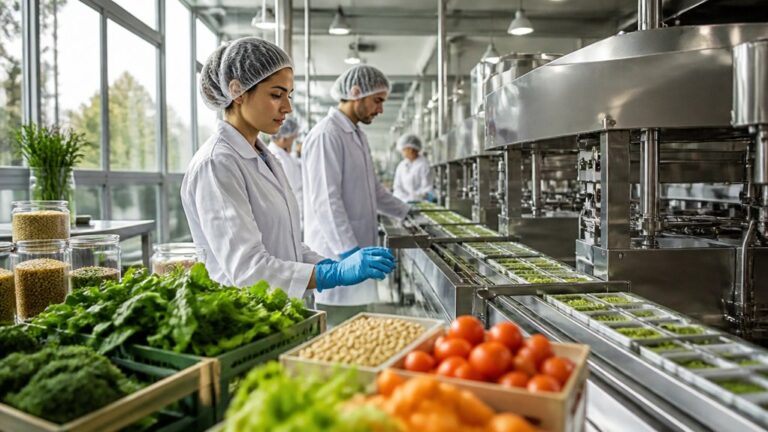
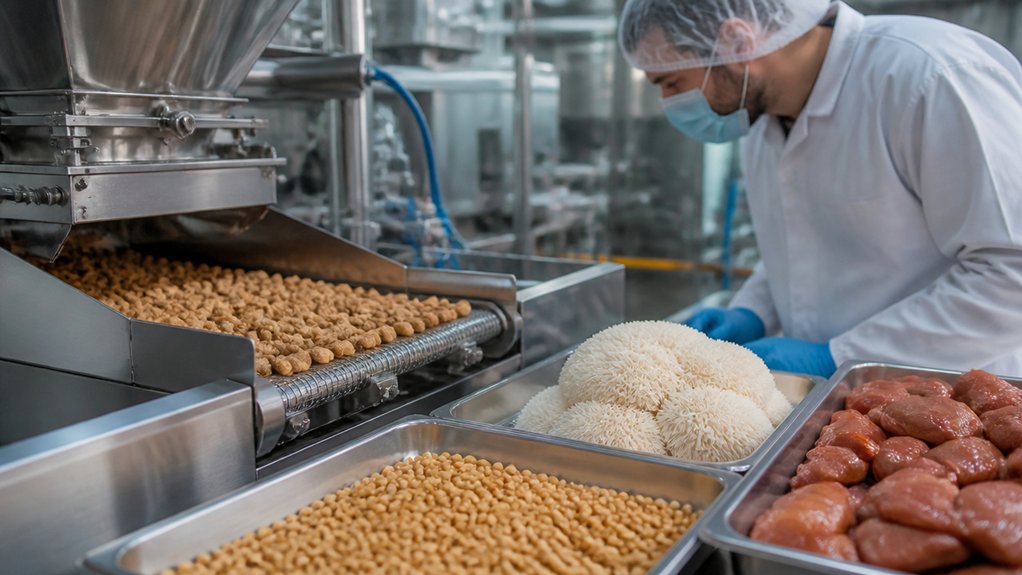
Alternative proteins are changing how you formulate, process, and scale food, not simply what goes into it. Plant-based ingredients, fermentation, and cultivated meat each bring different demands for sourcing, safety controls, and production equipment. To deliver consistent products, you’ll need to manage challenges such as extrusion performance, thermal stability, taste, and texture while keeping costs competitive. The manufacturing choices behind these products can determine whether they move beyond niche markets.
What Are the Main Types of Alternative Protein?
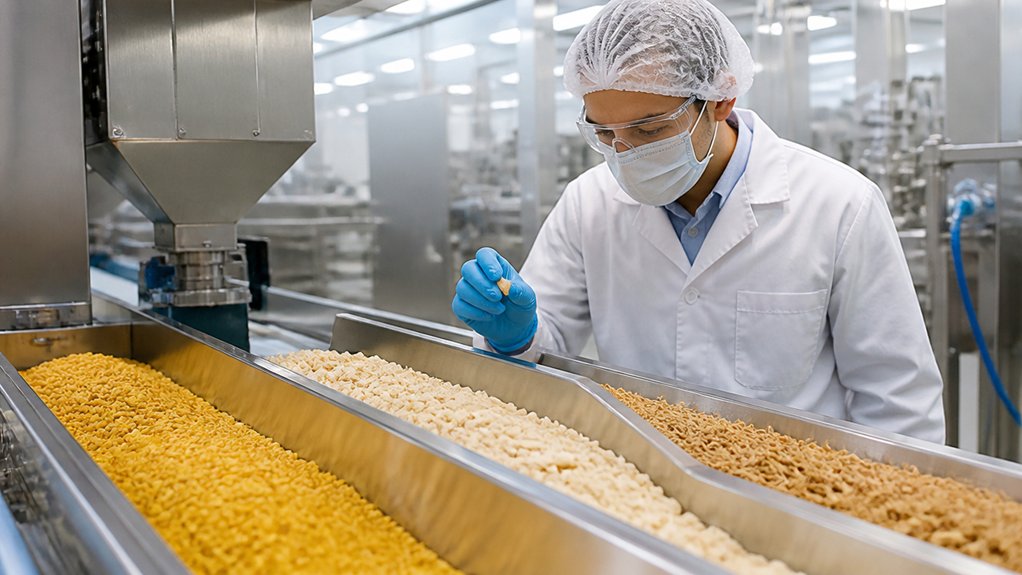
Alternative proteins fall into three main categories: plant-based, fermentation-derived, and cultivated.
Plant-based products use ingredients such as soy, peas, wheat, or fava beans to supply protein. Their nutritional profiles and functional properties vary by crop, processing, and formulation, so you should assess each product on its own merits.
Fermentation-derived proteins come from microorganisms. Traditional fermentation can improve ingredients, while precision fermentation uses engineered microbes to produce specific proteins, including dairy-identical whey.
Cultivated meat grows animal cells in controlled environments, aiming to reproduce meat without raising and slaughtering animals.
Each category brings distinct sustainability challenges, including land and energy demands, feedstock sourcing, and production scale.
You should also weigh evidence on nutrition, safety, cost, and environmental impact.
Consumer acceptance depends on taste, price, familiarity, and trust in production methods, not category labels alone.
How Plant-Based Proteins Change Food Manufacturing
When manufacturers replace or supplement animal proteins with plant-based ingredients, they must adapt formulation and processing to manage differences in solubility, gelation, water binding, and flavor.
You’ll need to select protein sources and functional ingredients that deliver the target texture while controlling off-notes and maintaining nutritional quality.
Extrusion, mixing, and thermal treatments can reshape plant proteins, but settings must match each ingredient’s composition and moisture level.
You should also validate performance across production scale, since shear, heat transfer, and hydration affect consistency and yield.
Sensory testing helps you address Consumer acceptance, while clear labeling and familiar formats can reduce barriers to trial.
Compare sourcing, energy use, water demand, and waste when evaluating Environmental impact; plant-based products don’t automatically deliver the same benefits under every supply chain.
These changes require coordinated formulation, process control, and quality assurance.
How Fermentation and Cultivated Meat Are Made
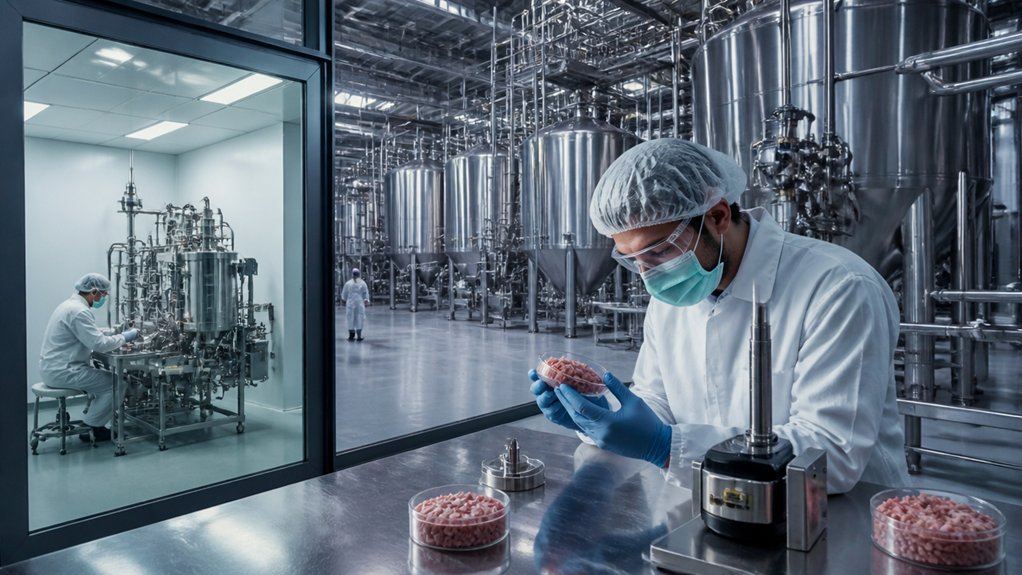
Fermentation and cultivated meat use biological processes to produce proteins, but they require different manufacturing controls. In precision fermentation, you cultivate selected microbes in sterile bioreactors, feed them sugars and nutrients, and manage temperature, pH, oxygen, and mixing.
Genetic engineering can program microbes to produce specific proteins, such as dairy proteins, which you then recover and purify. Conventional biomass fermentation instead harvests the microbial cells as food ingredients.
For cultivated meat, you grow animal cells in nutrient-rich media, expand them in controlled vessels, and guide their development into muscle and fat. You must maintain cell health, prevent contamination, and develop scalable processes that meet food-safety requirements.
Both methods need rigorous quality testing and consistent production. Clear labeling and sensory performance also influence consumer acceptance, so you’ll need products that meet expectations for taste, texture, and safety.
How Alternative Proteins Change Food Supply Chains
As fermentation-derived and cultivated proteins scale, they can shift sourcing from farms and fisheries toward feedstocks, specialized facilities, and regional production hubs. For you, that shift changes procurement priorities: ingredient sourcing may depend on sugar, nitrogen, minerals, and other inputs, each with its own price, availability, and geographic risks. You’ll also need suppliers that meet food-grade specifications consistently, plus traceability systems that document origin and processing.
Production can move closer to manufacturers or consumers, potentially shortening transport routes and reducing exposure to harvest disruptions. Yet concentrated capacity creates new dependencies on fermentation equipment, cell-culture inputs, energy, and technical expertise.
To build supply chain resilience, you should qualify multiple suppliers, assess facility capacity, and model disruptions across both conventional and emerging inputs. Contract structures and inventory policies must adapt as production volumes and regional networks mature.
Why Taste and Texture Still Need Work
Supply-chain readiness doesn’t guarantee consumer acceptance: alternative proteins still need to match the taste and texture people expect from familiar foods. You’ll notice gaps most in products where aroma, juiciness, and bite define quality.
Plant proteins can carry beany, bitter, or grassy notes, while fermentation and cell-based ingredients may produce unfamiliar flavor profiles. Processing, ingredient variation, and cooking conditions can also shift results between batches.
Flavor consistency depends on controlling raw materials, refining formulations, and validating performance across production runs and preparation methods.
Texture improvement requires more than adding binders: protein structure, moisture retention, fat distribution, and fiber alignment all affect chew and mouthfeel.
You can use sensory panels alongside instrumental tests to identify specific defects and guide reformulation. When products deliver predictable flavor and texture in real meals, consumers have stronger reasons to choose them again.
How Regulation and Production Costs Shape Adoption
Even when an alternative protein meets performance targets, regulation and production costs can determine whether manufacturers bring it to market. Regulatory hurdles vary by ingredient and jurisdiction. You’ll need to verify novel-food status, substantiate safety, meet labeling rules, and secure approvals before scaling. These steps can extend timelines and tie up capital, so build regulatory review into product development rather than treating it as a final check.
Cost implications reach beyond ingredient price. You’ll assess fermentation or cultivation yields, energy use, specialized equipment, and quality-control requirements. Low utilization can make unit costs uncompetitive, even when pilot runs succeed.
Compare total manufacturing costs with the product’s target price, and model scenarios for capacity, yield, and supply volatility. Strategic partnerships, process optimization, and staged investment can reduce exposure. When you align compliance planning with realistic economics, you can prioritize viable products and scale adoption with fewer surprises.
About the Author