

When you reduce packaging weight without compromising protection, you can lower material use, freight costs, and transport-related emissions. Lighter packs may also improve pallet density, allowing you to ship more units per load and use fuel more efficiently. The actual savings depend on your product, packaging format, and supply chain, so weight reduction alone isn’t a guarantee. The key is finding where less material can deliver measurable gains without increasing damage or waste.
What Does Lightweight Packaging Mean for Businesses?
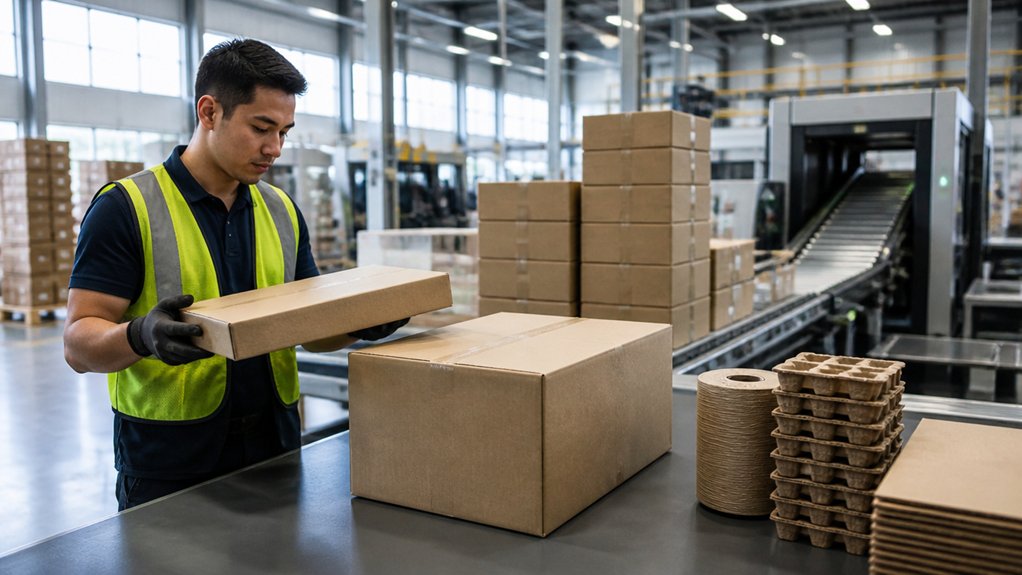
Lightweight packaging uses less material to protect and deliver a product while meeting performance and regulatory requirements. For your business, it’s a design strategy that can reduce package mass without compromising barrier properties, product integrity, handling, or shelf life. You can achieve this through material selection, structural redesign, or component optimization, then validate performance through testing under relevant distribution conditions.
Packaging sustainability extends beyond weight reduction: assess recyclability, recycled content, production impacts, and end-of-life pathways across the package’s life cycle. You’ll also need to confirm that changes meet applicable food-contact, labeling, and transport rules.
Consumer perception matters, too. A package that appears flimsy or fails to protect its contents can undermine confidence, even when its material footprint is lower. Clear design choices and reliable performance help you balance environmental objectives with customer expectations and operational requirements.
How Does Lightweight Packaging Cut Material Costs?
When you reduce package weight, you use less material per unit, which can lower the amount you spend on resin, paperboard, glass, or other packaging inputs.
Across high-volume production runs, even small reductions in grams per package can produce measurable savings. You can also reduce purchasing and inventory costs when lower material demand lets you order fewer tonnes or use less warehouse space.
Packaging innovations, such as downgauging and optimized package geometry, help you achieve these reductions while aligning specifications with production equipment.
To assess savings, compare material use, unit cost, scrap rates, and conversion expenses before and after a redesign.
Don’t overlook Consumer perceptions: a lighter package must still signal appropriate quality and value. Track consumer feedback and sales alongside cost data to confirm that material savings support your commercial objectives.
How Can Packaging Stay Protective With Less Material?
You can maintain protection with less material by selecting high-strength substrates that meet your product’s compression, puncture, and impact requirements.
Smarter structural design—such as optimized folds, ribs, and cushioning geometry—can distribute loads and limit damage.
Validate each design through transport testing to confirm it performs under real supply-chain conditions.
High-Strength Materials
By combining high-strength materials with efficient structural design, you can reduce packaging weight without sacrificing protection. Material innovation gives you access to high-performance paper grades, reinforced films, and advanced polymer blends that resist puncture, tearing, and compression. These materials can help you maintain product integrity while using less packaging, lowering material costs and shipment weight.
Evaluate performance against relevant tests, including edge-crush, burst, drop, and vibration testing, to confirm that lighter specifications meet distribution requirements. You should also assess moisture, temperature, and chemical exposure where products face demanding conditions.
Recycled content can support sustainability strategies, but verify that its strength and consistency suit your application. Work with suppliers to review material data and trial revised specifications under real handling conditions. This evidence-based approach helps you reduce material use without compromising protection.
Smarter Structural Design
Even strong materials can be wasted if a package’s geometry doesn’t distribute loads efficiently. You can reduce board or plastic use by designing ribs, folds, corners, and load paths to resist compression and impact where they occur. Model stacking, vibration, and drop conditions, then validate prototypes against distribution tests; this helps you remove material without compromising protection.
Right-sized dimensions also limit void fill and improve pallet density, lowering freight costs and emissions per unit.
Innovative assembly methods, such as interlocking tabs or formed features, can replace excess adhesive and separate components while maintaining structural integrity. You can use finite-element analysis to compare designs, but physical testing remains essential because material behavior and manufacturing tolerances affect performance.
Aesthetic enhancement can come from purposeful geometry and clean surfaces, rather than added layers or decorative components. Track damage rates and material weight together to confirm savings.
Which Lightweight Packaging Materials Work Best?

You can reduce package mass with recyclable paperboard, which supports established fiber-recovery streams where local infrastructure accepts it.
Lightweight flexible films use less material per unit, but their recyclability depends on resin design and collection access.
Compare both options against your product’s barrier needs, shipping conditions, and end-of-life systems.
Recyclable Paperboard
Recyclable paperboard can reduce packaging weight and simplify end-of-life recovery, particularly for dry goods and products that need moderate protection. You can specify lighter grades for cartons, sleeves, and partitions, then validate compression strength, drop performance, and stacking stability against distribution conditions.
Right-sizing board dimensions also reduces material use and shipping volume without compromising product protection. Paperboard’s fiber content supports established collection and recycling systems in many markets, though coatings, inks, adhesives, and local sorting capabilities affect actual recovery.
Check supplier data and regional recycling guidance before making recyclability claims. For your brand, clear disposal instructions can improve consumer perception, while Eco friendly branding should reflect verified material and recovery attributes.
Compare board weight, recycled content, barrier requirements, and damage rates to assess total cost and emissions across your supply chain.
Lightweight Flexible Films
For products that need flexible barriers rather than paperboard rigidity, lightweight films can cut package mass and transport emissions. You can select polyethylene or polypropylene structures for moisture protection, or add high-barrier layers when oxygen and aroma control matter.
Gauge reduction lowers resin use, but you should validate seal strength, puncture resistance, shelf life, and line speed before changing specifications.
Monomaterial designs can improve compatibility with existing recycling streams, while multilayer laminates may require specialized collection and processing.
Eco friendly innovations include recyclable barrier films and downgauged structures that preserve product protection.
You should compare life-cycle data, not package weight alone, because food waste can outweigh material savings.
Clear labeling and credible claims also shape Consumer perception, helping you explain performance and disposal options without overstating environmental benefits.
How Do Lighter Packages Cut Shipping Costs?
When lighter packaging reduces a shipment’s total weight, carriers may charge less because many freight rates depend on weight, dimensional weight, or both. You can lower billable weight by replacing heavy materials with engineered structures that protect products using less material.
However, dimensional weight still matters: a compact, well-designed pack can reduce charges when carriers compare parcel size with actual weight. For palletized freight, lighter cases may let you load more units before reaching vehicle weight limits, improving payload utilization and lowering cost per item.
Track freight invoices and test packaging against carrier rules; savings vary by lane, service, and shipment profile. Packaging innovation should also account for consumer preferences and damage risk.
If lighter packs fail in transit, returns and replacements can erase freight savings, so validate performance before scaling changes across your network.
Why Can Lightweight Packaging Lower Emissions?
Lightweight packaging can lower emissions by reducing the mass that trucks, ships, and aircraft must move, which may cut fuel use and transport-related greenhouse gas emissions per shipment.
You can also reduce emissions across a supply chain when lighter formats improve pallet density, allowing more units per load and fewer trips for the same volume.
The actual benefit depends on material production, package design, transport mode, and end-of-life treatment, so assess impacts across the package life cycle rather than weight alone.
Compare alternatives using consistent life-cycle assessment data, including recycled content and manufacturing energy.
You’ll need to preserve Packaging durability: damage, leakage, or product loss can erase transport savings and raise total emissions.
Clear labeling and testing can address consumer perception, helping you maintain confidence while reducing material use without compromising protection.
Which Products Suit Lightweight Packaging Best?
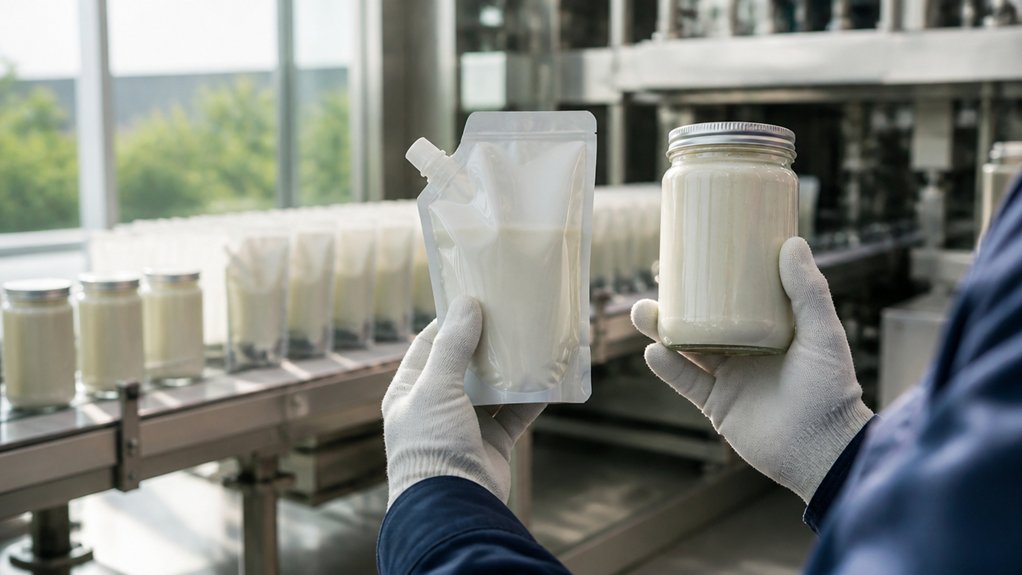
Which products suit lightweight packaging best? You’ll see the strongest fit in products whose contents tolerate compact, low-mass protection: dry foods, personal-care items, household cleaners, and many non-fragile consumer goods. Flexible films, thin-wall containers, and optimized cartons can reduce material use while maintaining required barrier and handling performance.
Assess product durability against distribution conditions, including stacking loads, vibration, puncture exposure, and temperature. Products with stable shapes and low breakage risk often need less structural packaging than glass, delicate electronics, or goods requiring extensive cushioning. Use package testing and damage data to confirm suitability before changing specifications.
You should also align material and format with brand perception. Lightweight designs can support sustainability positioning when they preserve shelf appeal, usability, and product protection. For e-commerce, evaluate parcel handling and returns; for retail, verify display stability and labeling space. Match packaging design to product needs and channel requirements.
What Trade-Offs Should Businesses Weigh?
Reducing packaging weight can lower material, freight, and emissions costs, but the savings depend on performance across the supply chain. Your trade-off considerations should include protection, line efficiency, and product quality.
Thinner walls or reduced cushioning may increase breakage, leakage, contamination, or returns, eroding savings and adding waste. Validate designs against distribution hazards, stacking loads, temperature, and moisture before adoption.
You’ll also need to check compatibility with filling, sealing, labeling, and automated handling equipment. A lighter format that slows throughput or requires line changes can raise operating costs.
Assess supplier capacity, material consistency, and food-contact or other regulatory requirements; substitutions may affect barrier performance and shelf life.
Sustainability challenges include balancing reduced material use against recyclability and recovery infrastructure. Choose formats your customers and local systems can actually sort and process, while protecting product integrity.
How Can You Measure Cost and Carbon Savings?
To measure savings accurately, compare the current package with the proposed design on a per-unit basis across the full supply chain. Your Cost analysis should include material, conversion, freight, storage, damage, and disposal costs. Use supplier quotes, production records, and logistics data, keeping volumes, service levels, and time periods consistent.
Calculate net savings after accounting for any tooling or testing expenses.
For Emission metrics, quantify greenhouse gases from raw materials, manufacturing, transport, and end-of-life treatment. Apply the same lifecycle boundaries and recognized emission factors to both designs; report results as kilograms of carbon dioxide equivalent per functional unit.
Verify package weights and shipment data, and document assumptions, data sources, and uncertainty. Check that reduced material use doesn’t increase product loss or protective packaging.
Present cost and emissions changes as absolute values and percentages, then validate results against operational records. This gives you a defensible, comparable baseline.
How Can Your Business Switch to Lightweight Packaging?
Once you’ve established a reliable cost and emissions baseline, switch to lightweight packaging through controlled trials rather than a full-scale rollout. Select high-volume products with stable specifications, then work with suppliers to identify material reductions that preserve barrier performance, seal integrity, and protection during distribution.
Use Packaging innovation to assess options such as downgauged films, optimized formats, or recycled-content materials, and confirm compatibility with filling lines and existing equipment.
Run trials across representative production conditions. Track damage rates, product shelf life, line speed, material use, freight weight, and total cost per unit. Compare results with your baseline using consistent sustainability metrics, including emissions per packaged unit.
Validate food safety or regulatory requirements where applicable. If performance holds, update specifications, train operators, and phase in the change by site or product family. Continue monitoring supplier quality and outcomes after implementation.
About the Author