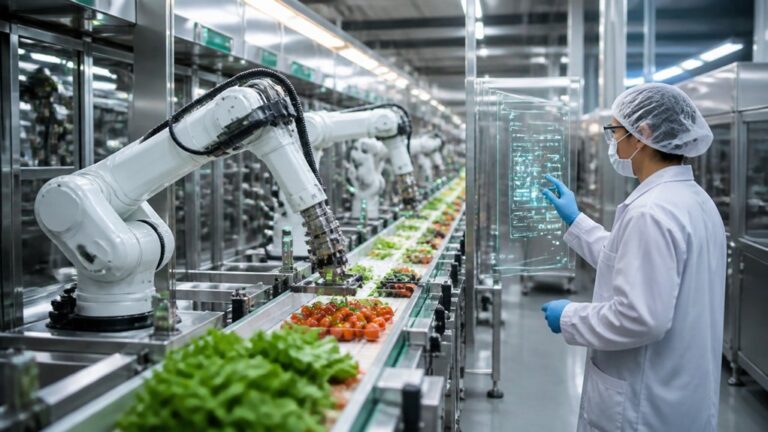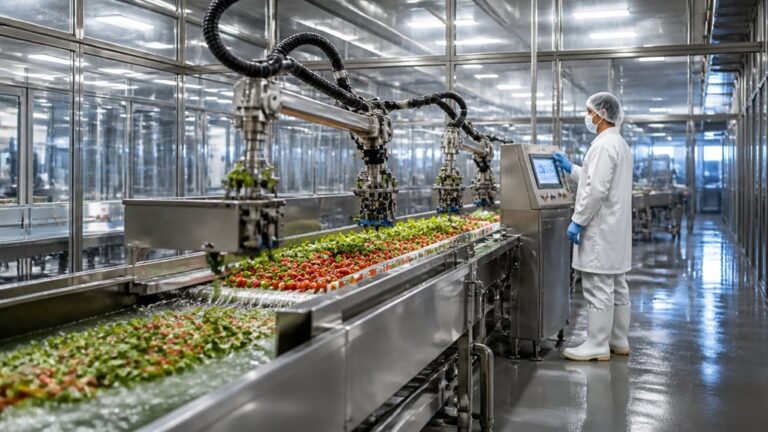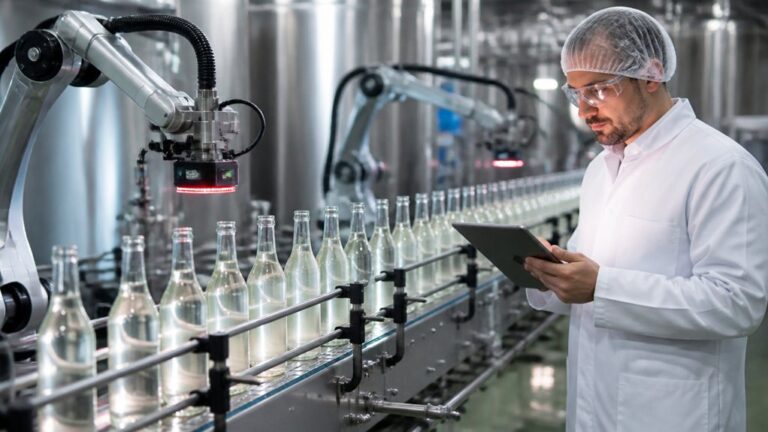
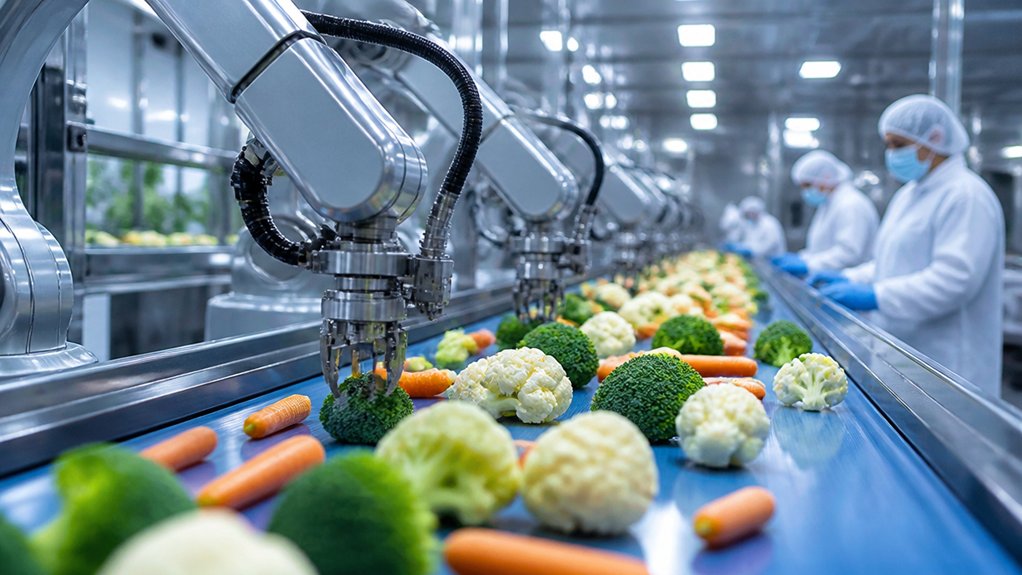
Just as production targets tighten, labor shortages and quality demands often converge on the same food line. Automation helps you respond by speeding repetitive tasks, improving consistency, and giving operators real-time control over process conditions. But the gains depend on where you apply it: sorting, processing, packaging, and monitoring each solve different bottlenecks. The key is knowing which changes will improve throughput without increasing waste or compromising food safety.
How Does Automation Speed Up Food Production?
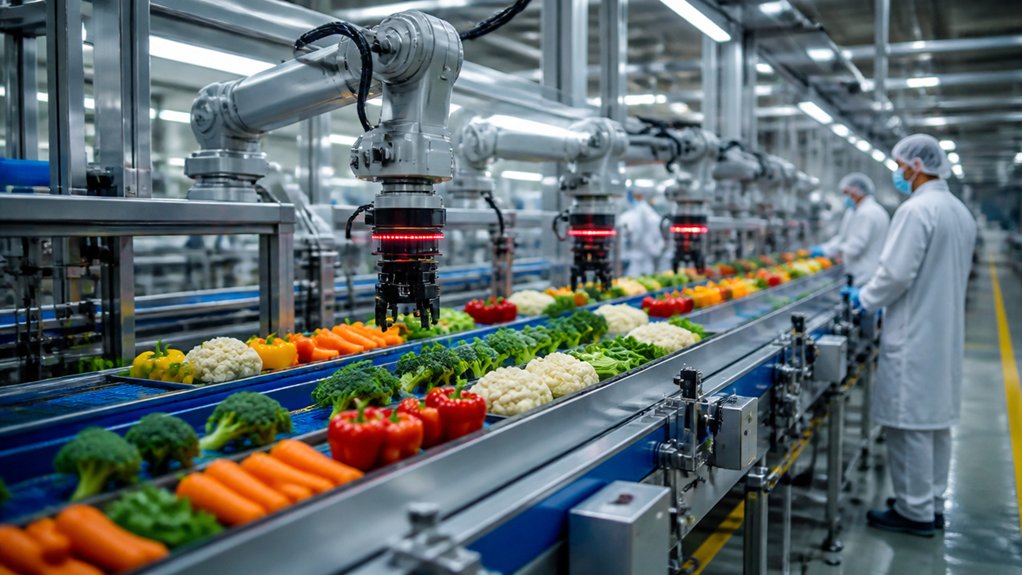
Automation speeds up food production by performing repetitive tasks—such as sorting, filling, and packaging—faster and more consistently than manual processes. When you automate these operations, you can increase throughput, reduce cycle times, and keep output steady across shifts.
Integrate equipment with production planning and inventory systems so you can match line speed to demand without creating excess work in progress. Sensors and controls help you monitor performance, identify bottlenecks, and respond before minor disruptions cause costly downtime.
To capture these gains, assess your current process, set measurable targets, and choose automation that fits your product mix and sanitation requirements. Include operators in equipment selection and provide workforce training for safe operation, changeovers, and basic troubleshooting.
Coordinate suppliers through your supply chain to ensure materials arrive at the pace your line requires.
How Does Automated Sorting Handle Ingredients?
Automated sorting uses sensors to identify ingredients by size, color, shape, or composition as they move along the line.
You can match precision sorting mechanisms—such as air jets or robotic pickers—to each product’s handling needs.
Routine calibration helps you maintain consistent quality control and reduce mis-sorts.
Sensor-Based Ingredient Detection
As ingredients move along a production line, optical cameras and other sensors identify them by color, size, shape, or composition. You can pair visible-light imaging with infrared or hyperspectral sensors to distinguish products that look alike but differ in moisture, ripeness, or material makeup.
This detection data helps your system recognize acceptable ingredients and flag foreign objects or out-of-spec items before processing. For reliable results, match sensor types to the ingredients and conditions you handle, including changes in lighting, surface moisture, and product orientation.
Schedule Sensor calibration and verify readings against known samples whenever you change recipes or equipment. Clean lenses and sensor windows regularly; residue can distort measurements and undermine Ingredient consistency.
Track detection accuracy over time so you can spot drift early and maintain dependable quality checks across production runs.
Precision Sorting Mechanisms
Once sensors identify each ingredient, precision sorting mechanisms direct it to the correct lane or process without slowing production. You can match sorting technology to product characteristics, line speed, and handling needs. Air jets divert lightweight items, while servo-driven gates and robotic arms move heavier or delicate ingredients with controlled force.
For mixed produce, programmable settings route items by size, shape, or detected condition, reducing manual handling and keeping workflows organized.
To protect ingredient freshness, choose contact surfaces and transfer speeds that limit bruising, crushing, and exposure. You’ll also need to account for sanitation access, washdown requirements, and changeover time when selecting equipment.
Flexible sorting layouts support packaging innovation by feeding different product formats or pack lines as demand shifts. Coordinate conveyor timing and reject paths with upstream detection so ingredients reach their intended destination reliably and efficiently.
Consistent Quality Control
How does automated sorting maintain consistent quality? It checks each ingredient against defined specifications, then removes items that fall outside your limits. Cameras capture color, shape, and surface defects; optical sensors can identify size, ripeness, or foreign material.
When you pair these tools with calibrated scales and metal detectors, you can catch more variation before ingredients reach processing.
Set thresholds to match product requirements, and validate them with representative samples. If settings drift, your system may reject good ingredients or pass defects, so review performance data and recalibrate routinely.
Consistent inputs support flavor consistency across batches and reduce downstream waste. You can also link sorting records to production and packaging systems, strengthening traceability and enabling packaging innovation without sacrificing quality.
Clear procedures help operators respond quickly when alerts flag unusual ingredient patterns.
How Do Robots Keep Food Processing Consistent?
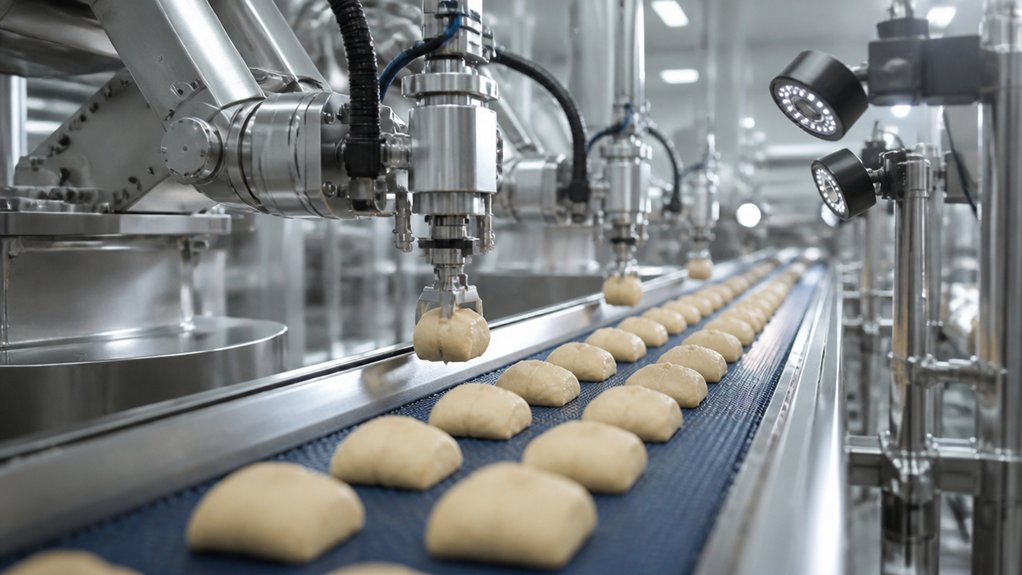
Robots keep food processing consistent by repeating programmed movements with precise timing, force, and temperature control. You can set parameters for mixing, cutting, cooking, or portioning, then monitor performance against validated process limits. This repeatability reduces variation between batches and helps you meet product specifications without relying on individual technique.
Consistency still depends on sound setup. Choose food-grade equipment suited to your ingredients, cleanability requirements, and operating environment. Calibrate sensors and verify recipes after product or line changes; even a small drift can affect texture, yield, or cooking results. Use scheduled inspections to catch wear before it changes tool paths or applied force.
Food safety improves when you control hygienic design, sanitation, and process records. Provide employee training so your team can operate, clean, and troubleshoot robots correctly. You’ll protect reliable results while keeping people accountable for critical checks.
How Does Automation Speed Up Filling and Packaging?
After processing controls product quality, automated filling and packaging lines move products into containers with speed and repeatable accuracy. Servo-driven fillers coordinate pumps, valves, and nozzles to deliver precise volumes as conveyors maintain product flow. You can match line speed to viscosity, container shape, and target fill weight, then use changeover recipes to switch formats with less manual adjustment.
Automated cappers, labelers, and case packers synchronize downstream, reducing bottlenecks and keeping throughput predictable. Inline sensors and vision systems verify fill levels, closures, codes, and label placement, while your control system flags deviations for quick correction.
Flexible equipment also helps you scale Flavor innovation into new sizes or varieties without rebuilding the line. Clear, accurate packaging supports Consumer engagement by presenting consistent product information and a polished shelf appearance.
Review cycle times and changeover data regularly to identify capacity gains.
How Can Automation Reduce Spoilage and Product Loss?
By catching process deviations early, automation helps keep more food within specification and out of the waste stream. You can reduce losses by coordinating ingredient dosing, mixing, cooking, and transfer steps so product doesn’t wait unnecessarily between operations.
Automated controls can also standardize changeovers and cleaning cycles, limiting residue buildup and cross-contamination that may shorten shelf life. For effective Spoilage prevention, set process limits around time, temperature, and handling, then configure equipment to pause or divert batches when conditions fall outside approved ranges.
This lets your team contain affected product instead of discarding an entire run. Ingredient preservation also depends on careful stock rotation and accurate batch tracking.
Use production data to identify recurring waste points, adjust schedules, and align batch sizes with demand. Review outcomes regularly to refine procedures and protect yield.
How Do Sensors Keep Food Quality on Track?
Sensors give you real-time visibility into temperature, moisture, and other quality indicators across production.
When readings drift from set limits, automated alerts help you correct conditions before product quality declines.
Vision systems can also detect defects on the line, letting you remove nonconforming items consistently.
Real-Time Quality Monitoring
How can food producers catch quality problems before a batch leaves the line? Real-time monitoring lets you track critical process conditions as products move through production. Sensors measure variables such as temperature, pressure, moisture, pH, and flow, then send readings to control systems for comparison with validated limits.
When a value drifts, you can investigate promptly, adjust equipment, or hold affected product before the deviation spreads.
Choose sensor locations and sampling rates based on your process risks; a poorly placed probe can miss meaningful variation. Calibrate instruments on a documented schedule, verify readings against reference devices, and review trends—not just alarms—to spot gradual drift.
Connect monitoring records with batch data so you can trace conditions and support audits. Strong ingredient sourcing and workforce training also help you interpret signals and respond consistently. Define clear escalation steps, assign responsibility, and test alarms routinely.
Automated Defect Detection
On a fast-moving production line, automated inspection can catch defects before they reach packaging. Cameras identify surface damage, discoloration, and incorrect shapes, while laser and X-ray sensors detect foreign material or internal flaws. You can set thresholds by product and route outliers to a reject lane without slowing the line.
To keep results reliable, calibrate sensors for changing lighting, product size, and line speed. Verify detection rates with representative samples, then review false rejects and missed defects each shift. Link inspection data to batch records so you can trace recurring issues to equipment or process changes.
Automated flavor analysis can complement visual checks by flagging taste-profile shifts. Schedule robotic cleaning systems to prevent residue from obscuring sensors or contaminating products. Together, these controls help you protect consistency and respond quickly when quality drifts.
How Does Monitoring Help Prevent Equipment Downtime?
When production equipment runs continuously, small changes in temperature, vibration, or cycle time can signal a developing fault. If you monitor these indicators in real time, you can spot abnormal patterns before a motor overheats, a bearing fails, or a conveyor slows.
Set thresholds for critical assets, then route alerts to operators and maintenance staff so they can verify issues and act promptly.
Use trend data to distinguish temporary fluctuations from deterioration. Schedule inspections or repairs during planned changeovers, rather than waiting for an unplanned stop.
This approach strengthens Equipment maintenance, reduces product loss, and supports energy optimization by revealing motors or pumps that consume more power than expected.
Review alarm history regularly, adjust thresholds as processes change, and confirm each intervention restores normal operating conditions.
How Does Automation Improve Food Traceability?
Automation lets you track products in real time across processing and distribution, giving you clearer visibility into each lot.
Integrated sensors and systems capture production data accurately, reducing manual entry errors.
When a quality issue arises, you can trace affected products faster and coordinate a targeted recall.
Real-Time Product Tracking
How quickly can you trace a product’s journey from field to shelf? With automated tracking, you can follow each lot as it moves through receiving, processing, packaging, and distribution. Connected production systems link items to time-stamped events, so you can locate affected inventory quickly when a quality issue or recall arises.
Assign unique lot or unit identifiers and connect them to each production stage. As products pass scanners, conveyors, or packaging stations, your system updates their status and location. You can then view work in progress, identify bottlenecks, and verify where a shipment stands without relying on manual searches.
This visibility also supports operational flexibility. When you introduce Flavor innovation or Packaging customization, you can track variant runs separately and direct finished goods to the right destinations. Set clear access rules and retention periods so teams can retrieve records when needed.
Accurate Data Capture
Accurate traceability starts with reliable data at every handoff. When you automate capture at receiving, processing, packaging, and shipping, sensors and scanners record lot codes, timestamps, quantities, and equipment settings directly from production events. You reduce manual transcription and keep records consistent across systems.
To protect Data accuracy, configure barcode or RFID readers to validate formats and link each scan to the correct product, line, and operator. Integrate scales, vision systems, and machine controls so measurements enter records automatically. Set exception alerts for missing, duplicate, or implausible values, and require staff to resolve them before production records close.
This approach supports Error reduction without adding paperwork. You should also calibrate devices, test integrations, and review access controls regularly. Clear procedures help your team maintain dependable records as products move through each production stage.
Faster Recall Response
When a food safety issue emerges, connected traceability records help you identify affected lots and act before the scope widens. Automated systems link supplier, production, and shipping data, so you can trace ingredients from receipt through distribution without relying on scattered spreadsheets.
With lot codes and timestamps captured at each handoff, you can pinpoint which products need review, quarantine inventory, and notify customers faster.
Use these records to narrow a recall to specific batches rather than pulling all products from a production window. Include Ingredient freshness checks and Packaging durability data in your review; temperature excursions or compromised seals can help explain risk and guide corrective action.
Set clear escalation rules, verify data accuracy, and test recall workflows regularly. When you can retrieve consistent records quickly, you reduce exposure, limit waste, and support confident decisions.
How Can Automation Make Food Production Safer?
Automation can reduce food-production hazards by limiting workers’ exposure to hot surfaces, sharp tools, heavy loads, and repetitive tasks. You can use robotic arms, conveyors, and automated cutters to handle these tasks, while guarding and interlocks help prevent contact with moving parts.
For Food safety, automated dosing and temperature controls can keep ingredients within validated limits and reduce handling errors. Design equipment for cleanability, then pair it with automated washdown or clean-in-place systems to support contamination prevention.
You’ll also want sensors that detect foreign objects, seal defects, or process deviations and trigger a line stop before affected product moves forward. Validate settings for each product and sanitation cycle, and train operators to respond to alarms, verify safeguards, and follow lockout procedures during maintenance.
Automation strengthens controls; it doesn’t replace sound hygiene practices.
How Do You Measure Automation’s Efficiency Gains?
To measure automation’s efficiency gains, compare performance before and after installation using consistent production conditions. Track output per hour, cycle time, changeover duration, and overall equipment effectiveness (OEE).
Record downtime, reject rates, rework, and energy use, too; faster output won’t help if waste or operating costs rise.
Use several weeks of baseline and post-installation data, adjusting for product mix, staffing, and scheduled maintenance. Compare like-for-like shifts, then calculate percentage changes and savings per unit.
Check whether gains persist during peak demand and routine cleaning.
Include labor implications in your assessment: automation may reduce repetitive tasks while shifting employees toward oversight, maintenance, or quality control. Factor training needs and workforce feedback into total costs.
Apply automation ethics by reviewing safety, data handling, and decision-making. Use results to refine settings and justify further investment.
About the Author