
A polished package can win a shopper’s glance, but repeat purchases depend on a product that solves a real need. Before you commit to production, test demand with target buyers, retailer feedback, and sales data from comparable products. Then define your customer, price, recipe, and production plan while checking food safety and labeling requirements. The launch gets harder when those choices meet shelf space, margins, and buyer expectations—so which decisions should you make first?
Validate Demand for Your Food Product
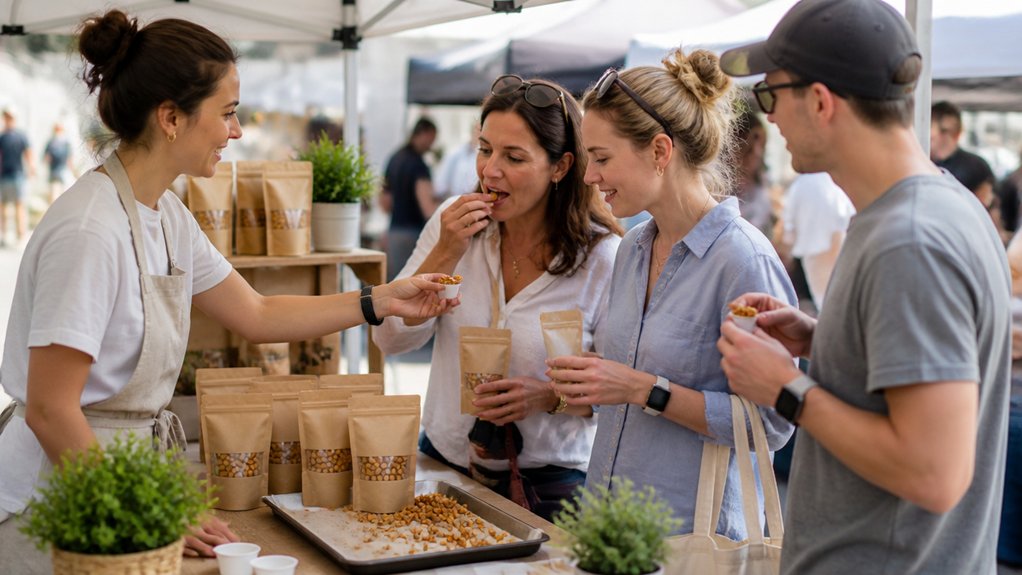
Before investing in production, confirm that customers want your food product and will pay a price that supports your costs.
Use Market research to estimate category demand, review retail pricing, and identify sales trends from credible sources, such as industry reports and retailer data.
Then test your concept with likely buyers through samples, surveys, or small-batch sales.
Ask specific questions about taste, portion size, packaging, purchase intent, and acceptable price; don’t rely on compliments alone.
Track responses systematically, and compare stated interest with actual purchases or preorders.
Consumer feedback can reveal problems with flavor, format, or value before you commit to equipment, ingredients, and inventory.
Calculate unit economics using realistic ingredient, packaging, labor, freight, and retailer costs.
If evidence doesn’t support repeat purchases at a viable price, revise the product or pause investment.
Choose Your Customer and Define Your Edge
Define your target customer by behavior, buying occasion, and price sensitivity—not just age or income.
Use retailer data, reviews, and interviews to pinpoint unmet needs in the category.
Then clarify your advantage in terms shoppers can verify, such as taste, convenience, ingredients, or value.
Define Your Audience
A successful food product launch starts with a specific customer, not a broad market. Define your audience by translating your product’s role into a clear buyer profile. Use target demographics such as age, household size, income, location, and life stage to guide decisions about pack size, price, and retail channels.
Then validate consumer preferences through category reports, retailer data, and focused interviews. Ask how often your target buys the category, where they shop, and which formats or claims influence their choices.
Keep the profile narrow enough to shape product positioning, but large enough to support realistic sales targets. Compare your offer with established brands to identify a credible edge, such as distinctive ingredients, convenient packaging, or a compelling format.
Document the audience and positioning so product, marketing, and sales teams make consistent launch decisions.
Identify Unmet Needs
With your target customer defined, identify the specific problem your product can solve better than current options. Look for market gaps in the occasions, formats, ingredients, or price points your customers care about.
Review retailer assortments, competitor labels, product reviews, and category sales data to see where current choices fall short. Then gather consumer feedback through interviews, tasting sessions, surveys, and in-home trials.
Ask customers what they buy, when they use it, and what frustrates them; avoid leading questions that invite praise. Compare responses across your chosen audience, since one person’s preference may not signal broad demand.
Check whether the unmet need appears consistently and whether customers will change their buying habits to address it. Record the evidence, rank needs by frequency and urgency, and use those findings to guide product development decisions.
Clarify Your Advantage
Once you’ve confirmed a customer need, decide exactly who your product will serve and why they should choose it over existing options. Define your target buyer by purchase behavior, dietary preferences, price sensitivity, and shopping channel—not broad labels alone.
Then compare competing products on ingredients, format, portion size, price, and claims. Identify an advantage customers can notice and verify, such as a shorter ingredient list, better protein content, or convenient packaging.
Support each claim with formulation data, supplier documentation, and regulatory review before you print it on a label. Your market differentiation should matter to buyers and remain feasible at scale, including sourcing, shelf life, and production costs.
Build unique branding around that proven benefit, then test the product and message with target shoppers before committing to a full launch.
Finalize Your Recipe, Pricing, and Production
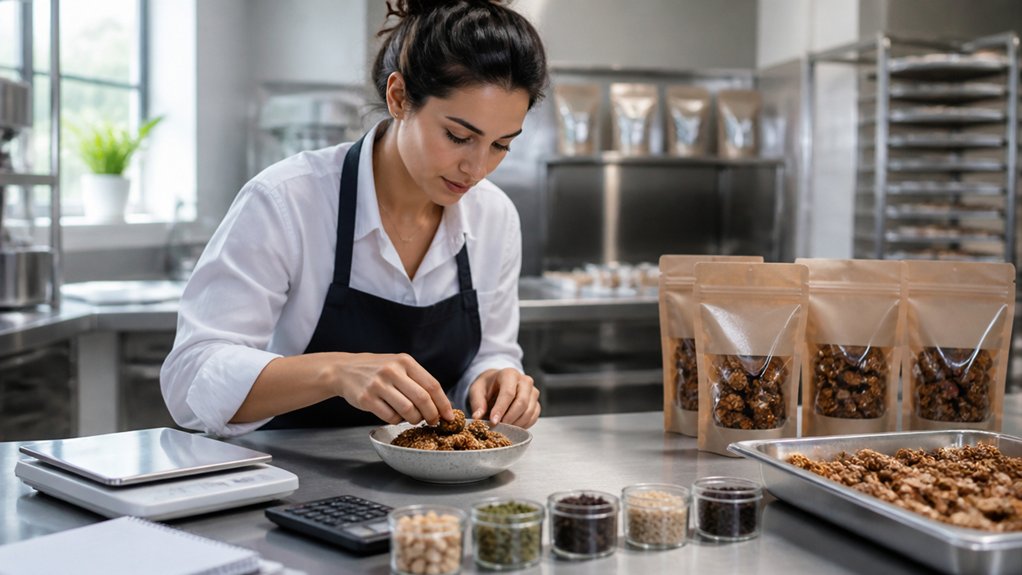
Lock your recipe after testing taste, shelf life, and batch-to-batch consistency.
Set pricing from ingredient, packaging, labor, and distribution costs, then compare it with your target market’s alternatives.
Plan production capacity around forecast demand, equipment limits, and food-safety requirements.
Finalize Your Recipe
Before setting a price or scheduling production, finalize a recipe that delivers consistent flavor, texture, yield, and shelf life. Run controlled bench trials, changing one variable at a time, and record ingredient weights, processing conditions, and sensory results. Working with a leading drink manufacturer offers you recipe opportunities that may prove to be challenging or even impossible for a small set-up to achieve.
Test the product with target consumers and use their feedback to refine sweetness, seasoning, aroma, and mouthfeel. Flavor innovation should support a clear product benefit without compromising stability or manufacturability.
Confirm Ingredient sourcing with suppliers, including specifications, allergen statements, and availability across seasons. Then validate the formula at pilot scale; equipment and batch size can affect mixing, cooking, and cooling.
Check pH, water activity, and microbiological safety where relevant, and conduct shelf-life testing under intended storage conditions.
Document the approved formula and process so your production team can reproduce each batch reliably.
Set Competitive Pricing
How much should you charge? Start with your unit economics: calculate ingredient, packaging, labor, freight, and distributor costs. Then set a wholesale price that supports your margin and leaves room for retailer markup.
Don’t price from ingredient cost alone; account for promotions, trade spending, and expected returns.
Compare products in the same category, package size, and channel. Your Market differentiation—such as organic certification, distinctive ingredients, or convenience—can justify a premium only if shoppers value it.
Check Price elasticity with small-scale tests, retailer feedback, or historical category data: if demand drops sharply after a price increase, reconsider your target price or offer.
Model several price points against margin and expected sales. Confirm your price fits your brand position and channel economics, then document assumptions so you can revise them as market evidence improves.
Plan Production Capacity
Once your price works on paper, confirm you can make the product consistently at the volume your sales plan requires. Map each production step, from ingredient receiving and preparation through cooking, filling, packaging, and sanitation.
Record batch yields, processing times, labor needs, and expected losses; then compare these figures with forecast orders and available shifts.
Check equipment requirements, including mixer capacity, heating or cooling rates, filler speed, packaging compatibility, and utility limits. A bottleneck at any step can constrain output, even when other machines have spare capacity.
Verify ingredient availability, supplier lead times, storage space, and shelf-life controls.
Run pilot or commercial-scale trials to validate quality, food safety controls, and actual throughput. Use results to assess production scalability and identify needed investments, co-manufacturing support, or schedule changes before you commit to launch volumes.
Meet Food Safety and Labeling Requirements
Food safety and labeling requirements can determine whether your product reaches store shelves—or gets held back. Before production, identify the regulations that apply to your product, facility, and sales markets.
Build Food safety standards into your process through hazard analysis, preventive controls, sanitation procedures, and documented supplier checks. Verify that your facility meets applicable registration and inspection requirements, and keep traceability records so you can quickly locate affected lots if a problem arises.
For Labeling compliance, confirm ingredient statements, allergen declarations, net quantity, nutrition facts, and required claims against current rules. Don’t assume a supplier’s specifications are sufficient; review formulations and label proofs with qualified regulatory experts.
Test the finished product’s shelf life and handling instructions, then retain approval records. Addressing these checks early helps you avoid costly relabeling, recalls, shipment delays, and retailer rejection.
Choose Packaging That Stands Out on Shelves
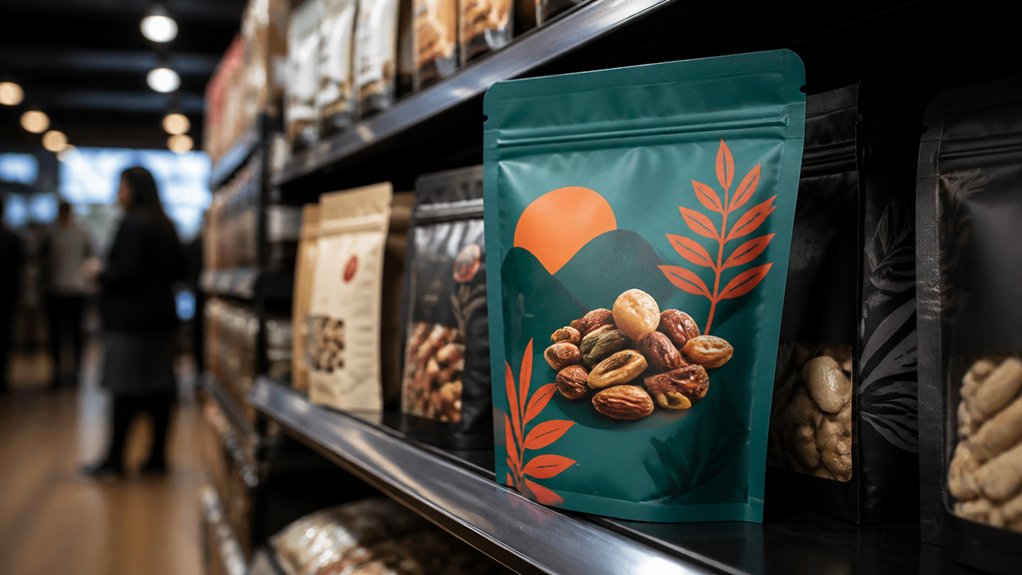
After meeting safety and labeling requirements, choose packaging that makes your product easy to spot and understand on a crowded shelf. Your design should signal the food’s category, key benefit, and intended use within seconds. Use color, typography, and imagery consistently, then check legibility at actual package size and under store lighting.
Unique packaging can help you stand apart, but it must also protect freshness, withstand shipping, and fit retail handling requirements. Test materials for barrier performance, seal integrity, and compatibility with your product before committing to a production run.
Shelf appeal depends on more than appearance: clear hierarchy helps shoppers find essential information without searching. Compare prototypes beside competing products, gather feedback from likely buyers, and revise based on what they notice first.
Choose a format that balances differentiation, functionality, and unit cost.
Find Retailers and Plan Your First Promotions
Start with retailers whose shoppers match your target customer and whose volume, pricing, and distribution requirements fit your capacity. Research category performance, competing products, and buyer requirements before you pitch.
Prepare a concise sell sheet with product specifications, wholesale pricing, suggested retail price, case pack, shelf life, certifications, and clear contact details.
Use retailer outreach to request a buyer meeting, then tailor your pitch to each store’s assortment and margin expectations. Bring samples and explain your production capacity, fulfillment plan, and food safety documentation.
Plan promotional strategies with the retailer before launch. Offer a limited introductory discount, in-store sampling, or a digital coupon, and agree on timing, placement, and funding.
Confirm who’ll supply signage, manage inventory, and cover promotional costs. Choose tactics that fit your budget and protect your margins, so your first promotion supports trial without setting an unsustainable price expectation.
Track Sales and Improve Your Food Product
Once your product reaches store shelves, track sales by retailer, location, and week to see how it performs. Compare units sold, revenue, repeat purchases, and out-of-stocks against your forecast. Use point-of-sale data to identify where velocity is strongest and whether promotions lift sales or simply shift purchases between weeks.
Pair those numbers with customer feedback from reviews, surveys, and retailer conversations. Look for recurring comments about taste, packaging, price, or portion size, then validate patterns with Market research before changing your product.
Check whether results differ by store format or region; a weak market may reflect poor placement, not poor demand.
Set a regular review cadence with your retail partners. Test one change at a time, such as adjusting pack size or messaging, and measure results before scaling. Keep what works and refine what doesn’t.
About the Author