

Plant-based innovation now reaches far beyond meat and dairy substitutes, changing how you evaluate flavor, texture, nutrition, and environmental impact. Advances in fermentation, ingredient design, automation, and data analytics help manufacturers improve products and scale production with greater precision. As new snacks, beverages, and functional ingredients enter the market, the disruption is becoming harder to ignore—but its long-term impact depends on how the industry addresses cost, sourcing, and consumer expectations.
What Is Plant-Based Food Innovation?

Plant-based food innovation uses advances in food science, processing, and ingredient design to create foods from plants that match or improve on the taste, texture, nutrition, and convenience of animal-based products. You can trace this work from raw materials to finished formulations: researchers isolate proteins, balance amino acids, and tune fats, starches, and fibers to control structure and flavor.
Extrusion, fermentation, and precision heating help you build chew, juiciness, and stability without animal ingredients. Analytical tools measure texture, nutrient profiles, and sensory performance, so developers can refine each prototype against defined targets.
Your choices also reflect Plant ethics, including concerns about animal welfare and resource use. Culinary creativity then turns functional ingredients into familiar or entirely new foods, while transparent labeling helps you assess what each product contains and how it fits your needs.
How Plant-Based Products Are Changing
As food science advances, plant-based products are moving beyond direct meat and dairy substitutes toward a wider range of formats, ingredients, and nutritional profiles. You’ll find legumes, fungi, algae, and precision-fermented proteins shaping products such as snack bars, ready meals, and functional beverages.
Formulators use data on amino acid composition, fiber, and micronutrients to design options that meet specific dietary needs, rather than simply imitate animal foods. Flavor fusion combines culinary traditions and botanical ingredients, creating distinctive profiles across categories.
Meanwhile, packaging innovation supports freshness, portion control, and clearer ingredient information, while helping brands test recyclable or lower-impact materials. These shifts give you more choice and let manufacturers target new occasions, from convenient breakfasts to protein-rich snacks.
Product development now centers on measurable nutrition, versatile formats, and resource efficiency.
Better Taste and Texture in Meat Alternatives
When you bite into a meat alternative, flavor release and texture determine whether it feels satisfying. You notice how quickly savory notes emerge, how they develop, and whether they linger. Manufacturers now use targeted Flavor enhancement, balancing salt, umami, fat, and aroma compounds to reduce beany or bitter notes without masking the product’s identity. They also tune processing conditions to build more convincing structure.
Texture improvement starts with protein selection and continues through extrusion, moisture control, and shear. These variables shape fiber alignment, juiciness, and bite resistance, helping products better mimic whole-muscle meat.
Advanced sensory testing links instrumental measures—such as hardness and springiness—with consumer preference, so teams can refine recipes against measurable targets. When you choose a product, consistent flavor and texture can make each bite more enjoyable and support repeat purchases across a growing category.
New Dairy-Free Foods and Ingredients
You’re seeing next-generation dairy alternatives engineered for improved protein quality, emulsion stability, and sensory performance.
New plant-based ingredients—from precision-fermented proteins to functional fibers—give you more control over nutrition and formulation.
These advances are expanding dairy-free options across categories while raising the bar for measurable product performance.
Next-Generation Dairy Alternatives
Next-generation dairy alternatives are moving beyond oat and almond beverages to deliver dairy’s functionality, nutrition, and sensory qualities. You’ll find precision-fermented proteins enabling casein-like stretch in cheese and whey-like solubility in drinks, without livestock. Dairy fermentation also helps developers create cultured products with controlled acidity, aroma, and texture.
Meanwhile, advances in Milk processing—including high-pressure homogenization and membrane filtration—improve stability, reduce separation, and support consistent performance in coffee, cooking, and baking.
For you, the shift means evaluating products by measurable function, not just ingredient lists. Compare protein quality, calcium fortification, viscosity, melt behavior, and performance under heat. Manufacturers can tune formulations to match specific applications, from foaming barista beverages to spoonable yogurt.
As production scales, fermentation efficiency and process yields will shape cost and availability. These technologies are expanding dairy-free choices while targeting familiar culinary results.
Innovative Plant-Based Ingredients
As food makers broaden dairy-free options, they’re using ingredients such as fava bean protein, chickpea flour, mycoprotein, and precision-fermented fats to build new products. You’ll see these inputs deliver targeted functions: fava protein supports emulsification, chickpea flour adds structure, and mycoprotein supplies fibrous texture.
Fermented fats can improve melt and mouthfeel without animal-derived ingredients.
To refine taste, developers use Flavor pairing, matching legumes with roasted notes, herbs, or cultured acids to mask bitterness and balance aroma. You can assess performance through measurable benchmarks, including protein content, viscosity, melting behavior, and sensory scores.
Ingredient blends also help manufacturers reduce reliance on single crops and adapt formulations to supply shifts.
Packaging sustainability matters, too: recyclable formats and verified material reductions can lower product impacts while protecting freshness.
Together, these advances let you choose dairy-free foods engineered for function, flavor, and resource efficiency.
How Production Is Becoming More Efficient
Automation, precision fermentation, and AI-driven process controls are helping plant-based producers increase throughput while cutting waste and energy use. With automation efficiency, you can stabilize mixing, extrusion, and packaging across production runs, reducing variability and costly rework.
Sensors track temperature, moisture, pressure, and flow in real time; control systems adjust parameters before defects spread. Machine-learning models can forecast equipment failures and schedule maintenance, protecting uptime without overprocessing.
Precision fermentation also enables tightly controlled ingredient production, while optimized bioreactor cycles improve output per unit of energy. Digital dashboards connect plant performance to supply chain planning, helping you match production rates with demand and limit excess inventory.
These tools make scale-up more predictable: you can validate process changes with measurable data, improve yields, and deliver consistent products using fewer resources per unit.
Where Plant-Based Ingredients Come From
You can trace plant proteins to crops such as peas, soy, and fava beans, each with distinct amino-acid profiles and processing needs.
Oils come from sources including canola, sunflower, and coconut, while starches often come from corn, potato, and cassava.
These choices shape ingredient performance, supply-chain resilience, and product cost.
Plant Protein Sources
Where do plant proteins come from? You’ll find them in legumes, grains, seeds, and specialized crops. Soybeans and peas supply concentrated protein for isolates and textured ingredients. Lentils, chickpeas, and fava beans bring protein alongside fiber and distinctive flavor. Wheat gluten delivers elastic structure, while rice, oats, and quinoa offer complementary amino-acid profiles. Pumpkin, hemp, and sunflower seeds add protein and functional compounds.
Processors fractionate these crops to tune solubility, water binding, gelation, and texture. Blending sources can improve amino-acid balance and create products with more convincing bite. Your ingredient choice also shapes color, flavor, processing needs, and nutritional labeling.
In plant-based cuisine, this diversity expands culinary creativity: you can build familiar formats or entirely new foods from crop-specific proteins, selected for performance, nutrition, and taste.
Sourcing Oils and Starches
Beyond protein, plant-based products rely on oils and starches sourced from crops such as canola, sunflower, coconut, corn, cassava, and potato.
You can select oils by fatty-acid profile, oxidation stability, and processing performance. High-oleic sunflower oil, for example, resists degradation during heating, while coconut oil contributes solid fat for structure.
Starches deliver viscosity, binding, and moisture control; cassava and potato starches can improve freeze-thaw stability in prepared foods.
Your sourcing choices also shape cost, supply resilience, and environmental impact. Compare crop origins, farming practices, and extraction methods, then validate each ingredient in the target formulation.
Oils support flavor enhancement by carrying aromas and balancing richness; starches tune texture without animal-derived additives.
Together, these functional ingredients enable packaging innovation, including products engineered for longer shelf life and reliable performance across distribution conditions.
How Plant-Based Foods Are Reshaping Markets
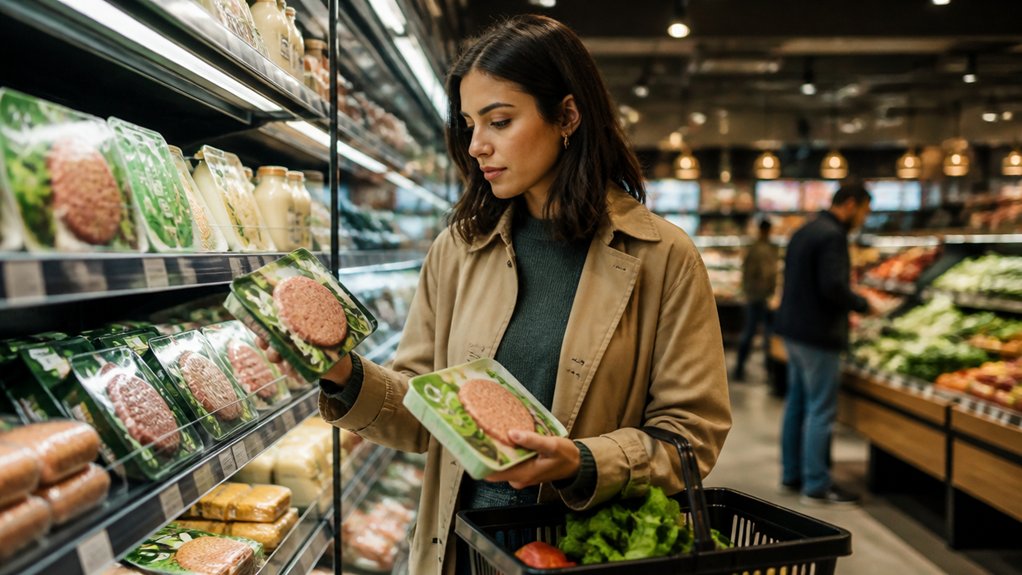
As plant-based foods move from specialty aisles into mainstream retail, they’re changing how companies compete for shelf space, customers, and investment. You can see the shift in product portfolios: brands now position plant-based options alongside familiar staples, targeting flexitarians as well as committed vegans.
Retailers use sales velocity, repeat-purchase rates, and basket data to decide which products earn space, while manufacturers track price parity and sensory performance to improve conversion.
This competition also expands the market’s cultural range. Plant cultural preferences and culinary traditions shape flavor development, ingredient choices, and regional launches, helping products feel relevant rather than interchangeable.
For you, the result is a broader set of convenient choices and clearer comparisons across categories. As demand signals evolve, companies that combine consumer analytics with rapid product iteration can respond faster and capture emerging segments.
What Plant-Based Innovation Means for Sustainability
When you compare products across their full life cycles, plant-based innovation can reduce environmental pressures—but the benefits depend on how ingredients are grown, processed, and transported. You can assess those gains through life-cycle analysis, tracking greenhouse-gas emissions, land use, water consumption, and energy from farm to disposal.
Replacing some animal-derived ingredients with crops can lower land demand and emissions, while precision fermentation and efficient processing can improve resource yields. Yet sourcing matters: regenerative practices, crop diversity, and shorter supply chains shape each product’s footprint.
Urban farming can bring fresh produce closer to consumers, reducing transport needs when systems use energy efficiently. You can also evaluate plant-based packaging by measuring material inputs, recyclability, and end-of-life impacts.
Transparent, comparable data helps you distinguish measurable sustainability improvements from simple marketing claims.
Challenges Facing Plant-Based Food Innovation
Measurable sustainability gains don’t guarantee that plant-based foods will succeed in the market. You must also engineer products that match animal-based foods on taste, texture, nutrition, price, and convenience.
Protein functionality varies by crop and processing method, so you’ll need precise formulation to control flavor, water binding, and structure. Ingredient costs, specialized equipment, and supply volatility can further constrain scale-up.
Regulatory hurdles add complexity: labeling rules, allergen disclosures, and novel-ingredient approvals differ across markets, affecting launch timelines and packaging. You’ll need robust safety data and traceable sourcing to meet requirements.
Meanwhile, consumer acceptance depends on more than sustainability claims. Shoppers scrutinize taste, price, processing, and nutritional value, and repeat purchases reveal whether a product delivers. Use sensory testing, compositional analysis, and market data to identify gaps, refine formulations, and prioritize innovations that can compete consistently at scale.
About the Author