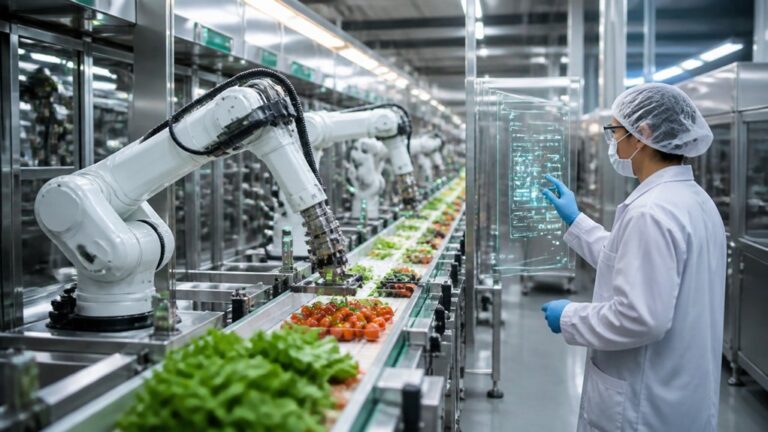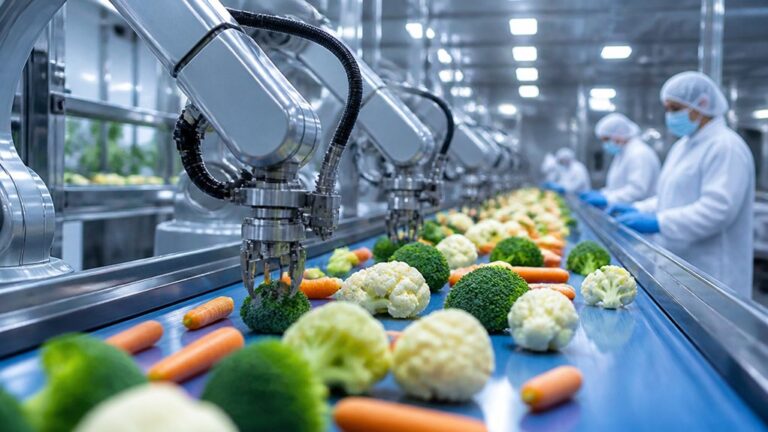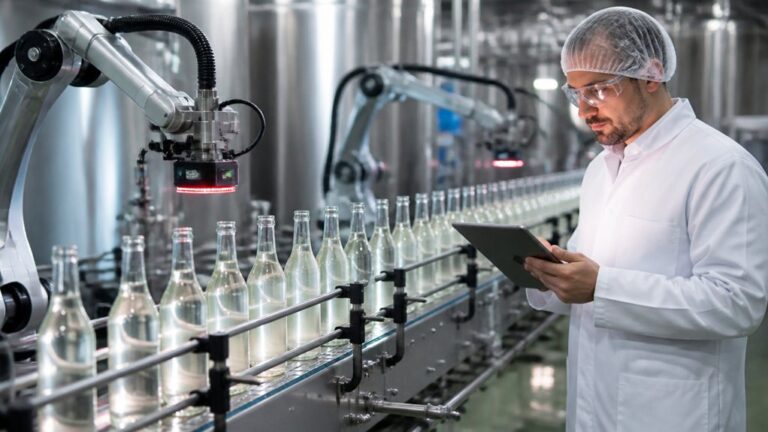
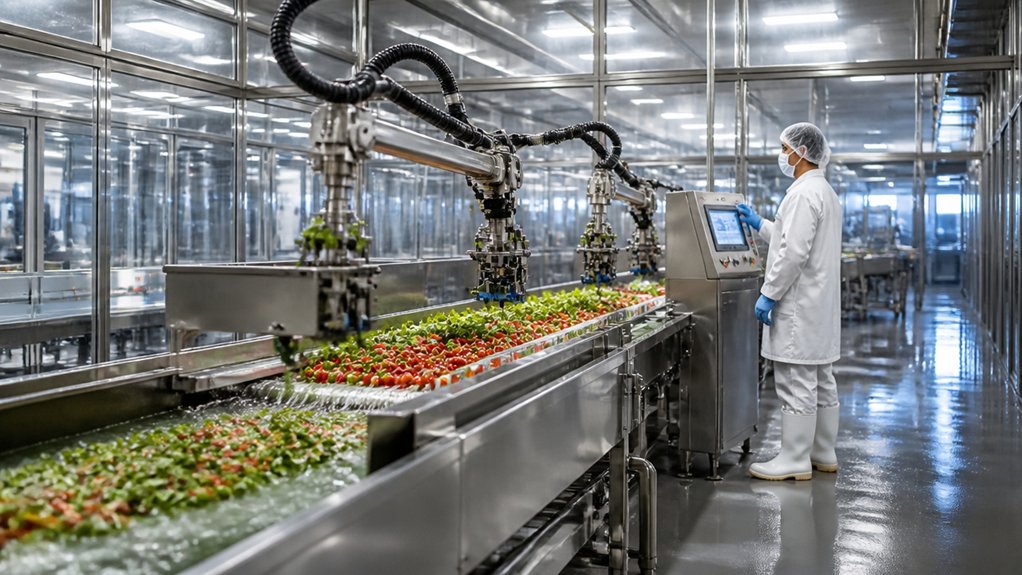
When you manage a food processing operation, smart factory technology connects sensors, machines, and production data so you can monitor conditions and respond in real time. Predictive analytics and automated controls can reduce waste, limit downtime, and strengthen traceability, but integration costs and cybersecurity risks complicate adoption. The key question is how these connected systems improve efficiency without compromising food safety—or operational resilience.
What Makes a Food Processing Factory Smart?
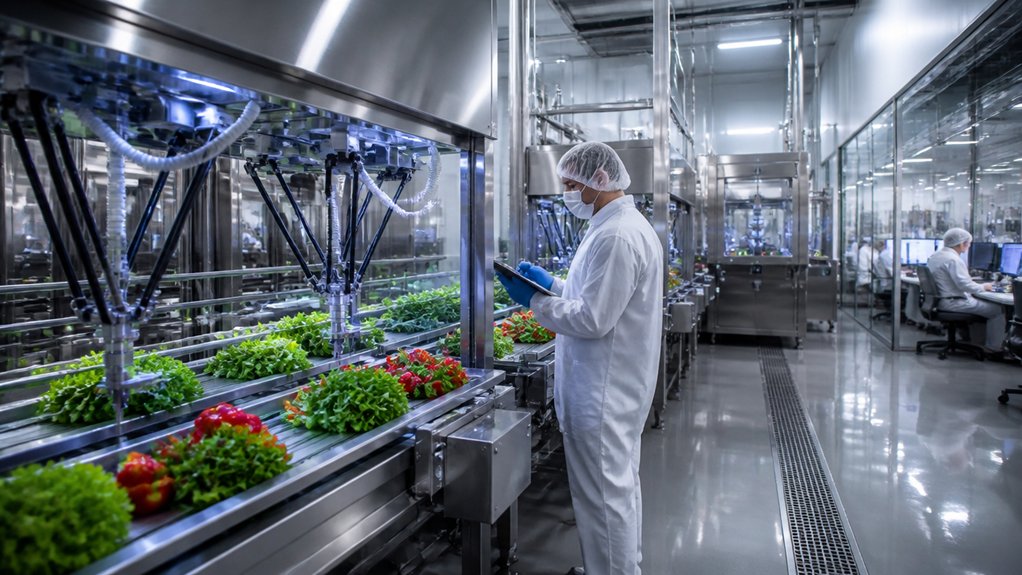
A smart food processing factory connects machines, sensors, and control systems to monitor production and adjust operations in real time. You define its intelligence not by equipment volume but by how effectively it turns operational data into safer, more consistent decisions.
Analytics can flag temperature drift, detect equipment wear, and identify quality variation before defects spread. Automated controls then refine settings within validated limits, supporting traceability and food safety while reducing waste.
Automation efficiency depends on measurable outcomes: fewer unplanned stops, tighter process control, and better use of energy and materials.
You also need Workforce adaptation. Give employees training to interpret alerts, verify automated actions, and manage exceptions. Their expertise keeps technology aligned with production goals and regulatory requirements.
When you combine reliable data, responsive controls, and skilled oversight, your factory becomes more resilient, precise, and continuously improvable.
How Smart Factories Connect the Production Line
How does a smart factory connect each production stage? It links machines, control systems, and data platforms through an integrated industrial network. Real time sensors capture equipment status, material movement, and process conditions, then send readings to a shared supervisory system.
You can use this live data to coordinate timing across mixing, forming, cooking, packaging, and inspection stations.
Interoperable controllers translate production plans into machine instructions, while edge computers filter signals and respond to local events. When one station changes its pace, connected systems can adjust upstream or downstream handoffs to prevent gaps and bottlenecks.
Autonomous robots exchange task and location data with conveyors and scheduling software, moving materials between work cells without breaking the digital chain. A common data model gives you traceable records and a clear view of how each stage connects.
How Smart Factories Improve Food Processing
Smart factories improve food processing by using real-time data to control conditions such as temperature, pressure, mixing speed, and cooking time. You can use connected sensors and adaptive controls to keep each batch within precise production targets, while machine-learning models refine recipes as ingredients or equipment conditions change.
This responsiveness helps you reduce waste, improve consistency, and adjust output without lengthy changeovers. Production software can also translate Consumer preferences into practical decisions, such as changing portion sizes, flavor profiles, or product formats.
How Smart Factories Strengthen Food Safety
When every production step is traceable, you can detect food-safety risks before they reach consumers. Connected sensors monitor temperature, humidity, pressure, and sanitation conditions in real time, while analytics flag deviations before they compromise a batch. You can link readings to ingredients, equipment, operators, and time stamps, creating a precise record for rapid containment and targeted recalls.
Automated vision systems can identify packaging defects, foreign objects, or labeling errors at line speed. Predictive monitoring also helps you schedule cleaning and maintenance based on verified conditions, reducing contamination opportunities.
When you integrate these controls with validated testing and clear response protocols, you strengthen Regulatory compliance and make audits more evidence-based. Consistent safeguards protect product integrity, support Consumer trust, and give you actionable insight to refine food-safety controls across production.
What Challenges Do Food Processors Face?
Even with stronger safety controls, food processors must address the cost and complexity of connecting smart-factory systems to existing operations. You’ll need to integrate sensors, robotics, and analytics with legacy equipment without interrupting production. Incompatible data formats can limit visibility, while cybersecurity gaps expose operational technology to new risks.
You must also validate automated processes against strict food-safety requirements and maintain reliable records for audits.
Labor shortages make implementation harder: your team needs people who can operate, troubleshoot, and secure connected systems. Training takes time, and competition for technical talent can delay upgrades.
Meanwhile, supply chain disruptions may constrain access to sensors, replacement parts, and specialized machinery. To manage these pressures, you’ll need phased investments, interoperable platforms, and contingency plans.
Clear performance metrics can help you prioritize projects, control costs, and demonstrate measurable returns.
About the Author