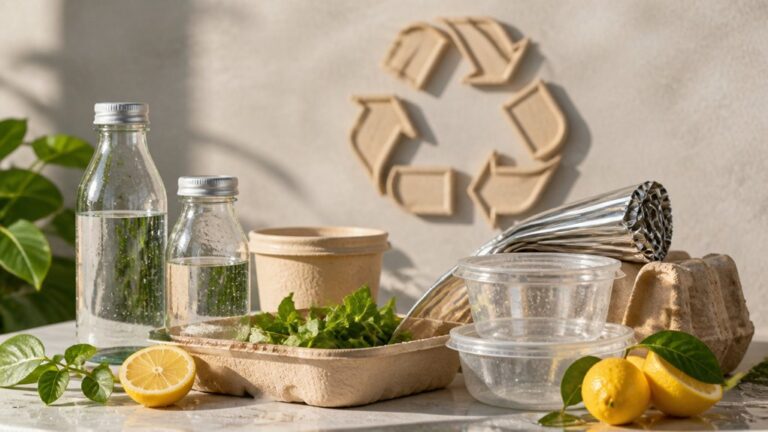
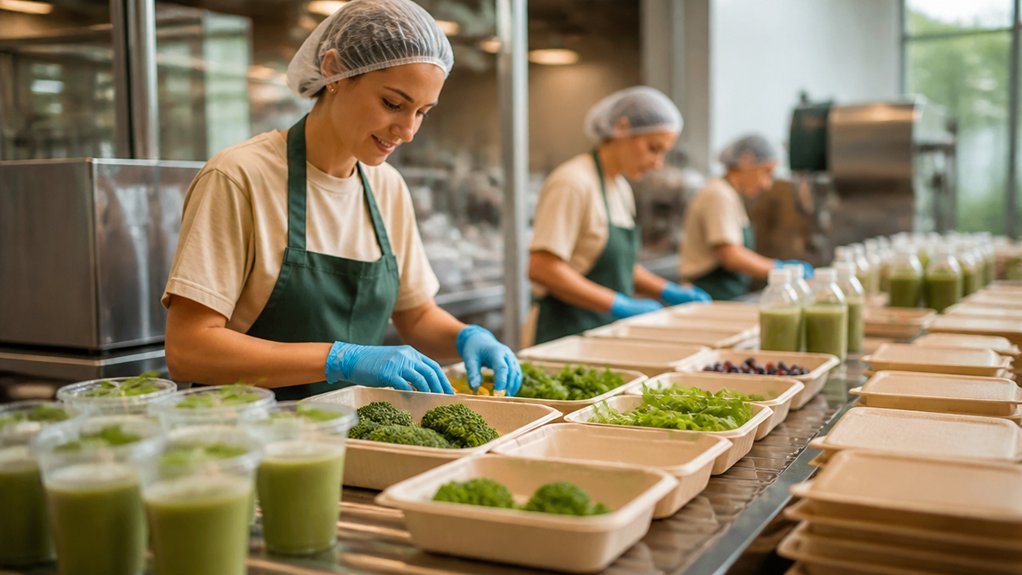
Packaging accounts for about 36% of global plastic production, making food and drink a key sector for reducing material waste. If you’re weighing compostable formats, certified materials can support waste diversion and help meet changing regulations—but only when local facilities can process them. Choosing the right option means balancing product protection, labeling, cost, and disposal access, and one overlooked factor can undermine the entire effort.
What Makes Packaging Compostable?
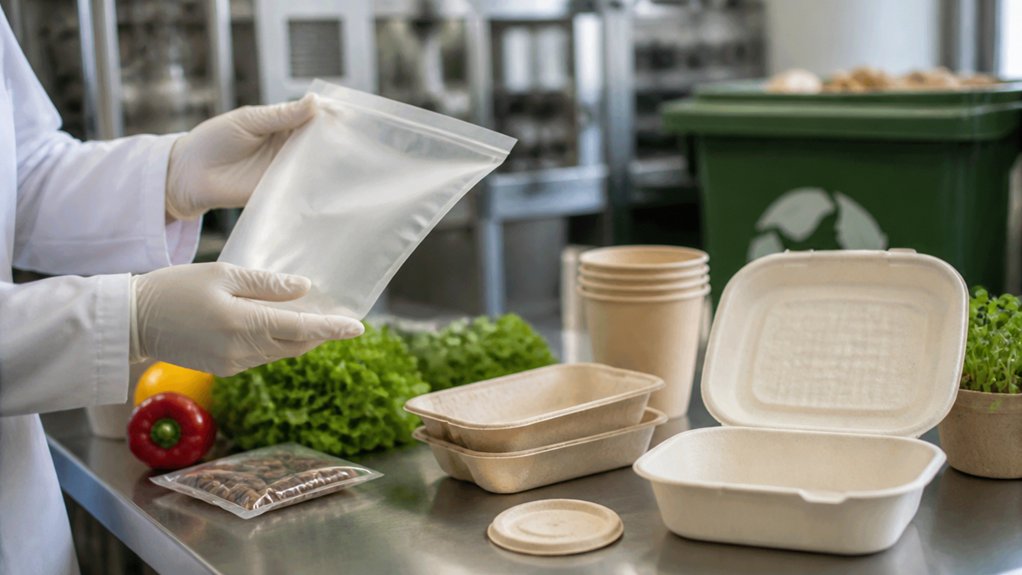
What makes packaging compostable is its ability to break down through microbial activity into water, carbon dioxide, and biomass under defined conditions, without leaving harmful residues.
For food and drink production, you need to verify that the finished article—not just its raw material—meets recognized compostability standards. Certification typically assesses biodegradation, disintegration, and ecotoxicity within specified time, temperature, and facility conditions.
Industrial compostable formats may require controlled heat and humidity; they won’t necessarily decompose in home compost or landfill environments. Check certificates and test reports for the exact product, including inks, coatings, adhesives, and additives.
Sustainable sourcing supports responsible material selection, while Eco friendly design considers barrier performance, food-contact safety, and compatibility with collection and processing systems.
Clear disposal instructions help guarantee the package reaches an appropriate composting facility.
Why Are Food Businesses Switching to Compostable Packaging?
When you switch to certified compostable packaging, you can reduce reliance on conventional plastics and cut packaging waste where suitable composting infrastructure exists.
You’ll also respond to consumer expectations for lower-impact food and drink packaging.
Your results depend on material choice, local waste systems, and clear disposal guidance.
Reducing Environmental Impact
Why are food businesses switching to compostable packaging? To reduce environmental impact, you need to assess packaging across its full life cycle, not assume compostable materials always outperform conventional options. Certified compostable formats can divert suitable food-soiled items from landfill, where organic waste may generate methane, but benefits depend on local collection and processing capacity. Check that your supplier’s material meets recognized compostability standards and that nearby facilities accept it. Otherwise, contamination can undermine recycling or composting streams.
Innovative Design can reduce material use while maintaining barrier performance, shelf life, and food safety. You should also evaluate feedstock sourcing, manufacturing energy, transport, and end-of-life emissions through life-cycle assessment.
Consumer Education helps users identify accepted disposal routes and follow local instructions. Track diversion rates and rejected loads, then adjust procurement and signage. This evidence-based approach lets you target measurable reductions rather than rely on packaging claims.
Meeting Consumer Expectations
Beyond measured environmental outcomes, compostable packaging can help food businesses meet consumer expectations for visible sustainability action. When you replace conventional formats, you give customers a tangible signal of your priorities at the point of purchase. However, claims must match verified material specifications and local waste infrastructure; compostable packaging won’t deliver its intended benefit if customers lack access to suitable collection and processing.
Clear disposal labels and staff guidance support customer engagement by helping people sort packaging correctly. You can also use customer feedback and purchasing data to assess whether the change improves satisfaction, repeat purchases, or trust.
As adoption grows, brand differentiation depends less on the compostable label alone and more on credible sourcing, functional performance, and transparent end-of-life instructions. This evidence-based approach helps you meet expectations without overstating environmental benefits.
What Types of Compostable Packaging Materials Are Available?
You can choose plant-based plastics made from feedstocks such as corn starch or sugarcane, but verify that the material meets relevant compostability standards and suits your product’s shelf life.
Paper and fiber packaging, including molded-pulp trays and coated paperboard, can provide alternatives when their coatings and additives are also compostable.
Your choice should reflect food-contact requirements, moisture and grease barriers, and the composting infrastructure available to your customers.
Plant-Based Plastics
As food and drink producers seek alternatives to fossil-based packaging, plant-based plastics offer several material options, each with different performance and end-of-life requirements.
Plant based plastics describe materials made partly or wholly from renewable feedstocks, but bio-based origin doesn’t guarantee compostability. You can select polylactic acid (PLA) for rigid cups, trays, and films where clarity and stiffness matter.
For flexible packaging, blends containing starch or polybutylene adipate terephthalate (PBAT) can improve flexibility and sealability. Polyhydroxyalkanoates (PHAs), produced by microorganisms, offer another option for coatings and molded items, with properties that vary by grade.
These biodegradable polymers require verification against relevant compostability standards, such as EN 13432 or ASTM D6400. Check whether certification covers industrial or home composting, and confirm local facilities accept the package.
You’ll also need to validate barrier performance, food-contact compliance, and processing compatibility before switching materials.
Paper and Fiber Packaging
Paper and fiber packaging provides a renewable-material option for food and drink formats such as cartons, trays, molded-pulp bowls, and paper wraps. You can select virgin or recycled pulp, bagasse, bamboo, and agricultural residues, depending on strength, sourcing, and food-contact requirements.
Molded fiber suits protective trays and bowls, while paperboard supports cartons and sleeves. To resist moisture, oils, or oxygen, converters apply Biodegradable coatings, though barrier performance and compostability depend on coating chemistry and local processing conditions.
Fiber reinforcement can improve stiffness and durability, helping you reduce material use without compromising handling. Specify certified compostability for the complete package, including inks, adhesives, and coatings.
Verify that industrial or home composting facilities accept the format, and test it against product shelf-life, filling-line, and transport demands before commercial adoption.
Where Does Compostable Packaging Work Best?
Compostable packaging works best in food-service settings where it can be collected with food scraps and sent to a facility equipped to process it. You’ll see the strongest fit at stadiums, campuses, hospitals, and event venues with centralized waste stations and contracted organics collection.
There, staff can separate certified items from conventional plastics, while haulers deliver them to industrial composting operations that accept the materials. Your procurement team should confirm local acceptance before specifying products; certification alone doesn’t guarantee access to processing.
Compostables may also suit closed-loop programs linked to Urban agriculture, where finished compost can support nearby growing operations if quality standards are met.
Marine packaging isn’t a substitute for collection: products that enter waterways rarely reach controlled composting conditions. Prioritize applications with reliable recovery infrastructure and verified end markets.
How Does Compostable Packaging Handle Food and Drink?
For food and drink service, compostable packaging must contain products without leaking, softening, or transferring unwanted odors or flavors. Your choice of material should match the product’s temperature, moisture, fat content, and expected contact time.
Coated fiber, molded pulp, and certified compostable films can provide barriers to grease and water, but performance varies by formulation and use conditions. Check supplier data for heat tolerance, seal integrity, and migration testing relevant to your application.
Food safety depends on suitable food-contact compliance, clean production, and storage that prevents contamination; compostability alone doesn’t establish safety.
Assess packaging durability under filling, stacking, transport, and serving conditions, then validate it with representative products. For hot liquids or oily meals, test for leaks and structural failure throughout the intended service period.
What Does Compostable Packaging Cost Your Business?
Although compostable packaging often costs more per unit than conventional plastic, its total business cost depends on more than the purchase price. You’ll need to assess tooling, minimum order quantities, storage, line speed, and any equipment adjustments.
Some materials require different sealing temperatures or handling, which can affect labor, throughput, and scrap rates. Compare suppliers’ delivered prices and test packaging on your production line before committing to volume orders.
Packaging innovations may reduce material use or improve machinability, narrowing the cost gap. You can also evaluate waste fees, local collection access, and potential customer demand, but don’t assume compostable packaging lowers disposal costs: facilities and contracts vary.
Track Sustainability metrics alongside financial measures, including material intensity, reject rates, and verified end-of-life outcomes. A lifecycle cost model helps you compare options across procurement, operations, and waste management, rather than relying on unit price alone.
How Do You Read Compostable Packaging Labels?

When you assess compostable packaging, read the label for the specific claim, certification, and disposal conditions—not just the word “compostable.” Check whether the product is certified for industrial or home composting, identify the certifying body and applicable standard, and confirm that the mark covers the entire package, including coatings, inks, and adhesives.
Look for a traceable certification number or database listing; a supplier’s self-declared claim isn’t equivalent to independent verification. Check whether the standard specifies biodegradation, disintegration, and limits on substances such as heavy metals. These criteria help you compare materials and verify claims across product formats.
Packaging innovation can introduce multilayer structures, so request technical documentation when label scope is unclear. Strong consumer awareness depends on precise, verifiable claims: ensure the wording matches the certification and avoid implying that every component shares the same compostability status.
Why Does Composting Access Matter?
Even correctly certified compostable packaging offers little environmental benefit if local systems can’t collect and process it. You need access to facilities that accept the specific materials and operating conditions your packaging requires.
Industrial composters control temperature, moisture, and aeration to support biodegradation; without suitable processing, items may be screened out, landfilled, or contaminate other waste streams.
Check whether local haulers collect food scraps and certified packaging together, and confirm that receiving facilities accept both. Collection rules vary by municipality, and contamination can reduce compost quality or lead to rejected loads.
These recycling challenges make clear communication across your supply chain essential: staff and customers need disposal instructions that match local services.
When composting infrastructure is unavailable, compostable packaging may not deliver its intended end-of-life benefit. Your waste data and local facility guidance can help you assess actual outcomes.
How Do You Choose Compostable Packaging for Your Business?
Choose compostable packaging by matching certified materials to your product, production line, and local waste infrastructure. Check recognized standards, such as ASTM D6400 or EN 13432, and verify that the certification covers the finished item, including inks, coatings, and adhesives.
Assess barrier performance against moisture, oxygen, grease, and heat requirements, then confirm shelf-life data under your actual storage conditions.
Run line trials to test sealing temperatures, filling speeds, and compatibility with existing equipment.
Request supplier specifications, migration data, and traceability documentation to support food-contact compliance and purchasing decisions.
Compare unit costs at expected volumes, not just sample prices.
Evaluate Packaging aesthetics, print quality, and branding opportunities alongside functional criteria; clear labeling can help customers identify disposal routes.
Select formats your local collection system can process, and confirm acceptance with waste partners before ordering.
How Can You Handle Compostable Packaging Challenges?
To manage material compatibility, test compostable formats against your product’s moisture, fat, acidity, and shelf-life requirements.
You’ll also need disposal systems that route packaging to facilities equipped to process it, since compostability depends on suitable conditions.
Track unit costs, waste fees, and operational changes to control total cost effectively.
Manage Material Compatibility
How can you prevent compostable packaging from compromising product quality or production efficiency? Match each material to your product’s moisture, fat, acidity, temperature, and shelf-life requirements. Paper-based packs may need barriers against water or grease, while bio-based films can respond differently to heat and sealing pressure than conventional plastics.
Test packaging with the actual food, processing conditions, and distribution timeline; measure seal strength, leakage, migration, and sensory changes. Check that coatings, inks, adhesives, and closures work together and meet applicable food-contact requirements.
Assess material durability during filling, transport, and storage, then adjust line settings or tooling where needed. Build supply chain integration by involving converters, equipment suppliers, quality teams, and procurement early. Confirm specifications, tolerances, and batch consistency before scaling up.
Pilot trials and documented acceptance criteria help you identify incompatibilities before they disrupt production or reach customers.
Ensure Proper Disposal
Material compatibility matters only if compostable packaging reaches a suitable disposal route. Before you specify a format, confirm that local facilities accept it and can process it under validated conditions. Industrially compostable items may require controlled heat, moisture, and residence time; they won’t reliably break down in home compost or landfill.
Check certification claims, facility rules, and collection arrangements, then give customers clear, item-specific disposal instructions at point of use.
You should coordinate with waste contractors and municipal partners to keep accepted materials out of recycling streams, where they can contaminate conventional plastics. Track contamination rates and facility acceptance changes, and update labels and staff training accordingly.
Recycling incentives can support correct sorting when they reward verified participation. As packaging innovations expand, test disposal pathways alongside performance, so your chosen materials match available infrastructure and documented processing requirements.
Control Costs Effectively
Although compostable packaging can carry a higher unit price than conventional materials, you can control total cost by evaluating the full system, not purchase price alone. Compare options using total cost of ownership, including material, conversion, transport, storage, waste handling, and equipment adjustments.
Review barrier performance and shelf-life data to avoid product loss that could outweigh packaging savings. Work with suppliers to standardize formats, forecast demand, and secure volume pricing; a resilient supply chain can also reduce shortages and expedite fees.
Test packaging on existing lines before scaling, since sealing or filling changes may affect throughput and labor. Track costs per saleable unit, not per package, and reassess results after launch.
Align your branding strategy with verified environmental claims, so you communicate value without overstating benefits or creating compliance risks.
About the Author