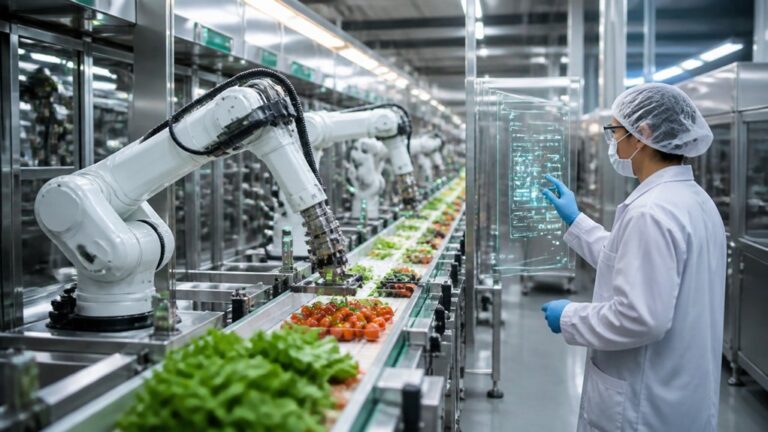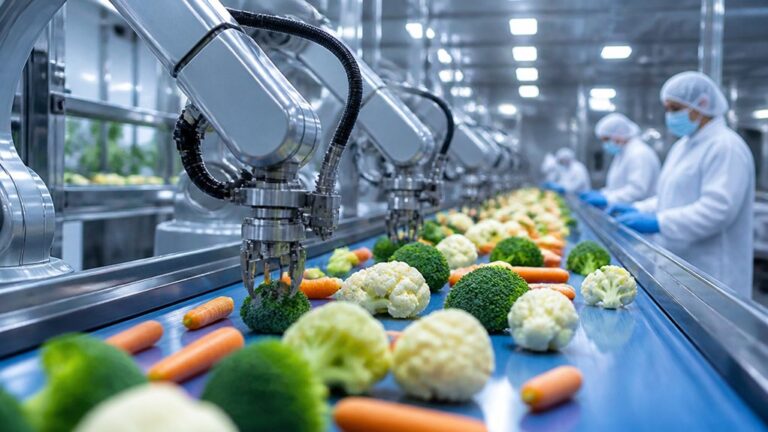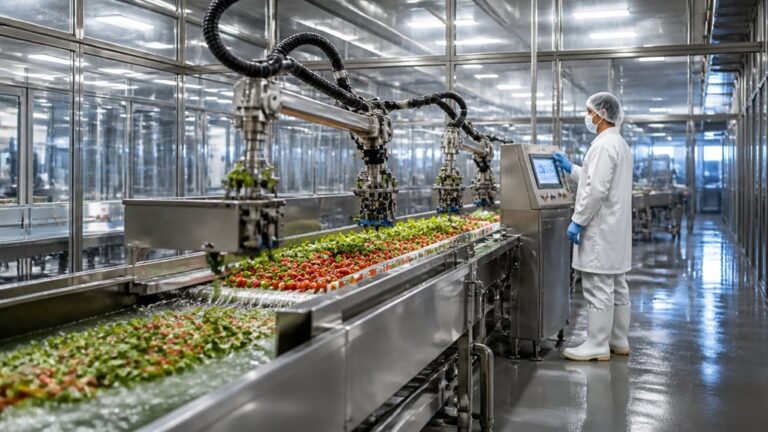
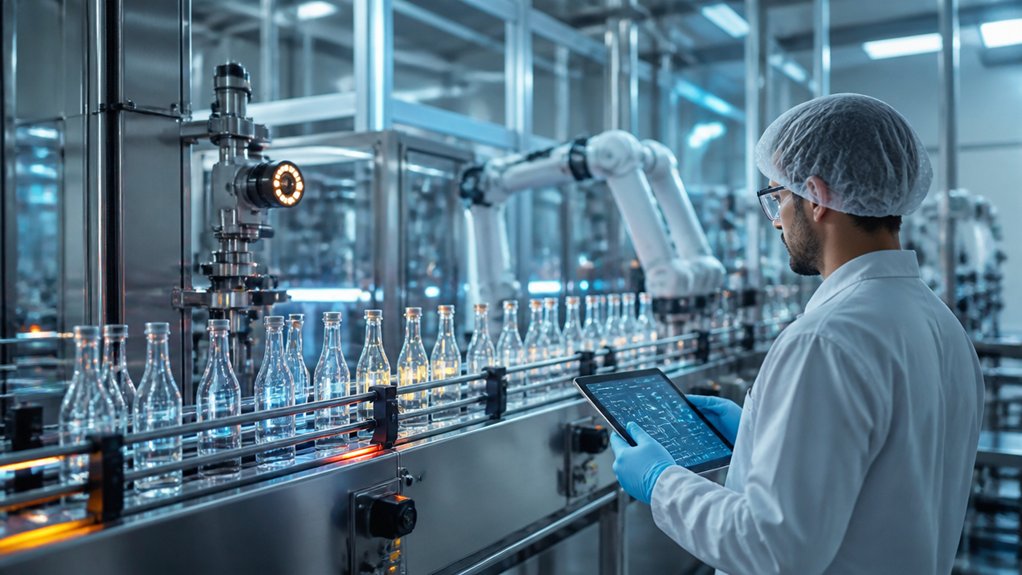
Your production line is becoming a nervous system, sensing changes and responding before small problems spread. With Industry 4.0, connected machines, AI, and real-time data help you improve quality, trace ingredients, and reduce downtime. But the biggest gains don’t come from technology alone; they depend on how well you connect data, people, and decisions across the factory.
What Is Industry 4.0 in Food Manufacturing?
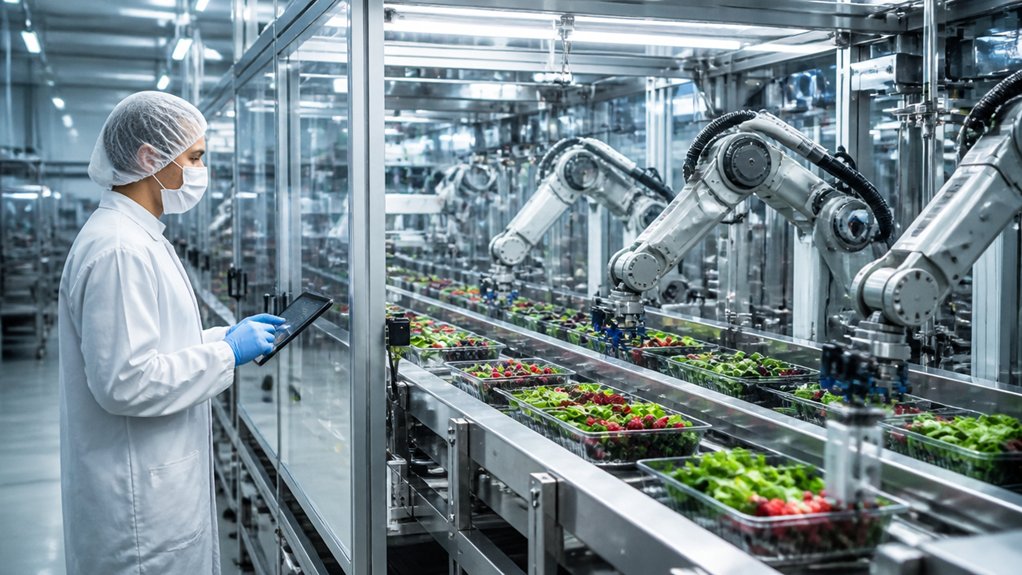
Industry 4.0 in food manufacturing connects machines, software, sensors, and people through data-driven systems. You use this integrated model to coordinate decisions across production, quality, maintenance, and planning.
Rather than treating technology as a collection of isolated tools, you link digital platforms with operational processes, enabling teams to respond to changing demand and resource constraints. Shared data can support the Supply Chain by improving coordination among suppliers, processors, and distributors, while helping you align materials and capacity.
Successful adoption also depends on people: Workforce Training equips employees to interpret digital information, use new tools, and adapt established procedures. With clear governance, interoperable systems, and skilled teams, you can build a more responsive manufacturing operation.
Industry 4.0 provides the foundation for continuous improvement, informed decisions, and stronger collaboration across your business.
How Connected Machines Track Food Production?
Connected machines stream production data to your dashboards in real time, revealing line performance, process conditions, and emerging deviations.
By linking each batch to its ingredients, equipment, and process records, you can trace products end to end.
This visibility helps you respond quickly to quality issues and verify compliance.
Real-Time Production Data
How can manufacturers see what’s happening across a food production line as it happens? With connected equipment, you can stream operating data from mixers, fillers, ovens, and packaging systems to a central platform.
Sensor integration captures temperature, pressure, flow, speed, and equipment status at the source. Gateways transmit these readings continuously, while edge processing filters noise and flags deviations before they disrupt production.
You can use data visualization dashboards to compare live performance with setpoints and production targets. Clear alerts help operators respond quickly to a temperature drift, a stalled conveyor, or an unexpected cycle-time change.
End-to-End Traceability
When connected machines capture each production step, you can trace ingredients and finished products from receipt through processing, packaging, and shipment. Sensors, scanners, and manufacturing execution systems record lot IDs, timestamps, equipment settings, and operator actions, linking each event to a digital batch record.
You can follow that record across facilities, identify affected products quickly, and isolate only the lots involved when a quality issue arises. Blockchain integration can preserve shared, tamper-evident records among suppliers, processors, and distributors, while access controls protect sensitive data.
With Supply chain transparency, you can verify provenance, confirm handling conditions, and provide auditors or customers with reliable evidence. Automated alerts flag missing scans, temperature excursions, or process deviations, helping your team resolve gaps before products move downstream.
Traceability turns production data into actionable control.
How AI Improves Food Quality Checks?
As food and beverage production accelerates, AI helps manufacturers inspect products more consistently and catch defects earlier. Machine-vision cameras and deep-learning models assess colour, shape, fill levels, seals, and surface texture at production speed.
You can use these systems to flag subtle deviations that manual checks may miss, improving AI accuracy across changing product lines. Calibrated models support reliable defect detection while reducing false rejects and limiting waste.
When a system identifies an anomaly, it can trigger an alert or divert the item for review without slowing the line. You can also analyse inspection results to spot recurring process issues and refine quality thresholds.
Human operators remain essential: they validate uncertain cases, update models, and oversee compliance. This combination gives you faster, more repeatable checks and stronger control over product quality.
How Digital Traceability Tracks Ingredients?
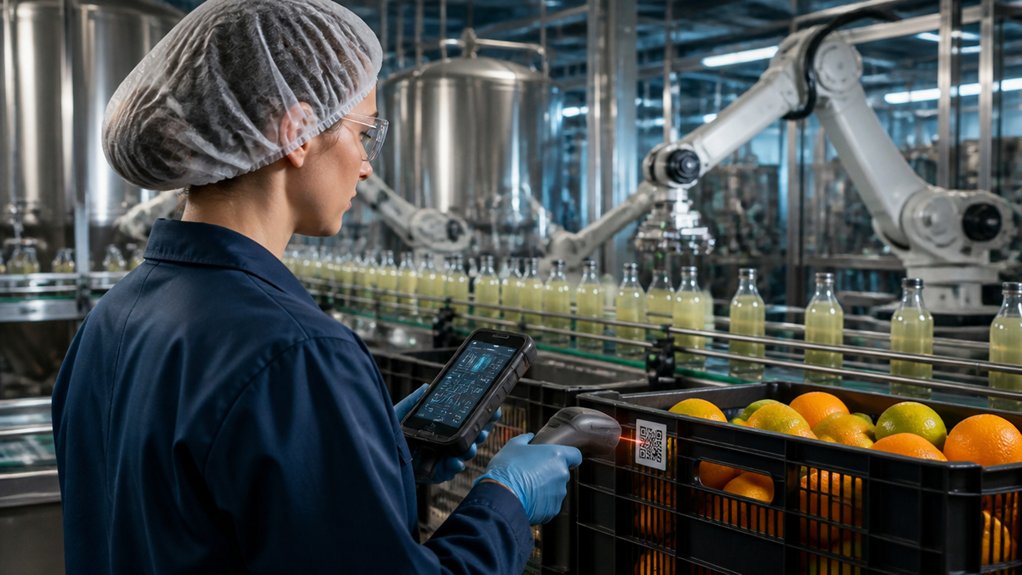
AI inspection verifies finished products, while digital traceability links them to the ingredients and processes behind them. You can assign each lot a unique digital identity and capture supplier, origin, harvest, and processing data at every handoff.
Sensors and connected systems record timestamps, temperatures, locations, and batch transformations, creating a searchable chain of custody. With ingredient provenance at your fingertips, you can verify claims, isolate affected lots, and respond quickly to quality or safety issues.
Blockchain verification can make shared records tamper-evident, helping suppliers, manufacturers, and retailers trust the same transaction history.
Integrating traceability with your manufacturing execution and enterprise systems lets you connect raw materials to finished batches without relying on disconnected spreadsheets. You gain faster audits, more targeted recalls, and clearer visibility across the supply network.
How Predictive Maintenance Prevents Downtime?
Predictive maintenance uses sensor data and machine-learning models to detect equipment wear before it causes a breakdown. In your plant, equipment monitoring tracks vibration, temperature, pressure, and motor current across mixers, fillers, conveyors, and refrigeration units.
Predictive analytics compares these signals with operating histories to identify abnormal patterns and estimate component failure risk. You can then schedule inspections or replace parts during planned sanitation or production changeovers, rather than react to an unexpected stoppage.
Maintenance teams receive alerts with fault indicators, asset locations, and recommended actions, helping them prioritize work and prepare the right tools. Integrating models with computerized maintenance systems also records interventions, refining future predictions.
This approach protects line availability, reduces emergency repairs, and helps you maintain reliable production schedules without replacing equipment solely on fixed service intervals.
How Real-Time Data Cuts Food Waste and Energy Use?
When production data updates in real time, you can correct process deviations before they waste ingredients or energy. Sensors track temperature, flow, fill levels, and product quality across your lines, while analytics flag readings outside validated ranges. You can adjust mixing, cooking, cooling, or packaging parameters before a small variation causes an entire batch to fail.
This supports Food waste reduction by limiting rejects, spills, and overprocessing. Connected meters also show where Energy consumption rises unexpectedly, such as during inefficient heating or idle equipment. You can tune setpoints and operating cycles using live measurements rather than delayed reports, maintaining product specifications with less power and water.
How Smart Factories Plan for Customer Demand?
By combining sales forecasts, order histories, inventory levels, and production capacity, smart factories can align output with customer demand. Connected planning systems analyze these inputs continuously, helping you anticipate demand shifts before they disrupt production.
Market forecasting models combine historical sales with promotions, seasonality, regional trends, and external signals to refine production schedules. When demand changes, automated workflows can adjust batch sizes, procurement timing, and line assignments while preserving quality controls and traceability.
You can also use Customer personalization data, such as preferred flavors, pack sizes, and dietary requirements, to plan targeted product variants without overproducing. This coordination gives you a clearer view of available capacity and likely orders, so you can prioritize profitable products, respond faster to retailers, and maintain dependable service as customer preferences evolve across channels and markets.
How Can Food Manufacturers Adopt Industry 4.0?
Once demand planning is connected to production, you can adopt Industry 4.0 by linking equipment, sensors, and software across your operations. Start with a focused pilot, such as monitoring a packaging line, and define measurable targets for uptime, yield, and energy use.
Add industrial IoT sensors and connect them to a secure platform that integrates production, quality, and maintenance data. Use analytics to detect anomalies, predict equipment failures, and adjust schedules before disruptions spread across your supply chain.
Scale only after validating results, interoperability, cybersecurity, and data governance. You’ll also need workforce training so operators can interpret dashboards, respond to alerts, and collaborate with automated systems.
Assign clear ownership for each technology, review performance regularly, and refine workflows. This stepwise approach builds reliable capabilities without forcing costly, disruptive changes across your plant.
About the Author