Your beverage concept is a bridge between a real consumer need and a credible functional benefit. Start by identifying an unmet occasion or pain point through market research, trend analysis, and customer feedback. Then pair a familiar flavor with botanicals or other active ingredients, checking taste, stability, and regulatory requirements. Your format and positioning should fit how people buy and use the drink. Before you scale, one test can reveal whether the concept works beyond the pitch.
Find a Customer Need Your Drink Can Meet
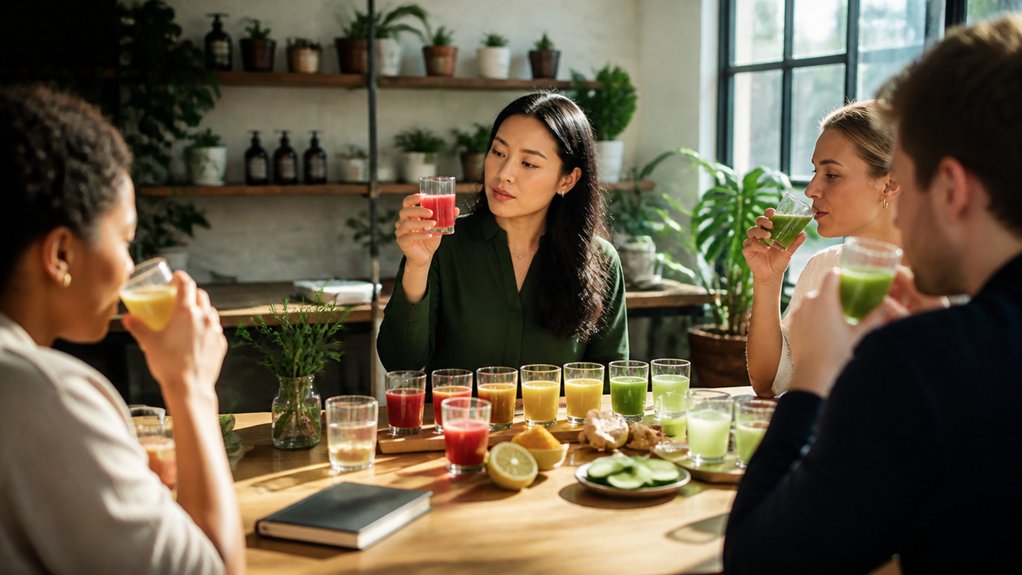
Before developing a functional drink, identify a specific need that existing products don’t meet. Examine consumer research, search trends, product reviews, and interviews to find recurring frustrations, such as excessive sweetness, unclear ingredient claims, or formats that don’t fit daily routines.
Treat these signals as hypotheses, then test them with your intended buyers.
Use Market segmentation to compare needs across groups defined by behavior, occasion, age, or dietary preference. Assess each segment’s size, purchasing frequency, willingness to pay, and access through relevant retail or digital channels.
Don’t mistake a vocal niche for a viable market; validate demand with surveys, interviews, and small-scale purchase tests.
Your findings should guide branding strategies: communicate the problem you address in language customers recognize. Keep claims specific, substantiated, and compliant with applicable regulations.
Develop a Functional Drink Concept
Once you’ve validated a customer need, turn it into a focused drink concept by defining its intended benefit, target user, consumption occasion, and format.
Translate the benefit into a measurable product brief: specify active ingredients, target dose per serving, and evidence supporting the proposed effect.
Check ingredient stability, sensory impact, and interactions before setting a formulation target.
Choose a format and serving size that fit how and when your customer will drink it, then assess production feasibility, shelf life, and cost.
Keep claims within applicable regulations; don’t imply disease treatment or promise outcomes beyond the evidence.
Align Marketing strategies with the product’s substantiated benefit and audience, and use Packaging innovations to protect ingredient quality, communicate serving information, and support convenient use.
Test the concept with target users before committing to scale.
Pair Familiar Flavors With Unexpected Botanicals
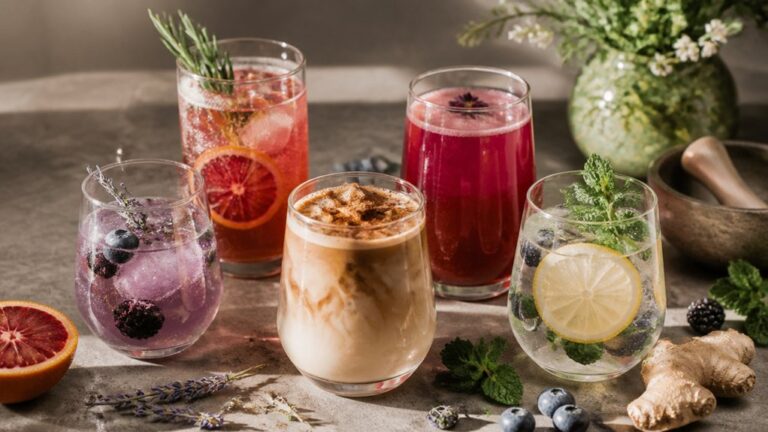
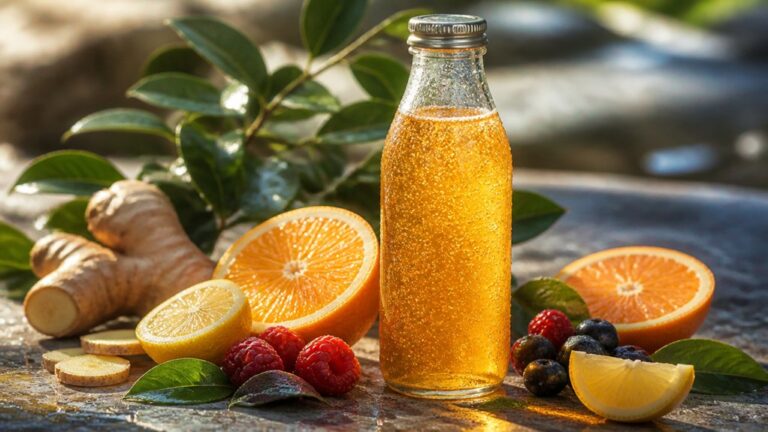
Pairing a familiar flavor with an unexpected botanical can make a functional drink feel approachable while giving it a distinctive edge. Start with a flavor consumers already recognize, such as citrus, berry, or ginger, then add a botanical whose aroma or bitterness creates contrast. This flavor pairing gives you a clear sensory anchor without making the drink seem conventional.
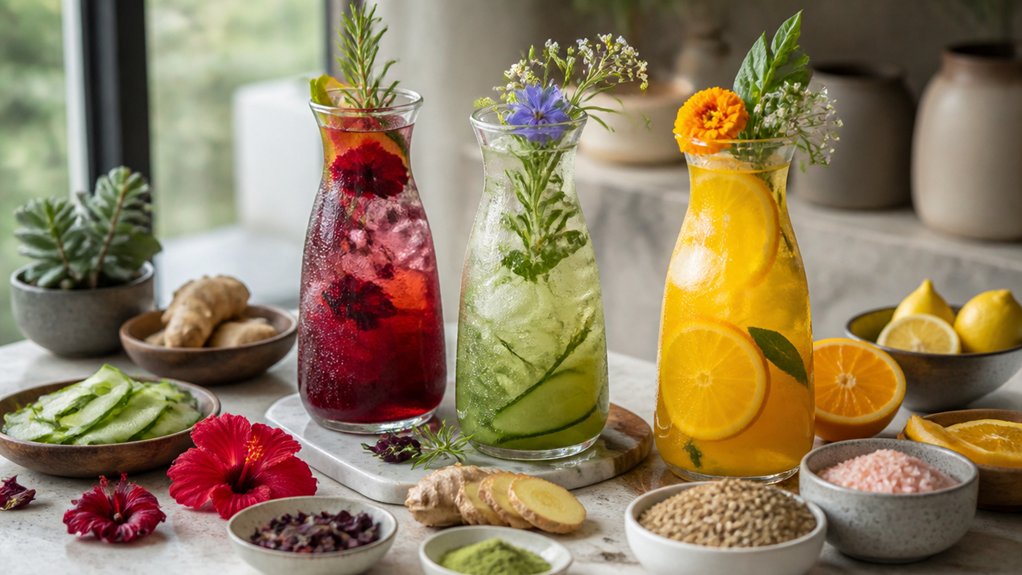
Use botanical blending to balance intensity, not simply stack ingredients. Hibiscus can sharpen berry notes with tartness, while rosemary can add a resinous lift to lemon. Test each combination at serving temperature and across realistic sweetness levels; sugar can mask bitterness, and acidity can change perceived aroma.
Keep the botanical’s character perceptible but not overpowering. Consumer tastings can reveal whether the pairing feels coherent, novel, and repeatable, helping you refine the sensory experience before finalizing the concept.
Choose Ingredients, Format, and Positioning
A compelling flavor profile is only the starting point; ingredient choices, drink format, and market position must work together. Choose active ingredients at doses supported by human research, then check solubility, stability, taste, and regulatory limits in your target market.
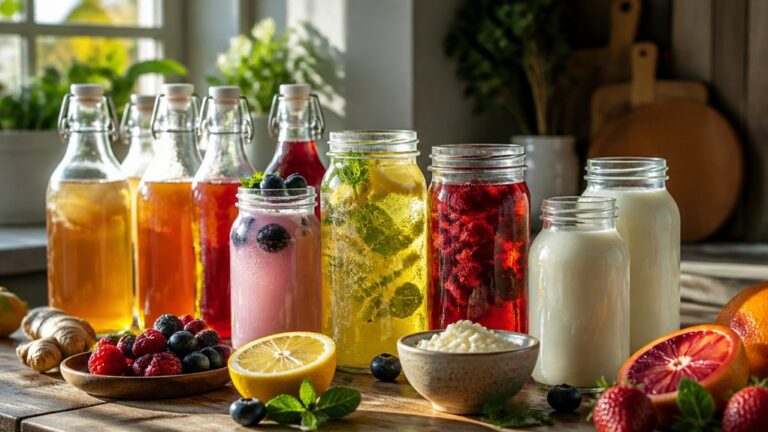
Match the format to the use occasion: a ready-to-drink can suits convenience, while a powder can reduce shipping weight and allow flexible serving sizes. Account for pH, heat processing, light exposure, and shelf life before selecting ingredients or packaging.
Packaging innovation can signal portability, premium quality, or sustainability, but materials must protect product integrity and meet recycling expectations where you sell.
Define a specific buyer and benefit, such as hydration for active adults, rather than making broad wellness claims. Align marketing strategies and label language with substantiated benefits and local regulations.
Test Your Drink Idea Before Scaling
Before investing in a full production run, test your drink with target customers and verify that it performs as intended. Recruit people who match your intended buyer, then run blind tastings to measure flavor, aroma, sweetness, and aftertaste.
Follow with branded samples to assess whether your concept and Packaging design support the price point and intended use occasion. Use structured surveys, purchase-intent questions, and repeat-taste tests; don’t rely on compliments alone.
If your beverage contains active ingredients, confirm dosage, stability, pH, and microbial safety through qualified laboratory testing and appropriate shelf-life studies. Compare results across batches, and record clear pass criteria before testing begins.
Use findings to refine the formula, claims, serving format, and Marketing strategies. Pilot production only after the drink meets sensory, safety, and commercial thresholds; then monitor feedback and complaints after launch.
About the Author