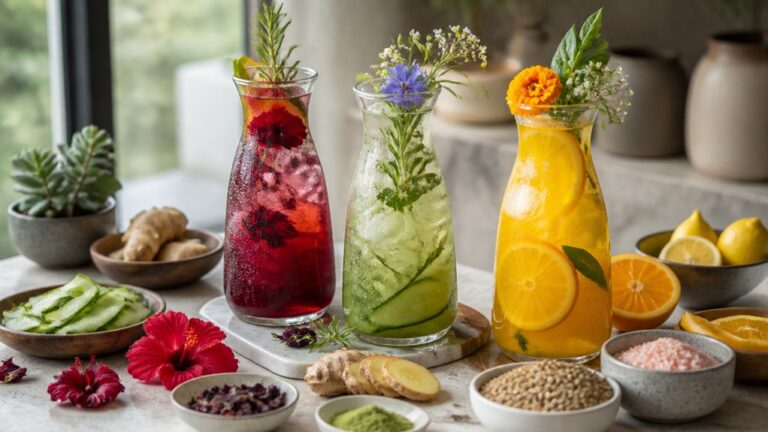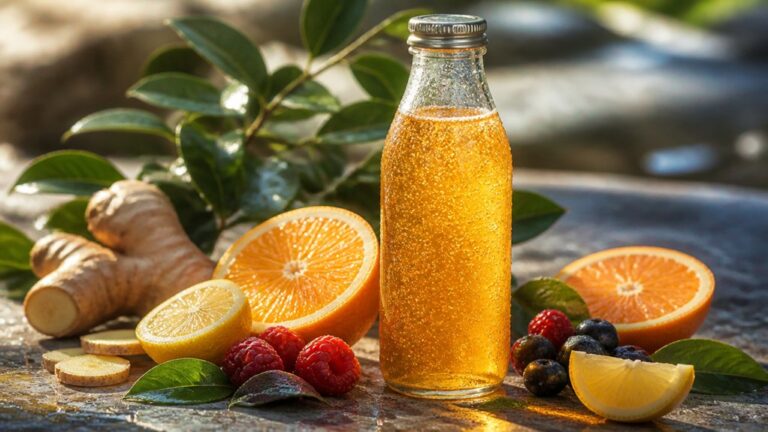
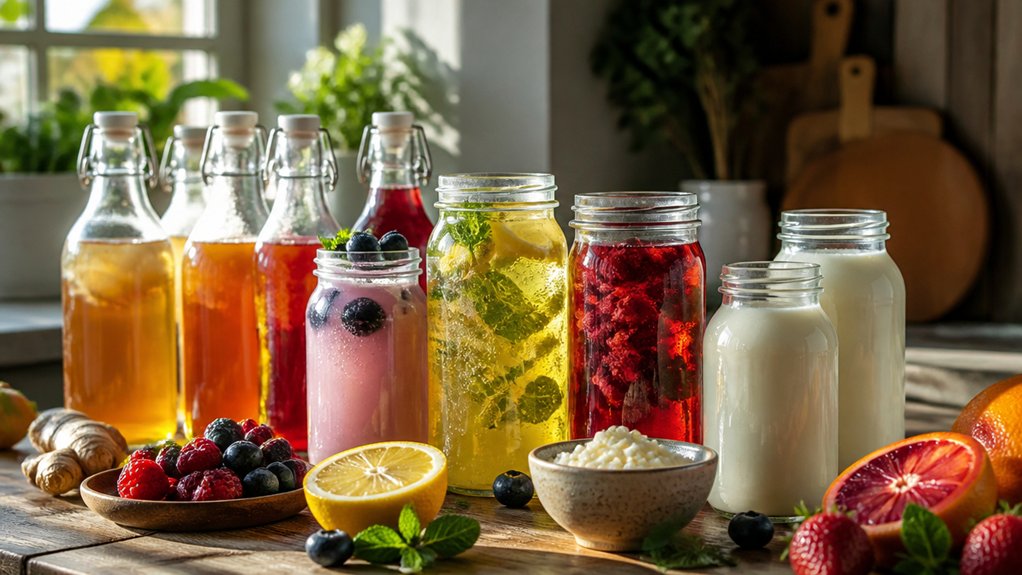
Your gut’s beverage aisle has become a fermentation lab, with kombucha, kefir, and other cultured drinks offering distinct flavors and live microbes. But “probiotic” on a label doesn’t guarantee the same cultures, sugar levels, or benefits in every bottle. As you compare how these drinks are made and what they contain, one small label detail may change which option suits you best.
What Counts as a Gut Health Drink?
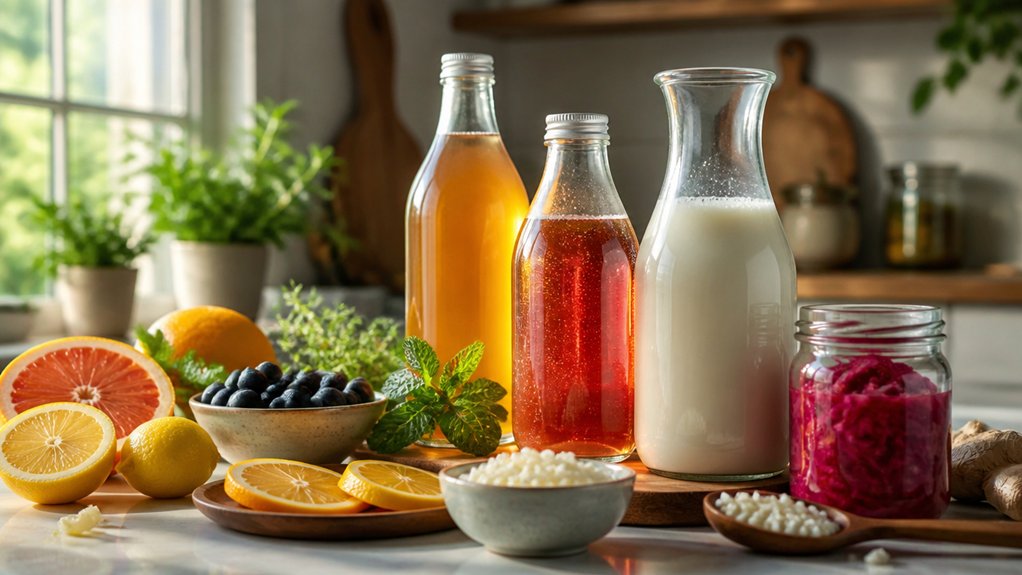
A gut health drink isn’t defined by a trendy label; it’s a beverage that may support digestion or the gut microbiome through ingredients such as live cultures, fiber, or specific plant compounds. You’ll find options ranging from cultured dairy to drinks with added prebiotic fibers or botanicals.
Their effects depend on the ingredients, dose, and your own health—not the packaging.
To assess a product, check whether it contains live microbes, a meaningful source of fiber, or compounds studied for digestive effects. Don’t assume every fermented drink delivers probiotics, or that more cultures guarantee better results. These are common Probiotic myths; evidence varies by strain and product.
Fermentation history offers useful context, but age-old use doesn’t prove a modern drink works. Choose based on transparent labeling, tolerability, and credible evidence, not wellness promises.
How Fermentation Shapes These Drinks
When microbes transform sugars in milk, tea, or vegetables, they create the tang, bubbles, and changing nutrient profile that distinguish fermented drinks. You can think of the Fermentation process as a controlled handoff: yeasts and bacteria consume available sugars, then produce acids, gases, and other compounds.
The exact results depend on the ingredients, starter cultures, temperature, and time, so kefir, kombucha, and fermented vegetable drinks develop distinct profiles.
These changes can also affect digestibility and nutrient availability. Some microbes break down lactose, while fermentation may increase certain vitamins or release compounds from plant foods.
Probiotic development depends on the organisms that survive production and storage; not every fermented drink contains live microbes when you drink it. Check labels and handling guidance, because heat treatment and refrigeration can alter what reaches your glass.
What Makes Kombucha Fizzy and Tangy?
When you sip kombucha, fermentation’s carbon dioxide gives it its lively fizz.
Acids formed as microbes transform sugars create its signature tang.
Yeast also shapes the drink’s flavor by producing aromatic compounds.
Fermentation Creates Carbonation
As yeast and bacteria ferment sweetened tea, they consume sugars and produce acids and carbon dioxide. In a sealed bottle, that gas dissolves into the liquid, building pressure and giving you kombucha’s lively fizz. Open it too quickly, and the sudden pressure release can send bubbles—and tea—over the rim.
Your brewing choices shape carbonation. Fermentation techniques such as a brief second fermentation in a tightly capped bottle let microbes generate more carbon dioxide. You can add fruit for fermentable sugars, but measure carefully: extra fuel may create excessive pressure.
Use bottles designed to withstand carbonation, leave headspace, and chill them before opening; cold liquid holds gas better and slows fermentation.
Across its cultural origins, kombucha has taken many forms, yet this microbial process remains the source of its natural sparkle.
Acids Build Tang
While microbes create kombucha’s fizz, their acids give it tang. As you sip, acetic acid brings a sharp, vinegar-like edge, while gluconic and lactic acids can add softer, fruitier or creamy notes. These compounds form as bacteria transform sugars during fermentation, lowering the drink’s pH and shaping its tartness.
You can taste how the balance shifts with brewing time: a shorter ferment often tastes gentler, while a longer one tends to grow more acidic. Temperature, tea, and sugar levels also influence the result, so fermentation techniques help producers steer flavor profiles without relying on added flavorings.
For you, that means kombucha’s tang isn’t one fixed sensation; it’s a spectrum, from bright and crisp to deeply sour. Acidity also helps limit some unwanted microbes, though it doesn’t guarantee safety.
Yeast Shapes Flavor
Acids set kombucha’s tang, but yeast helps build its flavor and fizz. As you brew, yeast consumes sugars and releases carbon dioxide, which creates the drink’s natural sparkle. It also produces ethanol, a substrate bacteria can convert into acids, linking yeast activity to the tartness you taste.
The balance depends on time, temperature, sugar, and the cultures in your jar.
Yeast diversity matters: different strains can generate distinct aromas, from fruity and floral notes to subtle spice. This microbial mix drives flavor development alongside bacteria, so each batch can taste and feel a little different.
If you want a brighter, livelier brew, monitor fermentation rather than relying on a fixed schedule. Taste it, watch for bubbles, and chill it when the tang and fizz suit you.
Use clean equipment to keep the culture balanced.
What Makes Kefir Creamy and Cultured?
Kefir gets its creamy texture and tangy, cultured character from milk fermented with kefir grains—living communities of bacteria and yeasts held together in a natural matrix. During Dairy fermentation, microbes consume lactose and produce lactic acid, lowering the milk’s pH. That acidity causes casein proteins to gather into a soft network, thickening the drink without turning it into a solid.
You’ll notice the result varies: fermentation time, temperature, milk composition, and grain activity all shape kefir’s body and sharpness.
Its Probiotic diversity comes from the grains’ many interacting microorganisms, though the exact mix can differ by batch and method. As you sip, you’re tasting more than sourness: microbial acids and other fermentation compounds create layered aromas and a lively finish.
Choose plain kefir when you want its cultured character without added sugar.
What About Water Kefir and Other Fermented Drinks?
Milk kefir isn’t the only fermented drink: water kefir cultures sugar water or juice with translucent grains made of bacteria and yeasts. You can flavor the finished drink with fruit, herbs, or spices, though fermentation changes its sweetness and acidity. Its flavor profiles range from lightly tart and sparkling to fruity and complex, depending on ingredients, time, and temperature.
Other traditions offer distinct options: kombucha ferments sweetened tea with a microbial culture, while fermented rice drinks appear in several food cultures. Their cultural origins reflect local ingredients, techniques, and tastes—not a single path to wellness.
Fermentation can produce acids and live microbes, but the organisms and amounts vary by batch. You shouldn’t assume every drink delivers a proven health benefit; choose products made and stored safely, and check labels for added sugar.
How Do These Gut Health Drinks Compare?
Although kombucha, water kefir, and milk kefir all rely on fermentation, they differ in ingredients, nutrients, microbes, and taste.
Kombucha starts with sweetened tea, so you’ll notice tart, lightly fizzy notes and some tea-derived compounds.
Water kefir ferments sugar water or juice, creating a milder, bubbly drink; its nutrient profile depends on what you add.
Milk kefir uses dairy, delivering protein and calcium alongside live cultures, with a tangy, creamy texture.
Each drink’s microbes vary by starter and production, so don’t assume they offer identical effects.
Your choice can hinge on dietary needs and sensory preference.
Flavor combinations, from ginger-citrus kombucha to berry water kefir, broaden the options.
Meanwhile, packaging innovations such as resealable bottles can make chilled, carbonated drinks easier to carry and enjoy.
What Should You Check on the Label?
Before you choose a gut health beverage, check whether the label names its live cultures and specific strains—“probiotic” alone doesn’t tell you which microbes it contains.
Compare added sugars and sweeteners, since amounts can vary widely between products.
Then scan the full ingredient list and serving size to see what you’re actually getting.
Live Cultures and Strains
Check whether the product says its cultures remain live through the end of shelf life, not merely at manufacture. Storage conditions and processing can affect viability, so follow refrigeration guidance when provided.
A clearly identified culture list helps you compare Probiotic diversity without assuming that more strains mean greater benefit. Fermentation techniques also shape which microbes survive in the finished drink; the beverage’s name alone can’t confirm its contents.
If the label gives no strain details or live-culture information, contact the maker before treating it as a reliable source of specific microorganisms.
Added Sugars and Sweeteners
Live-culture details tell you which microbes a beverage may deliver; the nutrition label shows what else comes with each serving.
Check the “Added Sugars” line to see how much sugar manufacturers have added, not just the total sugars naturally present in milk or fruit. The FDA’s Daily Value is 50 grams on a 2,000-calorie diet, but your needs may differ. A single bottle can supply a substantial share before you’ve had a meal.
Sweeteners impact flavor and nutrition differently. Sugar, honey, and syrups still count as added sugars; “natural” doesn’t make them sugar-free. Non-nutritive sweeteners can reduce sugar, but they may affect taste and tolerance, and evidence doesn’t show that every option improves gut health.
Compare similar drinks, check grams per serving, and choose one whose sweetness fits your preferences and overall eating pattern.
Ingredients and Serving Size
Once you’ve compared sweetness, scan the ingredient list and serving size to see what else each drink delivers. Look for live cultures, named strains, and clear storage directions; fermentation doesn’t guarantee that microbes remain alive through processing. Check for fruit juice, herbs, caffeine, or added probiotics, especially if you manage allergies, sensitivities, or medication interactions.
The label’s serving size matters: a bottle may contain two servings, so calories, sugars, and cultures per serving can understate what you’ll consume if you finish it.
Compare flavor profiles alongside ingredients: ginger or berry can signal flavoring, not necessarily meaningful amounts of those foods. Review packaging options, too. Single-serve bottles help with portion control, while larger containers may require refrigeration and careful measuring.
Choose a product whose ingredients, culture claims, and serving guidance fit your needs.
How Do You Choose a Drink That Fits?
To choose a gut health beverage that fits, start with what you want it to do—add live cultures, provide fiber, or simply replace a sugary drink. Then check the label: look for named cultures if you want probiotics, and compare added sugars, fiber, and caffeine with your needs. Claims like “supports digestion” don’t guarantee a specific benefit, so prioritize transparent ingredients and evidence-backed information.
Next, consider what you’ll enjoy consistently. Flavor combinations can make tart, earthy, or fermented drinks more appealing, while packaging options may suit your budget, accessibility, or preference for single servings.
If you’re sensitive to acidity, carbonation, or certain ingredients, try a small amount first and notice how you feel.
Choose a drink that complements your usual diet, not one that promises to replace balanced meals or medical care.
How Should You Store and Serve Them?
Storage depends on the drink: keep refrigerated products cold as directed, especially those labeled “live cultures,” and don’t leave them at room temperature longer than the package allows. Check the label for expiration dates, refrigeration instructions, and guidance after opening; different microbes and formulations need different care. These Storage tips help preserve quality, though they can’t guarantee a specific probiotic effect.
Packaging techniques also matter. Sealed, opaque containers can limit exposure to oxygen and light, while pressure-resistant bottles help contain naturally produced carbonation. Don’t shake a fizzy drink; open it slowly over a sink, since fermentation can build pressure. Serve kombucha or kefir chilled in a clean glass, and pour only what you’ll drink. Reseal the container promptly, use clean utensils, and avoid drinking directly from shared bottles.
If the package is swollen, leaking, or smells unexpectedly off, discard it.
About the Author