
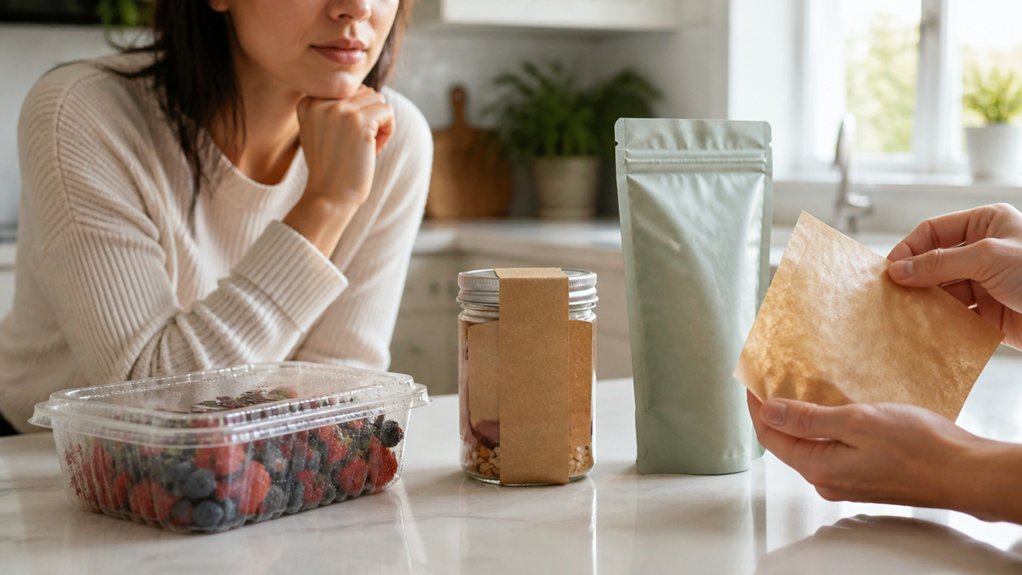
Packaging upgrades don’t have to mean higher costs or added complexity; well-chosen designs can improve safety, shelf life, and resource efficiency at once. You’re seeing progress in recyclable and compostable materials, smart sensors, active preservation, and practical closures. Each option involves trade-offs in performance, infrastructure, and price, so the right choice depends on the product and supply chain. The most consequential innovations may be the ones that solve several of these constraints together.
What Do Food Packaging Innovations Improve?

Food packaging innovations improve safety, shelf life, and supply-chain efficiency by limiting contamination, slowing spoilage, and protecting products from physical damage. When you select products, effective Packaging design helps preserve quality through barriers that control oxygen, moisture, light, and microbial exposure. These features can reduce oxidation, texture loss, and pathogen transfer, depending on the food and storage conditions.
Material innovation also gives manufacturers options such as recyclable structures, compostable materials, and high-performance films. You benefit when packaging matches a product’s specific sensitivity and distribution needs, rather than adding unnecessary layers.
Strong seals and impact-resistant formats can prevent leaks and breakage during handling, while right-sized packs may reduce material use and transport volume. Together, these improvements support consistent product quality, lower food waste, and more efficient movement from production to retail.
How Does Smart Packaging Track Food?
Smart packaging uses sensors to track temperature, humidity, and other conditions that affect food quality.
You can read freshness indicators that respond to spoilage-related changes, such as shifts in pH or gas levels.
Scannable codes link each package to traceability data, helping you verify its origin and handling history.
Sensors Monitor Conditions
As food moves through storage and distribution, smart packaging uses embedded sensors to track conditions that affect quality and safety. Through sensor integration, you can monitor temperature, humidity, oxygen, carbon dioxide, and package pressure in real time. These measurements help identify exposure to conditions that may accelerate microbial growth, oxidation, moisture loss, or structural failure.
Flexible printed sensors, RFID tags, and wireless data loggers can transmit readings to scanners or cloud platforms, depending on the package design. You can use condition monitoring records to assess handling practices, verify cold-chain performance, and investigate deviations during transport.
Sensor accuracy, calibration, power supply, placement, and food-contact compliance determine whether readings support reliable decisions. By connecting sensor data with shipment records, you can trace environmental changes across distribution and target corrective action before compromised products reach consumers.
Indicators Reveal Freshness
When spoilage changes a product’s chemistry, freshness indicators translate those changes into visible signals. Colorimetric labels, for example, respond to volatile amines released as protein-rich foods deteriorate. You can read a shift in hue to assess freshness without opening the package.
Other indicators detect pH changes, oxygen exposure, or microbial metabolites, using dyes or responsive films that change appearance at defined thresholds.
These signals complement temperature monitoring: while sensors record storage conditions, indicators show how the food itself is changing. You can use that evidence to make informed decisions, reduce premature disposal, and avoid relying solely on printed dates.
Designers must validate indicator accuracy across food types and storage environments. They also balance legibility with packaging aesthetics, ensuring labels remain easy to interpret without compromising safety, material compatibility, or flavor preservation.
Codes Enable Traceability
Once a package carries a unique QR code or RFID tag, each scan can link it to a digital record of its origin, processing, and movement through the supply chain.
With QR code integration, you can access batch details, handling records, and temperature data through a smartphone, while authorized partners update records at key checkpoints.
RFID readers can capture identifiers automatically, reducing manual entry and improving inventory visibility.
Blockchain authentication can help protect shared records from unauthorized changes, but it doesn’t guarantee that the original data is accurate; verification still depends on reliable sensors, procedures, and audits.
When a recall occurs, linked lot and shipment records help you trace affected products faster and narrow the scope.
Clear data standards and secure access controls make these systems more interoperable and useful across suppliers, processors, retailers, and consumers.
Why Are Recyclable Food Packages Gaining Ground?

When you choose recyclable food packaging, you can help reduce landfill waste and demand for virgin materials, depending on local recycling systems.
You’re also responding to consumer demand: surveys consistently show that many shoppers prefer packaging with lower environmental impacts.
These pressures are pushing food manufacturers to assess recyclability alongside product protection and cost.
Environmental Benefits
Why are recyclable food packages gaining ground? They help you reduce material waste and conserve resources when collection systems recover packaging for reuse. Recycling aluminum, glass, and suitable plastics can require less energy than producing these materials from virgin feedstocks, though results depend on local infrastructure, transport, and processing efficiency.
By choosing packages designed for established recycling streams, you can support material recovery and limit landfill disposal.
Environmental benefits also depend on package design and end-of-life conditions. Lightweight formats may cut transport emissions, while excessive layers can complicate sorting. Biodegradable materials can break down under specified conditions, but they don’t automatically replace recycling or prevent litter.
To assess a package’s carbon footprint, consider its full life cycle, including production, distribution, food protection, and disposal. Effective packaging preserves food while minimizing total environmental impacts.
Consumer Demand
As consumers pay closer attention to packaging waste, demand for recyclable food packages is growing. You’re more likely to choose products when labels clearly identify materials and explain local recycling options. This preference reflects research linking environmental concern, perceived convenience, and purchase intent; recyclable packaging gains ground when disposal feels practical, not burdensome.
Packaging aesthetics also shapes your decision. You expect recyclable formats to protect freshness, open easily, and look appealing, so sustainability alone may not secure repeat purchases. Manufacturers must balance material recovery with barrier performance, durability, and shelf appeal.
Consumer education can close knowledge gaps about resin codes, sorting rules, and contamination. Clear, evidence-based instructions help you dispose of packages correctly and strengthen trust in environmental claims. When brands pair functional design with accessible guidance, they make recycling easier and give you a measurable reason to favor their products.
When Do Compostable Food Packages Work?
Compostable food packages work only when their materials, food-contact conditions, and disposal route align. You should verify that the package meets relevant composting standards, such as ASTM D6400 or EN 13432, which assess disintegration, biodegradation, and ecotoxicity under specified conditions.
Certification doesn’t guarantee breakdown in every setting: many products need the sustained heat, moisture, oxygen, and microbial activity of an industrial composting facility. Home compost piles may not reach those conditions, and landfills typically restrict oxygen, slowing biodegradation processes.
Check whether your local composting program accepts the item; facilities often reject compostable packaging because it can contaminate conventional recycling or exceed processing limits. Also confirm that coatings, inks, adhesives, and food residues fit the facility’s requirements.
When collection and processing match the package design, composting can divert suitable packaging from disposal.
How Can Reusable Packaging Cut Food Waste?
Reusable packaging can cut food waste when its design protects food and supports repeated, reliable use. Reusable containers can limit crushing, leakage, and exposure during transport, helping you preserve product quality from processing to purchase.
Their seals and insulation must match the food’s moisture, temperature, and handling needs; otherwise, damage or spoilage may offset reuse benefits.
You can also reduce waste by choosing durable formats that clean efficiently and return through convenient collection systems. Standardized sizes improve stacking and storage, while clear return instructions help customers participate.
Track loss, breakage, wash-water use, and reuse cycles to assess the Packaging lifecycle, not just the package’s first trip. Reuse cuts food waste only when containers circulate often enough, sanitation protects food safety, and logistics don’t delay delivery or increase product damage.
Measure food discarded per shipment to verify results.
How Does Active Packaging Keep Food Fresh?
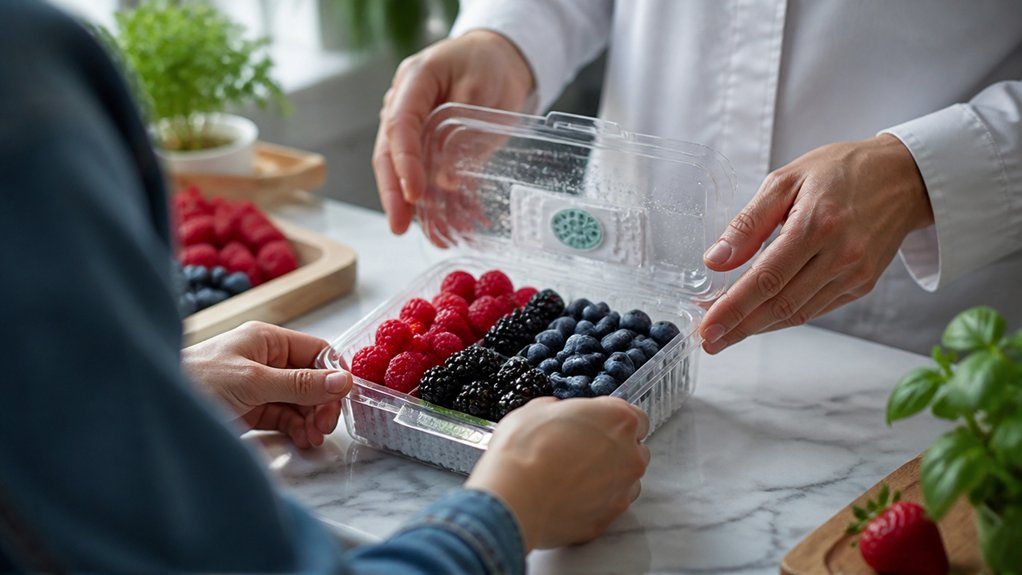
Active packaging extends food freshness by interacting with the product or its internal atmosphere to slow deterioration. Unlike passive barriers, these systems absorb or release compounds that influence spoilage.
Oxygen scavengers reduce oxidation, helping limit rancidity and color changes in oils, meats, and prepared foods. Carbon dioxide emitters can suppress microbial growth in selected products, while antimicrobial films release agents at controlled rates to inhibit surface contamination.
Desiccants and humidity regulators provide moisture control, reducing condensation that can encourage mold or excess drying that harms texture. These mechanisms support flavor preservation by limiting chemical reactions and microbial activity that alter aroma and taste.
You benefit when packaging matches the food’s specific risks: effectiveness depends on formulation, contact conditions, temperature, and storage time. Manufacturers validate performance through shelf-life and safety testing.
Which Food Packaging Features Make Use Easier?
When packaging is easy to open, portion, and reseal, you can handle food with less effort and reduce spills or waste. Convenience features such as tear notches, peelable seals, and resealable closures simplify access while helping you control how much you use.
Clear measurement marks and dispensing spouts support accurate pouring, so you’re less likely to overfill a bowl or create messes.
Ergonomic designs also improve handling: textured surfaces, shaped grips, and easy-pull tabs can help you open containers with wet hands or limited dexterity. For products you use repeatedly, one-handed operation can make preparation more efficient.
Manufacturers can test opening force, grip comfort, and closure performance with users to identify barriers. These design choices make everyday tasks more manageable without changing the food itself.
How Can Food Packaging Stay Safe and Affordable?
Convenient packaging must also protect food without adding unnecessary cost. You can balance safety and price by matching barrier performance to the product’s risks. Moisture, oxygen, light, and microbial exposure each require specific controls; excessive layers may raise costs without extending shelf life.
Select Cost effective materials, such as recyclable polymers or paperboard with validated coatings, only after testing their compatibility with food, processing conditions, and storage duration.
You should verify that packaging meets Regulatory compliance requirements for food-contact substances, migration limits, labeling, and traceability in your market. Supplier documentation and independent testing help confirm performance and reduce recall risk.
Design choices also affect total cost: lightweight formats can lower material use and transport emissions, while reliable seals prevent spoilage and waste. Compare options across the supply chain, not by unit price alone, and monitor results through shelf-life studies and quality checks.
About the Author