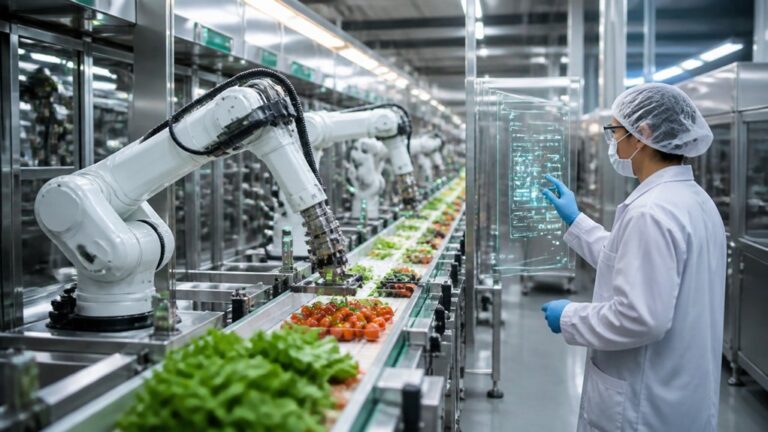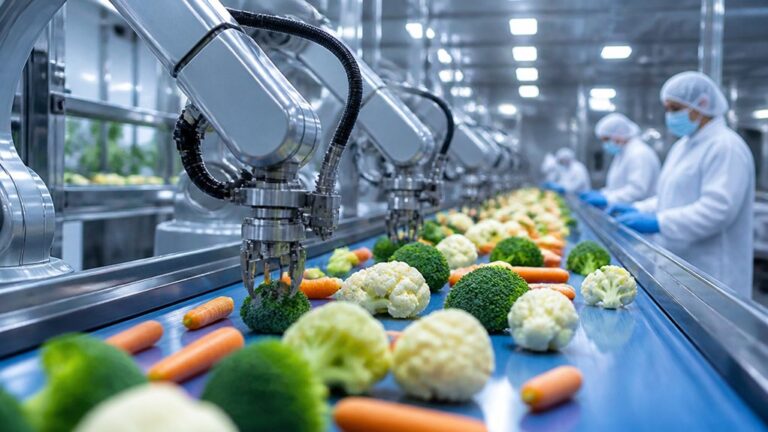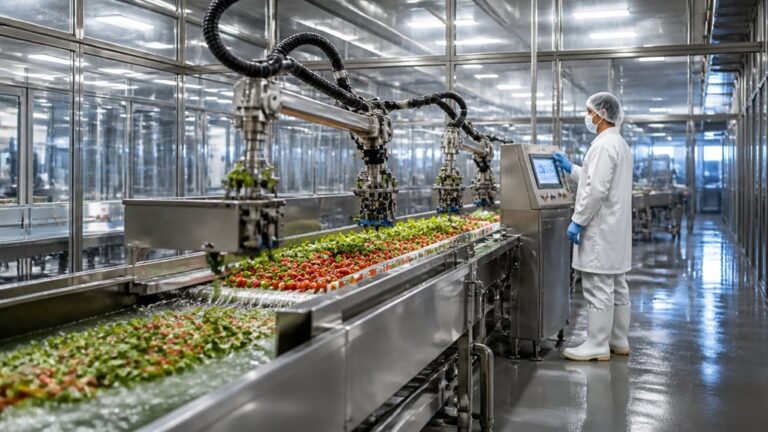
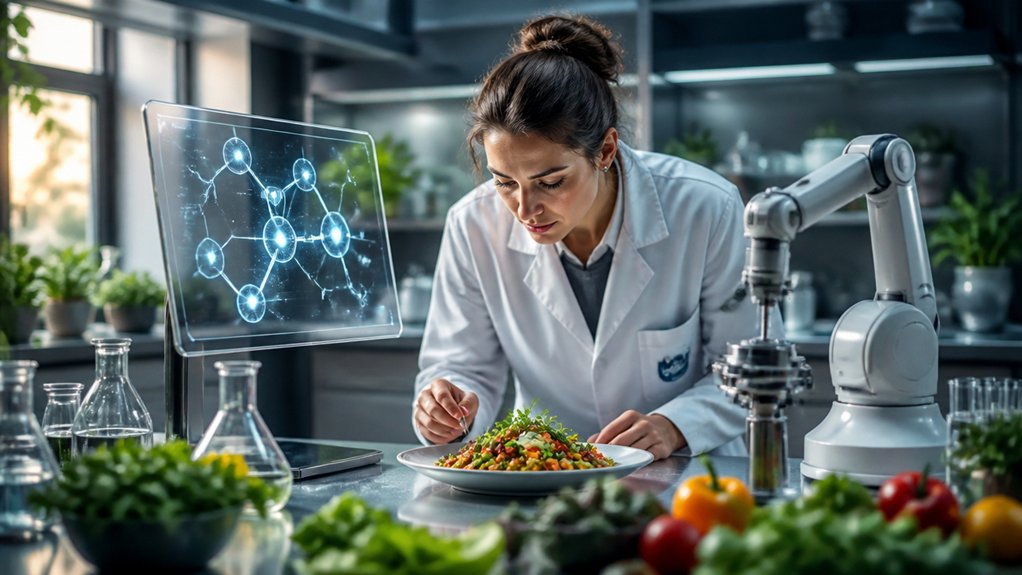
Like a digital sous-chef, AI can help you move from a food concept to a testable product with fewer rounds of guesswork. It analyzes consumer signals, screens ingredients, predicts flavor and texture, and helps you refine nutrition and production plans. Yet its speed doesn’t guarantee a product people will trust or enjoy. To see where its predictions end and human judgment begins, start with the development process.
Where Does AI Fit in Food Product Development?
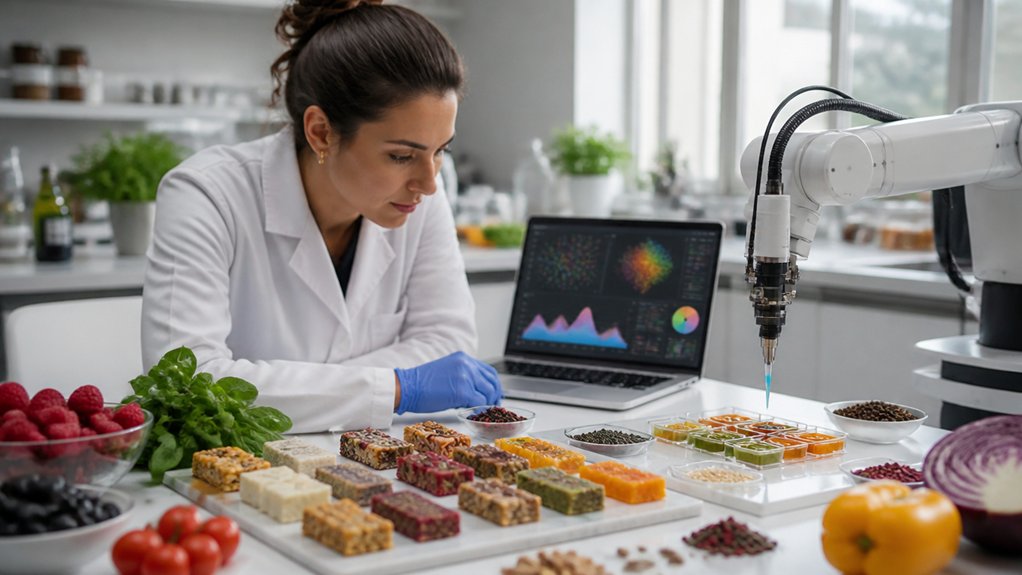
AI fits across the food product development cycle, helping teams identify consumer needs, generate and screen formulations, predict product performance, and refine processes. You can use machine-learning models to compare ingredient combinations, estimate texture and shelf life, and prioritize prototypes before costly production trials.
During formulation, simulation tools help you balance nutrition, flavor, stability, and manufacturing constraints. As development advances, digital twins can test processing conditions and reveal how equipment changes affect quality, yield, and waste.
You can also integrate Food safety data to flag hazards, verify controls, and strengthen traceability from ingredient intake through finished goods. Supply chain analytics help you assess supplier variability, ingredient availability, and sourcing risks, so you can adapt specifications or processes early.
How Does AI Use Consumer Data to Spot Trends?
AI systems analyze your sales, reviews, searches, and social interactions to detect shifts in consumer signals.
By linking these patterns across channels, you can identify emerging preferences before they become mainstream.
Predictive models then help you prioritize product concepts aligned with likely demand.
Analyzing Consumer Signals
How can food companies tell which emerging preferences will shape tomorrow’s products? They can use AI to analyze consumer signals across reviews, search queries, social posts, loyalty records, and customer-service interactions.
You can combine these sources with sales data to identify recurring themes, such as requests for plant-based protein, lower sugar, or convenient formats.
Natural-language models classify sentiment and extract attributes, while image recognition detects ingredients and packaging in shared photos.
You can segment findings by location, age group, or purchase behavior, preserving Cultural nuances that broad averages may hide.
Linking these signals to Supply chain data helps teams assess ingredient availability and sourcing constraints as they interpret demand.
With transparent data governance and human review, you can distinguish meaningful feedback from noise and give product teams a timely, evidence-based view of what consumers value.
Predicting Emerging Preferences
By combining consumer signals with sales, search, and product data, predictive models can spot preferences gaining momentum before they become mainstream. You can use these forecasts to guide food concepts while trends are still forming.
AI systems detect shifts in purchase frequency, search terms, reviews, and menu choices, then connect them to attributes such as flavor, format, price, and nutrition. They can also map Cultural influences across regions and communities, helping you distinguish a local spike from a broader movement.
When models link emerging ingredient interest to supply, you can assess Ingredient sourcing options before committing to a formulation.
You’ll get stronger predictions by invigorating datasets regularly and testing signals against real sales. Use the results to prioritize prototypes, adjust recipes, and plan launches; human review keeps forecasts grounded in context, feasibility, and consumer needs.
What Food Trends Can AI Help Developers Find?
AI models can analyze purchase, search, and feedback data to detect emerging flavor preferences before they reach the mainstream.
They can also track shifting dietary trends, revealing changes in demand for plant-based, low-sugar, or allergen-aware foods.
You can use these signals to guide product concepts and prioritize testing.
Emerging Flavor Preferences
As consumers explore new cuisines and flavor combinations, AI can help food developers detect emerging preferences before they become mainstream. By analyzing search queries, restaurant menus, product reviews, and social posts, you can identify rising interest in ingredients such as yuzu, fermented chili, or floral botanicals.
Natural-language models reveal how people describe taste, while trend algorithms track where and how quickly those descriptions spread.
You can connect these signals with sales and sensory-test data to distinguish durable demand from short-lived online buzz. AI can also map regional flavor pairings, helping you adapt prototypes for local palates without relying on broad assumptions.
Linking Farm to table sourcing data and Organic farming practices to flavor insights can guide ingredient choices and product stories. With continuous monitoring, you can refine recipes as preferences evolve and launch products with stronger evidence behind each flavor decision.
Shifting Dietary Trends
Flavor preferences are only one signal of change; AI can also reveal how dietary priorities are shifting. By combining purchase records, ingredient labels, search activity, and nutrition data, you can detect growing demand for plant-forward meals, allergen-aware products, lower-sugar recipes, and protein alternatives.
Models can separate short-lived spikes from sustained changes, helping you prioritize concepts before committing to production.
You can also map interest in Farm to table sourcing and Organic certification against regional buying patterns, price sensitivity, and seasonality. This analysis shows where provenance claims influence choice and where they may need stronger value or clearer evidence.
Link trend signals to formulation and supply-chain data, and you can test viable ingredient swaps, forecast demand, and tailor products to specific audiences. Continuous monitoring then lets you refine launches as dietary needs and expectations evolve.
How Does AI Turn Product Ideas Into Recipes?
Turning a product idea into a recipe starts with translating its target qualities—such as flavor, texture, nutrition, cost, and dietary requirements—into measurable constraints. You can then use AI systems to search ingredient databases, supplier catalogs, and formulation records for combinations that meet those specifications.
The model ranks candidate ingredients by function, availability, price, and compatibility with your production process. You set limits for allergens, processing methods, and nutritional targets; the system generates draft formulas and adjusts ingredient ratios to satisfy them.
It can also connect Farm to table goals with traceable regional inputs and support Sustainable sourcing by prioritizing verified suppliers. You review each proposed recipe, test it in the kitchen or pilot line, and feed results back into the model.
This iterative workflow shortens formulation cycles while keeping you in control.
How Can AI Predict a Product’s Flavor and Texture?
AI predicts flavor and texture by learning patterns that link ingredient composition and processing conditions to sensory measurements. When you adjust a recipe, models can estimate how changes in sugars, acids, fats, proteins, or aroma compounds will affect the finished product.
Flavor chemistry helps explain these relationships: algorithms connect volatile molecules and taste-active compounds with perceived sweetness, bitterness, acidity, and aroma.
For texture, you can model how ingredients and processing shape viscosity, firmness, elasticity, and mouthfeel. Data from instruments and sensory analysis give the system measurable targets, while machine learning identifies interactions that conventional formulas may miss.
You can use these predictions to compare candidate formulations, anticipate trade-offs, and refine a product toward a defined sensory profile. The result is a more informed development decision, grounded in ingredient behavior and consumer-relevant attributes.
How Does AI Help Test Food Products Faster?
When product testing relies on repeated physical trials, development can slow; AI helps you prioritize the most informative tests. You can combine historical results, ingredient data, and process conditions to predict which prototypes are most likely to meet performance targets. Models can also identify variables that need controlled experiments, so your team tests fewer combinations without skipping critical evidence.
During trials, computer vision and sensor analytics can track color, texture, temperature, and microbial indicators in near real time. You can flag deviations early, adjust test conditions, and focus lab resources on uncertain results.
For Food safety, predictive models can help you target shelf-life and contamination checks where risk is highest. Linking test outcomes to the supply chain can reveal how storage or transport affects product stability, guiding faster, more relevant validation decisions.
How Can AI Improve Nutrition and Formulation?
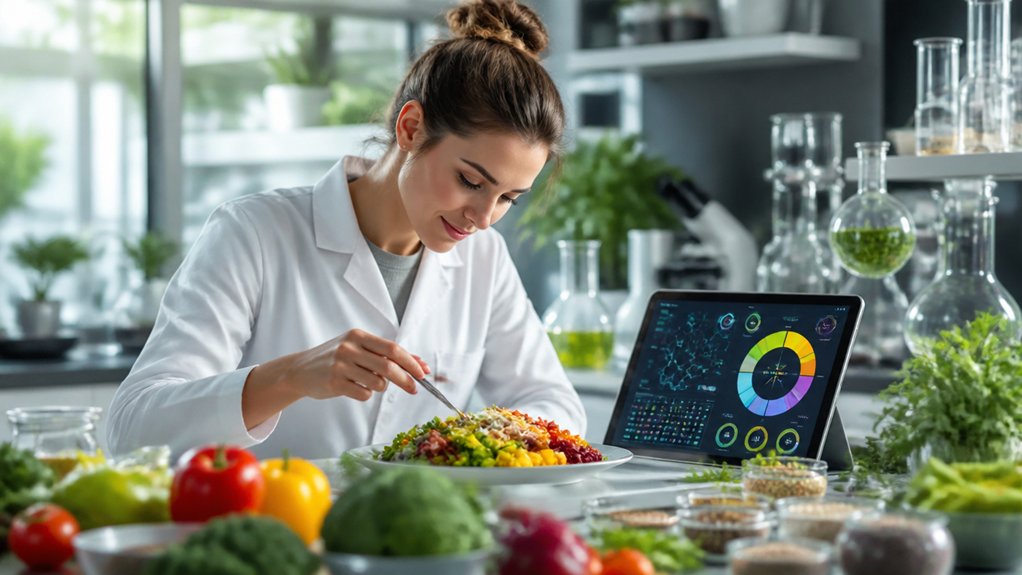
Beyond faster testing, AI can help you design formulations that meet nutrition targets without sacrificing taste, texture, or stability. By analyzing ingredient composition, sensory data, and processing constraints, models can predict how changing one component affects the whole product.
Nutritional optimization becomes more precise: you can set limits for sugar, sodium, saturated fat, or allergens, then compare candidate recipes against those targets. AI can also identify nutrient gaps and suggest substitutions that preserve key functional properties.
Ingredient innovation expands when algorithms screen underused crops, novel proteins, fibers, and flavor compounds for compatibility with your formulation. You can evaluate trade-offs early, prioritize promising combinations, and refine recipes with fewer trial cycles.
Human expertise still guides decisions, ensuring recommendations align with consumer needs, regulatory requirements, and your product’s intended nutritional profile.
How Does AI Help Scale Food Production?
Once a formulation is validated, AI can help you scale it reliably from pilot runs to full production. Models analyze process data to identify how mixing speed, temperature, and timing affect product quality. You can use those insights to set operating ranges, predict equipment bottlenecks, and adjust production schedules before costly disruptions occur.
During scale-up, sensors and machine-learning systems monitor each batch in real time. They can flag deviations early, helping you maintain consistency while reducing waste and downtime.
AI can also connect production forecasts with the Supply chain, aligning ingredient purchasing, inventory, and demand. That coordination helps you respond faster to shortages or shifts in orders.
For Food safety, automated monitoring can detect unusual process patterns and support traceability. You’ll gain clearer records and faster alerts, making large-scale production more controlled and responsive.
What Can’t AI Replace in Food Development?
AI can optimize formulations and production, but it can’t substitute the human judgment behind what makes food worth eating. You decide whether a texture feels comforting, a flavor fits a meal, or an innovation respects a community’s traditions.
Models can analyze preference data, but they can’t fully interpret Cultural nuances, including how memory, identity, and context shape acceptance.
You also weigh Ethical considerations that require accountability: ingredient sourcing, allergen safety, affordability, labor impacts, and honest labeling.
AI can flag risks and compare scenarios, yet you remain responsible for deciding which trade-offs are acceptable.
Sensory panels, chefs, food scientists, and consumers bring embodied experience that datasets can’t reproduce.
Use AI to expand options and test hypotheses; rely on human expertise to set values, interpret results, and ensure products serve people, not just performance metrics.
About the Author