You need a clear benefit, a taste you’ll enjoy, and a format that fits your routine. To stand out, your functional beverage must address a real need with evidence-backed ingredients and claims that match the science. Transparent labeling and credible sustainability practices can strengthen trust, while thoughtful pricing helps you reach the right audience. But even a well-designed drink can fall short if one critical choice undermines the rest.
What Makes a Functional Beverage Stand Out?
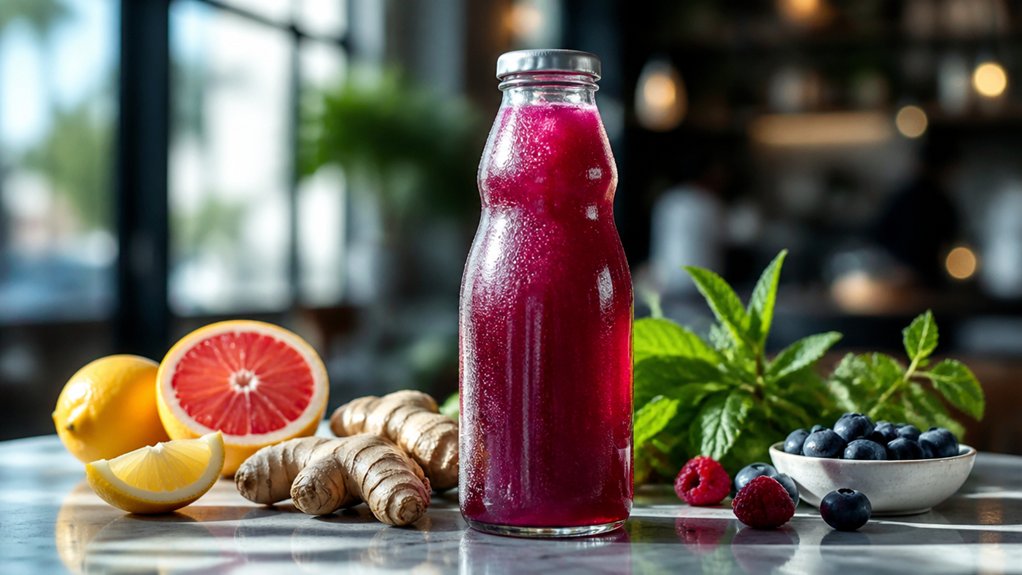
A functional beverage stands out when it pairs a clear, credible benefit with a taste and format people want to choose repeatedly. You’ll also notice how quickly its value becomes clear: the label identifies active ingredients, their amounts, and relevant usage details without overstating evidence. Transparent sourcing and quality controls strengthen trust, while consistent flavor, convenient packaging, and reliable availability support repeat purchases.
Innovative marketing can make those features easier to discover, but it shouldn’t substitute for substantiation. Consumer education helps you interpret ingredient claims, serving sizes, and the limits of available research. Brands that communicate plainly across packaging and digital channels reduce confusion and build credibility.
In a crowded market, differentiation comes from a coherent product experience: verifiable information, enjoyable sensory qualities, practical design, and claims that match the evidence.
Match Functional Beverage Benefits to Real Needs
Start by identifying your daily needs, such as hydration, energy, or digestive support. Check whether a drink’s ingredients and evidence align with them.
Match its intended benefits to a specific goal rather than relying on broad wellness claims.
Consider how it fits your lifestyle, including your dietary preferences, routine, and budget.
Identify Daily Needs
When evaluating functional beverages, begin with the need they’re meant to address—not the ingredient or trend. Identify recurring friction in your day: missed fluids, limited breakfast time, or an afternoon energy dip.
Hydration habits vary with activity, climate, and access to water, so assess when and why you fall short before considering a drink. Morning routines may reveal a practical need for a portable option, but convenience alone doesn’t establish functional value.
Look for evidence that the beverage’s stated effect relates to that specific need. Check serving size, active ingredients, and relevant research; distinguish measured outcomes from broad wellness claims.
Also consider sugar, caffeine, allergens, and interactions with medications, since these can affect suitability. Your daily pattern—not a fashionable ingredient—should define the problem. This keeps product evaluation grounded in use, safety, and credible benefit.
Match Benefits to Goals
Once you’ve identified a recurring need, compare it with the benefit a beverage can plausibly deliver. If you want steadier alertness, assess whether the caffeine dose and supporting ingredients fit that goal; if you seek digestive support, check the strain, viable count, and evidence for the intended effect.
Match claims to ingredient levels and human research, not broad promises. Personalized formulations can help you select relevant benefits, but they should still disclose doses and avoid implying guaranteed outcomes.
Consider how quickly an effect may occur and whether regular use is necessary. Marketing storytelling can make a product memorable, yet you’ll make a better choice by checking the label, study population, and claim wording.
Choose a beverage whose measurable formulation aligns with your priority, rather than one that bundles benefits without clear rationale.
Support Specific Lifestyles
Your routine can reveal which functional beverage benefits matter most. If you train regularly, you may value hydration and electrolytes; if you work shifts, you might prioritize low-sugar energy or sleep support.
Match claims to evidence: ingredients, dose, and serving frequency affect outcomes, and a beverage can’t replace adequate food, sleep, or medical care.
Dietary customization helps you choose products that fit allergies, dietary patterns, and ingredient preferences. Check labels for allergens, caffeine, added sugars, and active-ingredient amounts rather than relying on broad wellness claims.
Cultural influences also shape familiar flavors, acceptable ingredients, and how people use beverages throughout the day. Brands that reflect these preferences can make products more relevant and accessible without assuming one formulation suits everyone.
When a product fits your needs and habits, you’re more likely to use it consistently and assess whether its benefits justify its cost.
Choose Functional Beverage Ingredients With Evidence

Choose functional beverage ingredients for demonstrated benefits, not marketing claims: look for human clinical trials that test the specific ingredient, dose, and intended outcome. Then check whether study participants resemble your target consumers and whether researchers measured meaningful endpoints over a relevant period.
Evidence for a standardized extract won’t necessarily apply to a different plant part, extraction method, or formulation. Herbal extracts and adaptogenic herbs vary in composition, so verify identity, active compounds, and batch consistency with supplier documentation and independent testing.
Assess the amount your beverage can deliver against studied doses, accounting for serving size, stability, taste, and interactions with other ingredients.
Prioritize ingredients with replicated findings and a plausible mechanism, while recognizing that small or preliminary studies leave uncertainty.
This diligence helps you build products consumers can trust and manufacturers can scale.
Make Functional Beverage Claims Clear and Credible
After confirming an ingredient’s evidence and dose, make sure your label and marketing claims match what the research supports. Describe the intended benefit precisely, and distinguish a measured effect from a broader promise. If a study tested a specific population, formulation, or intake period, don’t imply its findings apply universally.
You’ll build trust by stating relevant limits and avoiding disease-treatment language unless regulations permit it and evidence supports it. Clear claims also help you stand out in a crowded market. Replace marketing myths and vague terms such as “detox” with specific, verifiable explanations of what the beverage may do.
Substantiate express and implied claims with appropriate human evidence, and review packaging, ads, and influencer scripts for consistency. Because consumer skepticism rises when promises outpace proof, make every benefit easy to understand and independently check.
Get the Flavor and Texture Right
A functional beverage can meet its nutrition targets and still lose repeat buyers if it tastes medicinal, feels gritty, or leaves an unpleasant aftertaste. You’ll earn trust when sensory quality supports the product’s promise rather than competing with it.
Flavor innovation can balance bitter botanicals, minerals, or protein notes with carefully selected acids, aromas, and sweeteners. Test formulations across serving temperatures and after storage; oxidation and ingredient interactions can shift flavor over time. Don’t assume more sweetness solves bitterness, since it may create cloying profiles or raise sugar content.
Texture enhancement matters just as much. Choose stabilizers, emulsifiers, or particle-size controls to reduce sedimentation and improve mouthfeel without masking the beverage’s character. Run blinded sensory panels with target consumers, then refine based on preference data.
Consistent taste and texture can strengthen acceptance and support repeat purchase.
Fit the Beverage Into Daily Routines
Even a well-formulated functional beverage can struggle if it doesn’t fit naturally into consumers’ daily routines. Design for a clear, repeatable use occasion, such as hydration after waking, a midday focus break, or recovery after exercise.
Morning routines can support consistent use when the product complements habits consumers already have, rather than demanding extra preparation or a new schedule.
Workplace integration also matters: consider portability, discreet consumption, and whether the beverage suits shared settings and typical workday needs.
Match ingredients and functional claims to the occasion, and communicate when and how to use the product without implying guaranteed effects.
Research target consumers’ schedules and routines before finalizing the concept; interviews, usage diaries, and in-context trials can reveal practical barriers.
When use feels convenient and relevant, you’re more likely to earn repeat engagement.
Set Prices and Formats for Your Audience
Price your beverage against its functional benefits, ingredient quality, and competitors so customers can assess its value.
Offer sizes that fit different routines and budgets, from trial portions to larger formats.
Multipacks can encourage repeat purchase while lowering the per-unit price.
Match Price to Value
To earn repeat purchases, align each beverage’s price and format with its benefits, serving size, and target customer’s willingness to pay. Your price should reflect ingredient quality, clinically supported claims, and production costs, while remaining competitive in its category.
Compare unit economics and shelf prices across relevant brands; don’t assume premium ingredients alone justify a premium. Pricing psychology shapes consumer perception: a higher price may signal efficacy or quality, but only when packaging, evidence, and taste support that expectation.
Test price points with target buyers, then track conversion, repeat purchase, and retailer feedback after launch. If your drink contains a meaningful dose of a studied ingredient, explain that value clearly without overstating outcomes.
Set margins that account for distribution, promotions, and channel fees. Revisit pricing as costs, competition, and customer expectations change.
Offer Flexible Sizes
Offer functional beverages in sizes that match different occasions, budgets, and usage patterns. A compact bottle can suit a commute or a first-time trial, while a larger format may serve at-home use. Align each size with its price so you give shoppers a clear entry point without weakening perceived value.
Consider the serving volume needed to deliver the product’s active ingredients at the stated dose; changing package size shouldn’t create ambiguity about efficacy or directions.
Use portion control to help customers manage intake, particularly when a beverage contains caffeine, electrolytes, or other ingredients with recommended limits. Packaging innovation can support portability, resealability, and protection from light or oxygen, depending on formulation needs.
Test formats with your target audience, then track sales, repeat purchase, and waste. Let observed behavior—not assumptions—guide your size mix and pricing.
Create Multipack Options
Multipacks can make functional beverages more convenient for routine use and improve value per serving. Offer Multi pack options that match how your customers consume and purchase: a small trial bundle lowers the commitment for first-time buyers, while larger cases suit repeat users and households.
Set prices by calculating unit economics, including product, packaging, fulfillment, and retailer margins. Show the per-serving cost clearly so shoppers can compare formats without assuming a discount compromises quality.
Use Packaging innovations such as recyclable cartons, lightweight cans, or resealable multipacks to balance portability, product protection, and material use. Check that each format preserves ingredient stability and complies with labeling requirements.
Test pack sizes and price points through retailer feedback, sales data, and controlled online experiments. Track conversion, repeat purchase, and average order value, then adjust your assortment to reflect demand rather than relying on assumptions.
Show What’s in Your Functional Beverage
As functional beverages compete for space in a crowded market, clear ingredient disclosure helps consumers judge whether a product fits their needs. List each active ingredient, its amount per serving, and its intended role; vague proprietary blends make meaningful comparisons difficult.
If you use herbal extracts, identify the plant species and plant part, and disclose standardized compounds when relevant. State caffeine content and serving size clearly, since both affect exposure.
Name natural sweeteners specifically rather than relying on broad claims such as “clean” or “better for you.” Distinguish evidence-backed benefits from general wellness positioning, and avoid implying that an ingredient treats or prevents disease.
Your label and product page should present consistent facts, including allergens and potential interactions where appropriate. Transparent details build trust and help shoppers assess value.
Choose Sustainable Packaging for Your Beverage
Choose packaging that protects your beverage while reducing material use and environmental impact. Match the format to your formula, processing method, shelf life, and distribution conditions.
Light-sensitive ingredients may need opaque or UV-blocking packaging; carbonated drinks require containers rated for internal pressure.
Recyclable packaging can support recovery when local systems accept the material and consumers can sort it correctly. Check labels, closures, liners, and barrier coatings, since mixed components may complicate recycling.
Lightweighting can lower material use and shipping emissions, but you must preserve package strength and product safety.
Biodegradable containers may suit specific disposal streams, yet they don’t automatically break down in home compost or landfill conditions. Verify certifications and local infrastructure before making claims.
Compare life-cycle data, cost, and customer expectations, then explain disposal instructions clearly. Your packaging choice should protect product quality and substantiate environmental messaging.
About the Author