

A package can lose material without losing the protection that keeps food safe and fresh. To reduce waste, you’ll need to assess product needs, then refine materials, structure, and production controls without weakening critical barriers. Recyclable and compostable options can help, but only when they perform under real storage and handling conditions. The challenge is knowing which changes deliver measurable savings—and which could shorten shelf life or compromise quality.
Assess Food Packaging Needs Before Redesigning

Before redesigning a package, identify what the food needs to stay safe, fresh, and appealing throughout storage and distribution. Assess sensitivity to oxygen, moisture, light, temperature changes, and physical damage, then define measurable performance targets for each risk.
Your product’s formulation, processing method, shelf-life goal, and distribution route all shape those requirements.
Test candidate formats under realistic conditions, including transit vibration and temperature cycling, and verify that seals, barriers, and closures perform consistently.
Review Consumer feedback to understand which features protect usability, portion control, and confidence in product quality.
Confirm Regulatory compliance for food-contact materials, labeling, and any required safety claims before approving specifications.
Document results and establish acceptance criteria with suppliers. This evidence-based assessment helps you protect quality while directing redesign toward genuine packaging needs, not assumptions.
Redesign Food Packaging to Use Less Material
You can reduce material use by selecting lightweight packaging that still meets strength and barrier requirements.
Optimize package dimensions to fit the product closely and maintain protection through distribution.
Remove unnecessary layers, then validate performance with quality testing.
Lightweight Packaging Materials
By reducing material without compromising protection, food manufacturers can lower packaging waste through lightweight designs. You can select thinner films, downgauged trays, and high-strength paperboard to cut material use while maintaining barrier performance, seal integrity, and product safety.
Advanced polymers and fiber blends help you achieve stiffness with less mass, while coatings can protect against moisture, oxygen, and grease. Validate each design through drop, compression, shelf-life, and transport testing; a lighter pack must still withstand handling and preserve freshness.
These Eco friendly innovations can also support consumer acceptance when you communicate their environmental benefits clearly and keep the package easy to open and use. Work with suppliers to assess recyclability and food-contact compliance, then monitor production lines for consistent forming and sealing.
This approach reduces material demand without weakening quality.
Optimize Package Dimensions
Right-size each package to the product’s actual dimensions to eliminate unused space and reduce material use. Use 3D scanning and product measurements to develop a close fit that protects food during filling, shipping, and storage. You’ll lower material demand, improve pallet density, and reduce transport emissions without sacrificing product integrity.
Validate each design with compression, vibration, and shelf-life testing. Check that seals remain reliable and that barriers still control moisture, oxygen, or light as needed. Coordinate package dimensions with filling equipment and distribution requirements so efficiency gains don’t create production or handling problems.
Connect dimensional improvements to sustainable sourcing by selecting appropriately sized formats made from responsibly sourced materials. Use clear consumer education to explain portion sizes, storage guidance, and the packaging’s purpose.
Track material use, damage rates, and customer feedback to refine dimensions while maintaining consistent quality.
Eliminate Excess Layers
When protection requirements allow, remove redundant liners, wraps, and secondary layers to cut packaging material without compromising food safety or shelf life. Assess each component’s function, then validate leaner designs through barrier, seal-integrity, migration, and distribution testing.
You can replace multi-part structures with Innovative materials that deliver moisture, oxygen, or light protection in a single recyclable format. Match material selection to the product’s sensitivity, processing conditions, and expected storage period; don’t rely on appearance alone to judge performance.
Pilot redesigned packs on existing filling lines to confirm they run consistently and protect product quality. Clear Consumer education helps buyers understand how to open, store, and recycle simplified packaging.
Monitor damage, spoilage, and customer feedback after launch, then refine specifications to maintain safety while steadily reducing material use.
Choose Recyclable or Compostable Food Packaging
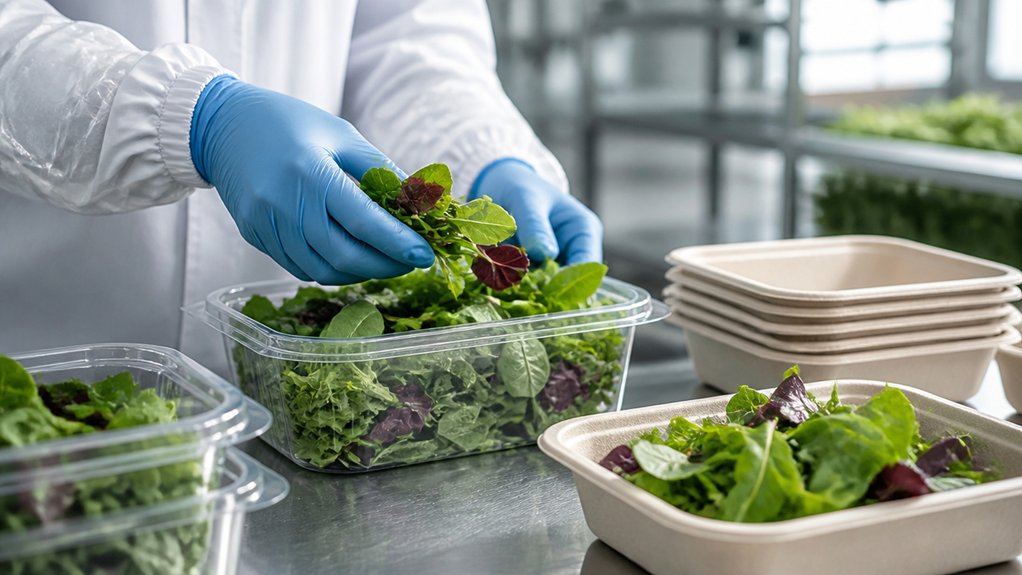
Choosing recyclable or compostable packaging can reduce food manufacturers’ waste, but the material must match local processing systems and product requirements. You should verify that collection, sorting, and reprocessing facilities accept your chosen format; a technically recyclable pack offers little benefit if local programs reject it.
Assess barrier performance, sealing compatibility, and food-contact compliance alongside end-of-life options. For compostable materials, confirm that the intended facilities can process them under specified conditions, and label disposal instructions clearly.
Biodegradable plastics aren’t automatically compostable or recyclable, so check recognized standards and avoid unsupported claims.
You can pilot alternative structures, measure product quality and package recovery, then refine specifications with suppliers. Integrating these checks into procurement supports Zero waste initiatives while helping you select materials that meet performance targets and fit real waste pathways.
Protect Freshness With Smarter Food Packaging
You can extend shelf life by matching packaging design to your product’s sensitivity to oxygen, moisture, and light.
Optimize barrier protection with material structures that preserve freshness without adding unnecessary layers.
This precision helps you maintain quality while reducing packaging waste.
Extend Shelf Life
How can smarter packaging reduce waste while keeping food fresh? You can extend shelf life by matching package design to each product’s sensitivity, distribution route, and expected storage conditions.
Active packaging can release or absorb targeted compounds that slow oxidation, manage moisture, or support microbial inhibition, helping you maintain safety and quality for longer.
Time-temperature indicators can reveal whether a product has faced conditions that may shorten its usable life, so you can make informed handling decisions.
For fresh foods, carefully selected films and formats can help preserve aroma, texture, and flavor preservation without relying on unnecessary additives.
Pair these solutions with validated shelf-life testing, clear date coding, and storage guidance.
You’ll reduce premature disposal while protecting consumer trust and product performance.
Choose packaging interventions that meet food-contact requirements and verify their effectiveness across real-world supply chains.
Optimize Barrier Protection
When packaging matches a food’s sensitivity to oxygen, moisture, and light, it can slow quality loss without adding unnecessary material. You can assess the product’s actual exposure risks, then select a film, coating, or structure that blocks only what matters.
For oxygen-sensitive snacks, high-barrier layers help preserve flavor and prevent rancidity. For dry goods, moisture resistance protects texture while avoiding excessive plastic thickness.
You can also combine material science with package design: apply barrier coatings to lightweight substrates or use targeted layers in flexible formats. Validate Barrier integrity through seal testing and shelf-life trials under realistic storage conditions.
Monitor performance across production runs, since weak seals can undermine even advanced materials. By matching protection to product needs, you’ll maintain freshness, reduce spoilage, and avoid overpackaging—delivering quality with fewer resources and more precise material use.
Cut Packaging Waste on the Production Line
Production-line adjustments can prevent packaging waste before it leaves the factory. You can tune filling nozzles, sealing temperatures, and forming pressure to reduce spills, rejects, and excess material while maintaining consistent pack integrity.
Use sensors and inline vision systems to detect misfeeds early, then adjust equipment before defects multiply. Set up changeovers with precise guides and validated machine recipes so you don’t discard film or containers while dialing in a new format.
Track trim, downtime, and reject rates by line and shift to identify recurring losses. You can pair lightweight, recyclable formats with sustainable sourcing, then use consumer education to encourage correct disposal.
Train operators to make controlled adjustments and escalate drift promptly. These measures help you cut material use without compromising product protection, presentation, or throughput.
Test and Measure Packaging Safety and Shelf Life

Reducing packaging waste also requires proving that lighter or redesigned formats protect food throughout distribution and storage. You should validate each package against the product’s specific risks, including oxygen and moisture exposure, light, seal integrity, and transport stress.
Use accelerated and real-time shelf-life studies to track microbial safety, texture, aroma, and flavor preservation under realistic conditions. Instrumented drop, vibration, compression, and leak tests can reveal weak points before launch.
Compare results with your current pack and confirm that reduced material doesn’t compromise barrier performance or food-contact compliance.
You’ll also need to assess consumer convenience: test opening, reclosing, dispensing, and handling with representative users. Define measurable acceptance limits, document methods, and review results across production batches.
When data show a gap, adjust material structure, coatings, or sealing parameters, then retest. This evidence lets you reduce packaging confidently while protecting quality and safety.
About the Author