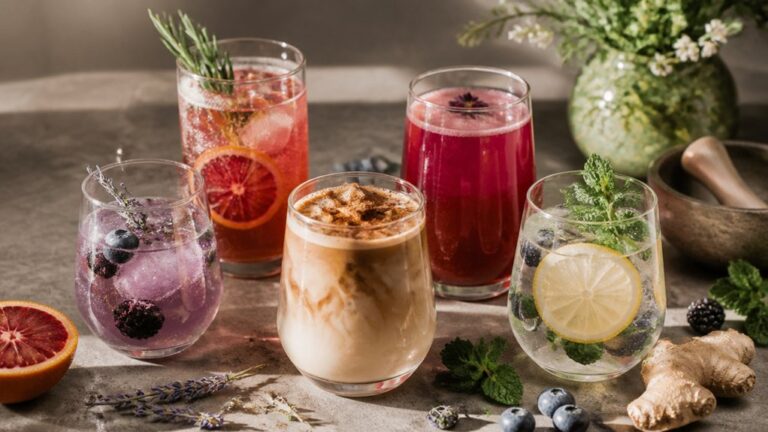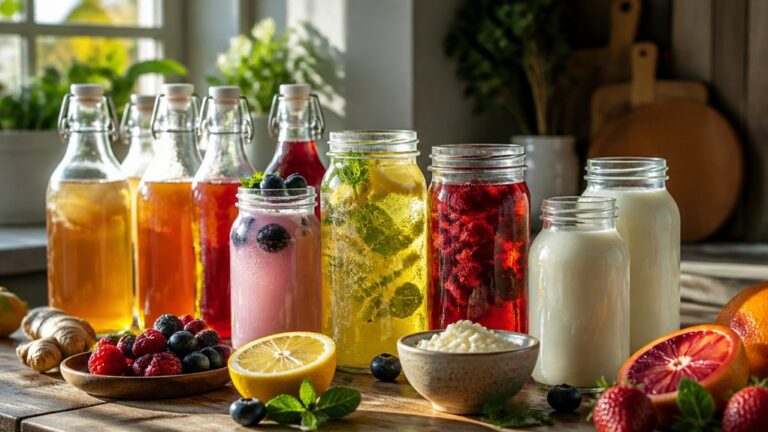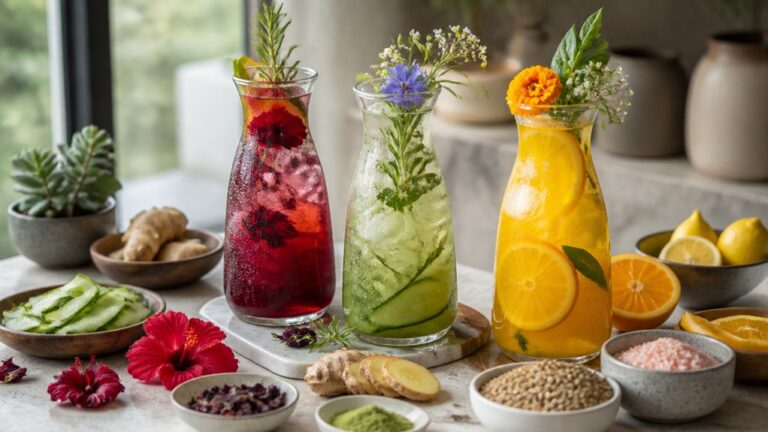
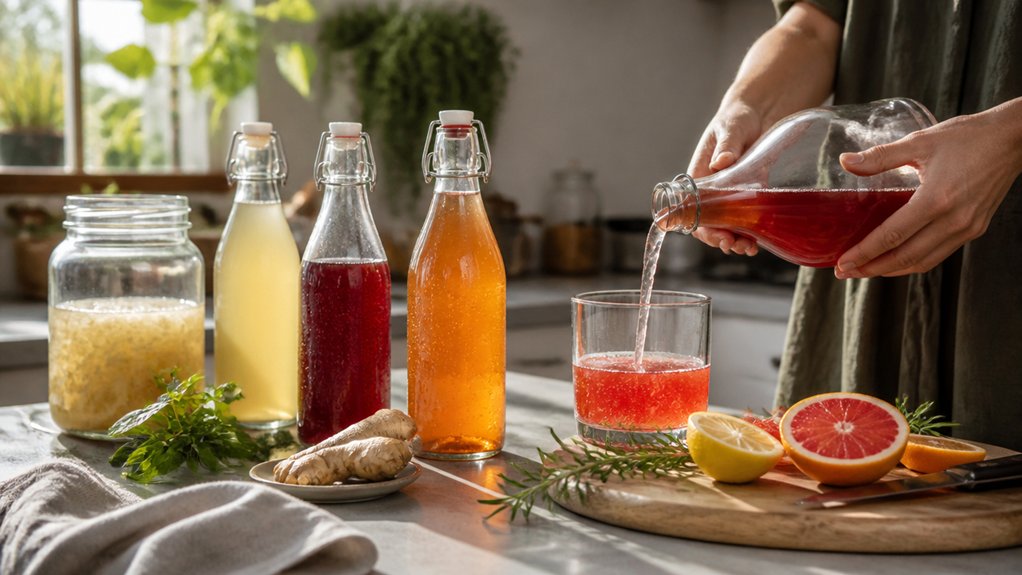
Like a familiar sourdough starter, fermented drinks turn microscopic activity into something you can taste. You’ll find kombucha, kefir, and traditional grain-based beverages returning to menus as interest in gut health and functional foods grows. Modern fermentation pairs established methods with tighter controls for quality and safety, but “natural” doesn’t automatically mean risk-free. The flavor, live cultures, and possible drawbacks depend on how each drink is made—and that’s where your choices begin.
What Are Fermented Drinks?
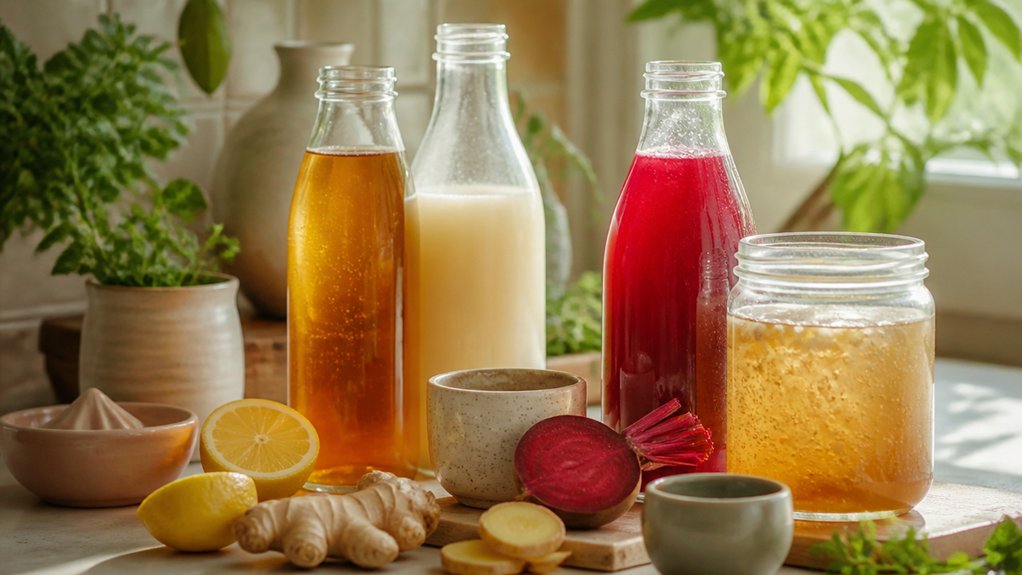
Fermented drinks are beverages transformed by microorganisms—typically yeasts or bacteria—that consume sugars and produce compounds such as acids, carbon dioxide, and, in some cases, alcohol.
During fermentation, microbes alter a liquid’s chemistry, creating distinctive acidity, aroma, texture, and stability. You can think of the process as controlled microbial metabolism: organisms use available sugars and release measurable by-products.
Temperature, time, ingredients, oxygen exposure, and starter cultures all influence the outcome, so producers select fermentation techniques to shape specific characteristics and manage consistency.
These methods connect modern production with historical beverage traditions, while contemporary monitoring tools help you understand and control microbial activity.
Fermentation doesn’t automatically make a drink beneficial; its composition depends on ingredients and processing. The term describes how it’s made, not a guaranteed nutritional effect.
Which Fermented Drinks Are Popular?
The most popular fermented drinks vary by region, but several have gained broad international visibility. You’ll often find kombucha, a tea-based drink, alongside kefir, a cultured milk beverage. Water kefir offers a dairy-free alternative, while yogurt drinks remain widely consumed across many food traditions.
In East Asia, you may encounter fermented rice drinks such as makgeolli, and in parts of Africa, sorghum-based beverages such as togwa. These products differ in ingredients, microbial communities, and fermentation techniques, creating meaningful probiotic diversity across categories.
Popularity also reflects practical factors: retail availability, familiar formats, and growing consumer interest in live-culture foods. However, live microbes don’t appear in every commercial product; pasteurization or filtration can reduce them.
Check labels for culture information, ingredients, and storage guidance when comparing options.
How Fermentation Shapes Drink Flavor
As microbes consume sugars, they produce acids, gases, and aroma compounds that shape a drink’s flavor. You can trace these changes to the fermentation process, where yeast and bacteria transform raw ingredients through distinct metabolic pathways.
Yeast often generates ethanol, carbon dioxide, and fruity esters. Lactic acid bacteria add tartness and may create buttery or savory notes. Acetic acid bacteria contribute sharper, vinegar-like acidity when oxygen is available.
Temperature, time, microbial strains, and starting ingredients all influence the outcome. A cooler, slower fermentation may preserve delicate aromas, while warmer conditions can accelerate acid production and shift the balance.
You’ll notice Flavor complexity when these compounds interact, layering sweetness, acidity, aroma, and texture. Producers can steer that profile by adjusting cultures and conditions, but each batch may still develop subtle differences.
What Are the Potential Health Benefits and Risks?
Because fermentation can alter a drink’s acidity, microbes, and nutrient profile, its health effects depend on the beverage, its ingredients, and how it’s made.
Some fermented drinks contain live cultures that may support gut microbial activity, but evidence varies by product, strain, and dose. Probiotic diversity can shape these effects; fermentation doesn’t guarantee clinically meaningful benefits, and pasteurization may eliminate viable microbes.
You may also gain organic acids or altered nutrient availability, though sugar and calories can remain substantial.
Risks include contamination from poor production, excess acidity that may affect teeth or reflux, and alcohol formed during fermentation—even when a drink seems nonalcoholic.
If you have a weakened immune system, certain live-culture products may pose added risks. The fermentation process thus warrants careful evaluation, not blanket health claims.
How Can You Choose and Enjoy Fermented Drinks?
To choose fermented drinks wisely, check the ingredient list, added sugars, alcohol content, and whether the product is pasteurized or contains live cultures.
Compare serving sizes, since sugar and alcohol can vary substantially across brands. If you’re sensitive to histamine, caffeine, or carbonation, test a small portion and track your response.
Refrigerate live-culture products as directed; heat treatment and storage conditions can alter microbial viability.
Use fermentation history to guide exploration: kombucha, kefir, and traditional grain ferments reflect distinct substrates and microbial processes, not guaranteed health effects.
Choose products for flavor and fit, rather than assuming “natural” means safer or more beneficial.
For pairing suggestions, try tart kombucha with rich foods, kefir with fruit, or lightly sour fermented grain drinks with savory dishes.
Pour modestly, savor slowly, and consult your clinician if you have health concerns.
About the Author