One mushroom drink won’t turn your morning into a wellness revolution, but it might offer a different way to think about your daily brew. You’ll find blends featuring mushrooms such as lion’s mane, reishi, and chaga, often marketed for focus, relaxation, or immune support. The evidence behind those claims varies, and the ingredients and doses matter. Before you swap your coffee, consider what’s actually in the cup—and what the research can support.
What Are Mushroom Drinks?
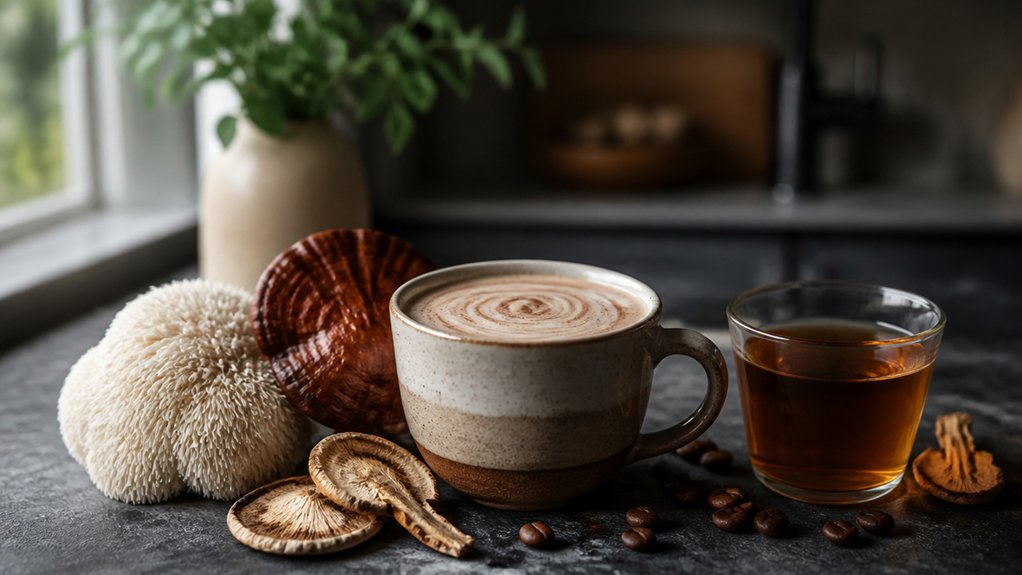
Mushroom drinks are beverages made with culinary or functional mushrooms, often blended into coffee, tea, cocoa, or powdered drink mixes. You’ll find familiar ingredients such as shiitake alongside varieties like lion’s mane, chaga, and reishi.
Producers typically dry and mill mushroom fruiting bodies or mycelium, then add the resulting powder or extract to a drink base. Labels may distinguish whole-mushroom powders from extracts, which use processing to concentrate selected compounds. Check ingredient lists, serving sizes, and sourcing details to understand what you’re buying.
Mushroom cultivation now supports products designed for convenience, including instant sachets and ready-to-drink cans.
Yet these beverages also draw on Cultural significance: mushrooms have long appeared in food and traditional practices across regions. Today’s formulations reinterpret that history through modern processing, flavor development, and packaging, giving you new ways to explore mushroom ingredients.
What Benefits Do Mushroom Drinks Actually Offer?
Their potential benefits depend on the mushroom species, preparation, dose, and your overall diet—not just the drink’s branding. Some products may provide antioxidants or other compounds that support normal bodily functions, while caffeine-free blends can offer an alternative to coffee.
But evidence for specific claims—such as sharper focus, better immunity, or reduced stress—varies, and studies on isolated extracts don’t automatically prove a beverage delivers the same effects.
Myth busting matters because consumer perceptions can outpace clinical research. You shouldn’t treat a mushroom drink as a cure, a guaranteed energy boost, or a substitute for balanced meals and medical care.
Check ingredient amounts, added sugar, caffeine, and third-party testing; vague “proprietary blends” make benefits harder to assess. Emerging extraction methods may improve consistency, but product quality still varies.
Track how you feel, and judge claims against credible evidence—not testimonials or trend-driven marketing.
Which Mushrooms Are Used in These Drinks?
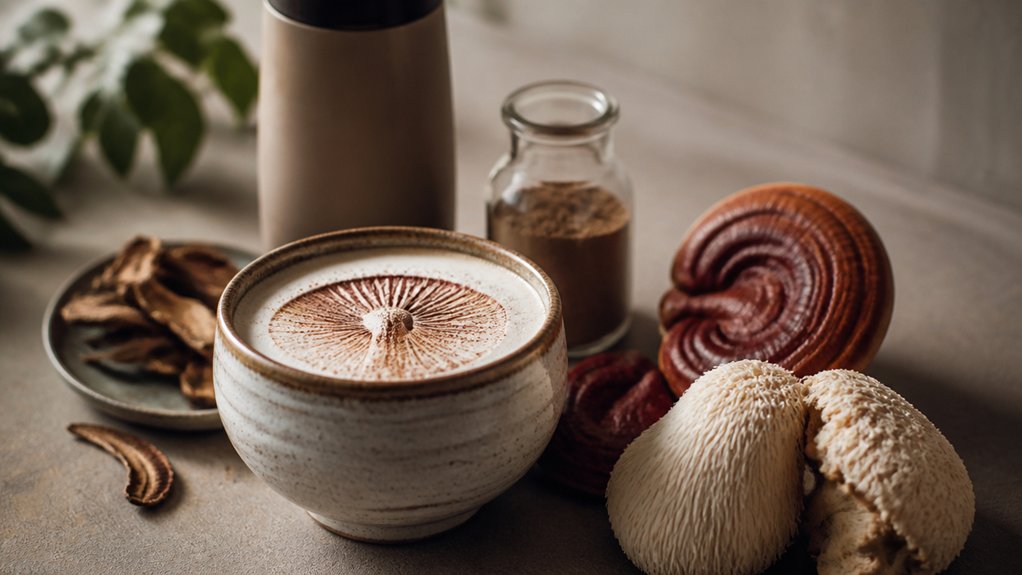
Depending on the blend, you may find familiar culinary mushrooms alongside species marketed for their distinctive compounds. Common choices include lion’s mane, reishi, chaga, cordyceps, and turkey tail. These Medicinal mushrooms aren’t interchangeable: each has a different history of use and chemical profile, while research on many proposed effects remains limited.
You’ll also see culinary varieties such as shiitake and maitake, valued for their savory flavor as well as their food uses. Some products combine mushroom powders or extracts with coffee, cocoa, or spices, so check the ingredient list to see what you’re actually getting.
Labels may identify fruiting bodies, mycelium, or both; these materials can differ in composition. If you’re comparing blends, look for clear species names and transparent sourcing rather than relying on broad claims alone.
How Do Mushroom Drinks Compare With Coffee and Energy Drinks?
Although mushroom drinks may look like a coffee alternative, their effects depend largely on what else is in the blend. If yours contains caffeine, you may feel a familiar lift; caffeine-free versions won’t deliver coffee’s immediate stimulation.
Research on mushroom beverages remains limited, so don’t assume they improve focus or energy.
Compared with energy drinks, mushroom blends may offer a milder, less sweet experience, though recipes vary. Check the label’s caffeine content to understand how a product may affect you, especially if you’re sensitive to stimulants.
Flavor profiles also shape the comparison: earthy notes can complement coffee, while cocoa, chai, or sweeteners soften them.
Consumer preferences differ; you might choose mushroom drinks for novelty or variety, coffee for its bold taste, and energy drinks for a stronger, more predictable caffeine boost.
How to Check Ingredients, Dose, and Safety
Before choosing a mushroom beverage, check the label for each mushroom species, the amount per serving, and whether it lists extract or whole-mushroom powder. Look for extract ratios or standardized active compounds, since processing can affect what a serving contains. Clear ingredient transparency helps you compare products, but a “proprietary blend” may hide individual doses.
Check whether the company identifies its supplier and provides independent testing for identity, contaminants, and batch consistency. This safety verification matters because supplements aren’t reviewed like medicines for effectiveness before sale.
Follow the serving directions, and don’t assume more delivers greater benefits. If you’re pregnant, take medication, have allergies, or manage a health condition, ask a healthcare professional before trying a drink.
Choose products that disclose caffeine and added ingredients, too, so you can assess the full formula.
About the Author